

An Alarm Bell in the Depths of the Sea
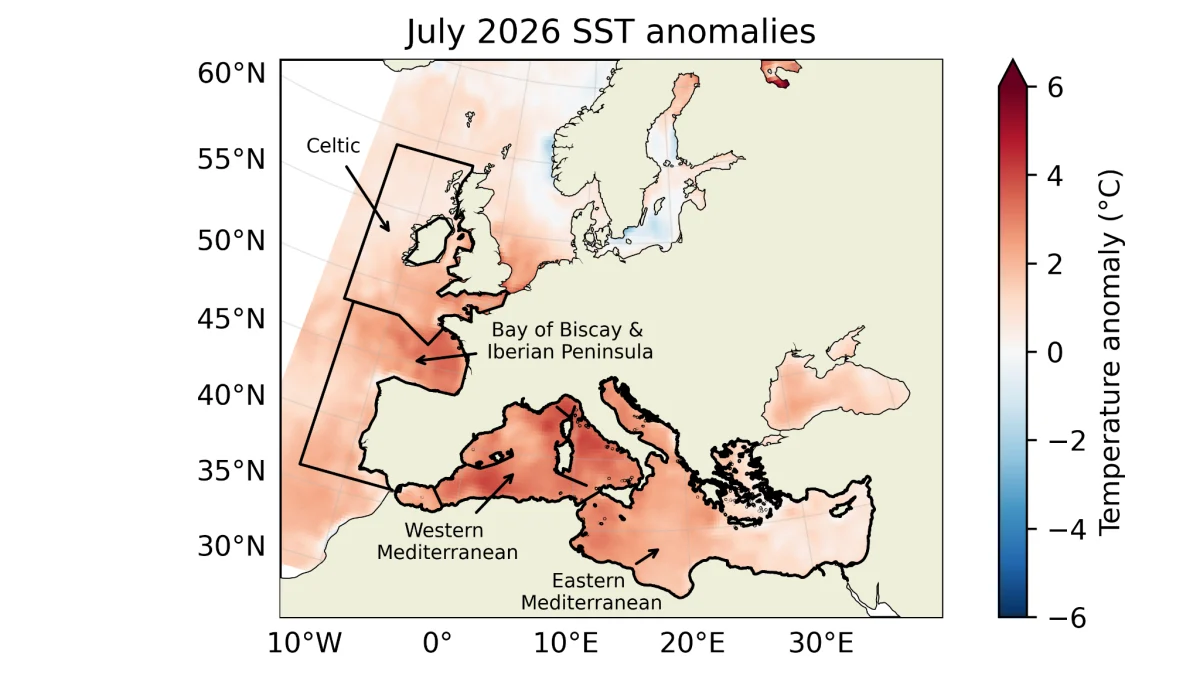
July 2026 saw a worrisome climate shift in European coastal seas, with sea surface temperatures hitting record levels never before seen in modern history. This rise is not just a passing figure in meteorological tables, but a blunt warning signal reflecting a disruption in our planet’s thermal balance, which raises an urgent question about the ability of marine ecosystems to withstand this fast-paced change.
The Human Footprint Behind the Phenomenon
A recent analytical study confirmed that these severe marine heatwaves are not the result of chance or normal natural fluctuations, but are the direct product of human activities that cause global warming. An international team of researchers specializing in the study of extreme events explained that carbon emissions from burning fossil fuels have created a “heat canopy” that traps heat in the depths of the sea, pushing temperatures beyond the natural limits to which marine organisms are accustomed.
Are We Living Through a Moment of Environmental Collapse?
Marine ecosystems rely on a delicate and stable temperature balance. A rise in this temperature, even by a few degrees, may lead to severe consequences, such as coral bleaching, disrupted fish reproduction cycles, and the migration of marine organisms from their original habitats in search of colder waters. What we are witnessing today represents immense pressure pushing these systems toward a “tipping point,” where changes become irreversible, threatening the food security and biodiversity upon which millions of people depend.
The Need to Act Before It Is Too Late
Setting records in July 2026 places the world before a moral and scientific responsibility. The climate crisis is no longer just predictions for a distant future, but has become a tangible reality reshaping our seas. Protecting marine life requires a strict international commitment to cut emissions and work on smart adaptation strategies that protect the seas from ongoing warming, to ensure the continuation of life in our oceans, which serve as the lungs and safety valve of the Earth.
By: Hany Sallam
Source: news.mongabay.com


Latest video
تابع معنا تحليل قراءة الصحف اليومية مع الكاتب الصحفي Hany Sallam عبر