
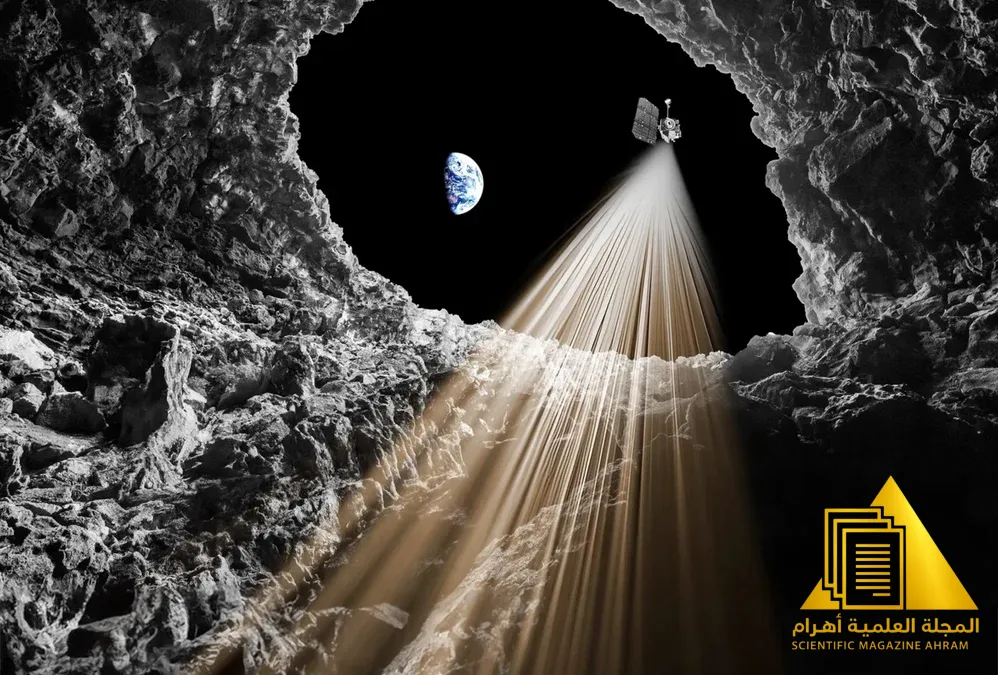

The Future of Human Settlement: Searching for Safe Havens Beneath the Moon’s Surface
In an ambitious move to foster a sustainable human presence beyond Earth, NASA has announced the adoption of an advanced research project aimed at studying the depths of Marius Hills on the Moon. The mission is not limited to surface observation alone; rather, it aims to uncover a geological mystery that could change the rules of the game in space exploration: do these giant craters hide natural caves suitable as headquarters for future lunar bases?
Lunar Craters: Natural Shields Against Cosmic Hazards
The lunar environment is harsh by all measures, as astronauts face severe challenges posed by harmful cosmic radiation, extreme temperature variations between night and day, and the danger of micrometeorite impacts. This is where the importance of Marius Hills comes in, as scientists believe these craters are merely surface openings to ancient volcanic cave systems beneath the lunar surface. These subterranean formations may provide superior natural protection, reducing the need to build complex and costly protective structures on the surface, which paves the way for establishing long-term human colonies.
GIMLI Project: Technology at the Service of Exploration
The Planetary Science Institute is leading this ambitious research project, which will use advanced sensing technologies to analyze the crater’s internal structure. The primary goal is to determine whether this opening connects to a broad network of caves extending beneath the lunar crust. Success in this endeavor means astronauts may soon find “ready-made homes” beneath the lunar surface, where temperatures are stable and protected from outside space fluctuations.
New Horizons for Space Colonization
Investing in the exploration of the lunar subsurface represents a qualitative shift in space science. If the existence of these caves is confirmed, lunar craters will become humanity’s first station on the journey toward exploring Mars and beyond. It is not merely a scientific adventure, but a technical necessity that lays the cornerstone for humanity’s upcoming steps toward turning into interplanetary beings, taking advantage of the Moon’s geological nature to ensure our survival and the continuation of our scientific missions deep in space.
By: Hany Sallam
Source: universetoday.com


Latest video
تابع معنا تحليل قراءة الصحف اليومية مع الكاتب الصحفي Hany Sallam عبر