
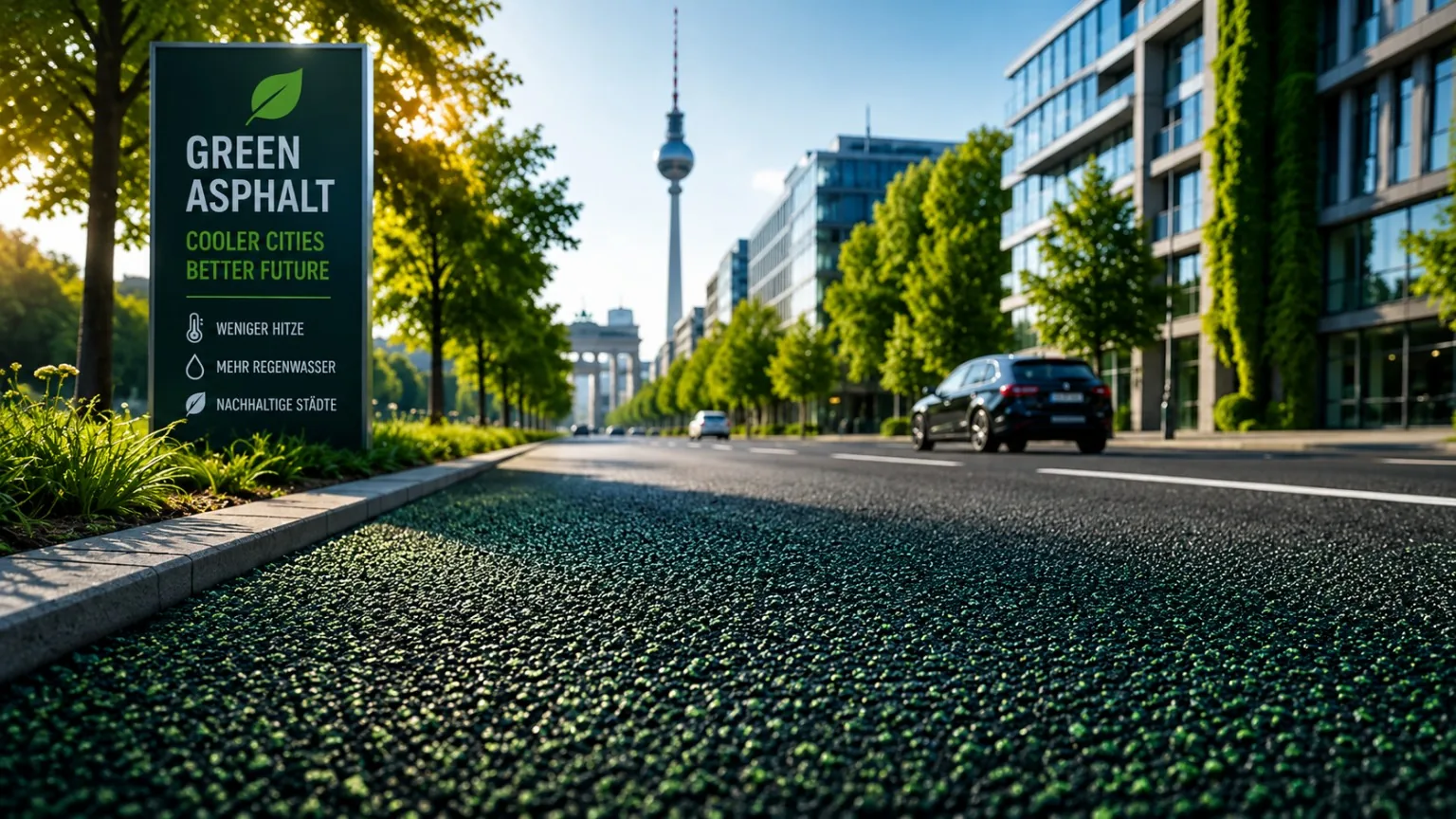

Several German cities have started testing a new type of “green asphalt” specifically designed to combat the growing impacts of climate change in urban areas, in a move researchers describe as potentially changing the future layout of city streets.
The new environmental project relies on special materials that allow roads to absorb some of the sun’s heat and reduce the “heat island” effect that makes cities much hotter than their surrounding areas during the summer.
Cooler Streets During Summer Heatwaves
During recent heatwaves, some European streets recorded extremely high temperatures because conventional asphalt retains heat for many hours.
The new asphalt, however, uses a more reflective light-absorbing mix along with layers that cool the surface and reduce heat buildup, which helps lower temperatures in crowded neighborhoods.
Reducing Floods Too
Another advantage of the German project lies in the ability of some new models to absorb rainwater instead of letting it pool on roads.
Engineers hope this will help reduce flash floods, which have become more frequent in European cities due to climate change.
Real-World Tests in Cities
Testing has begun in crowded urban areas across Germany, where temperatures, water levels, and road quality are monitored over continuous months.
Researchers are also using smart sensors to compare the performance of the new asphalt with conventional roads during periods of extreme heat and heavy rain.
The Future of European Cities
Environmental experts believe that conventional infrastructure is no longer entirely suited for a world growing hotter year after year.
That is why many European countries are moving toward developing “climate-resilient cities” that rely on smarter building materials capable of adapting to new environmental conditions.
Researchers believe the success of the German trials may prompt other cities around the world to adopt the idea in the coming years.
Hany Sallam


Latest video
تابع معنا تحليل قراءة الصحف اليومية مع الكاتب الصحفي Hany Sallam عبر