

Nature’s Ultimate Trick
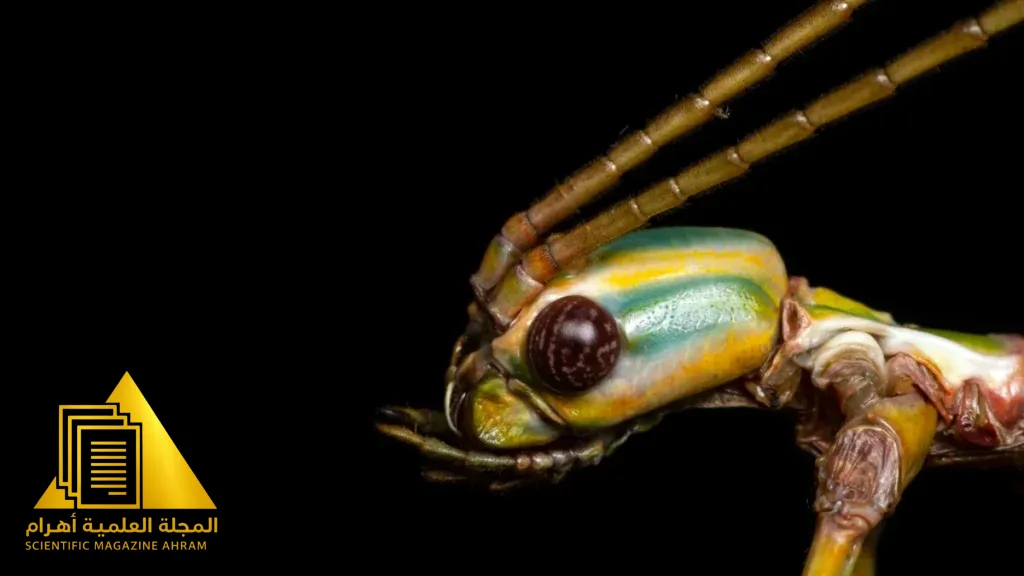
In the insect world, the ability to camouflage is a fundamental part of the survival strategy, but what Australian scientists recently discovered goes beyond simple camouflage; it is a “scientific deception” that has lasted for decades. A recent study has revealed two new species of giant stick insects, one of which remained hidden behind a false identity. It was long believed to belong to a thoroughly well-known species, only for years of genetic research and careful analysis to prove it is a completely independent creature that had not been classified before.
Oddities in Egg Formation
The discovery did not stop at identifying the species, but extended to include striking biological characteristics. Scientists observed a previously unrecorded phenomenon in this group of insects within one of the newly discovered species: the laying of eggs with a unique “cap.” This biological adaptation raises new scientific questions about insect evolution and how these creatures managed to develop protective techniques for their offspring in Australia’s harsh environments, which is a scientific breakthrough that changes our understanding of stick insect reproduction.
A Lesson in Lost Biodiversity
This discovery redirects scientists’ compass toward the biodiversity that hides “right in front of our eyes.” Misclassifying a familiar insect for decades proves that we still know very little about the creatures we see in our daily surroundings. The researchers emphasize that these results are not merely an addition to classification lists, but a wakeup call reminding us that nature possesses a genetic reservoir and diversity we are still in the process of exploring, and that evolution still holds untold surprises.
Beyond the Discovery
Understanding biodiversity is not limited to discovering rare or isolated species, but starts with re-examining “known” species. Every stick insect reclassified today opens a new window into understanding the evolutionary history of the Australian continent. As climate change continues and impacts ecosystems, preserving these creatures that managed to fool us for years becomes a top scientific priority, not only to protect biodiversity, but to appreciate the complexity and intelligence of life in its simplest forms.
By: Hany Sallam
Source: ScienceDaily


Latest video
تابع معنا تحليل قراءة الصحف اليومية مع الكاتب الصحفي Hany Sallam عبر