
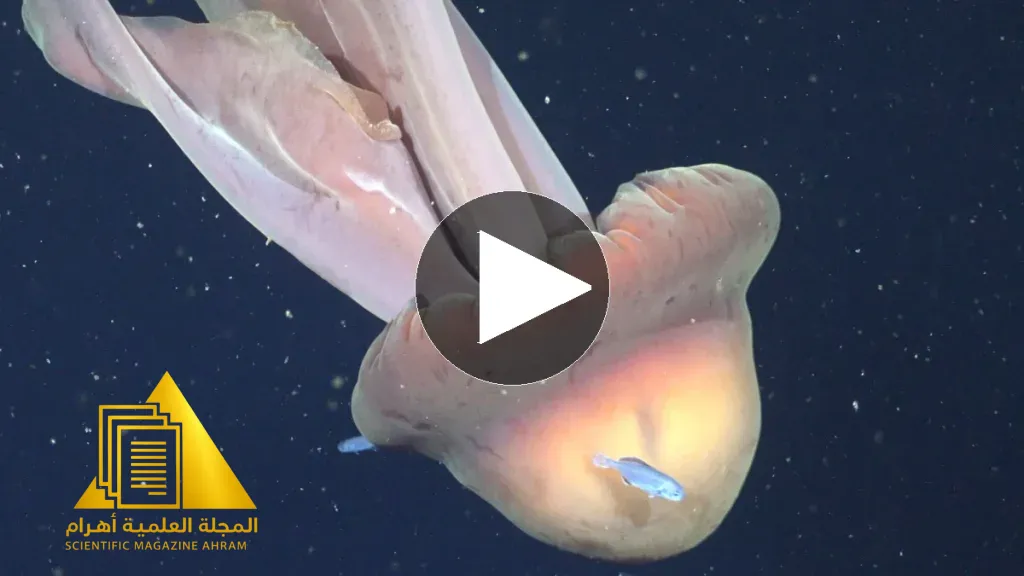

Deep-Sea Monster Emerges from the Darkness
In the abyssal depths of the ocean, where sunlight never reaches and isolation and crushing pressure reign, scientists recently captured a rare appearance of one of the most mysterious creatures: the giant phantom jellyfish. Looking much like a loose cloak drifting through dark waters, this organism ranks among the largest invertebrates in the deep sea. It possesses long, ribbon-like arms that trail meters behind it, giving it an appearance that is simultaneously ghostly and captivating.
An Unexpected Alliance for Survival
The jellyfish was not alone on this mysterious journey. Camera lenses documented a remarkable biological phenomenon as a group of small fish accompanied it. In a harsh environment teeming with predators, these fish use the phantom jellyfish as a natural shield and a mobile fortress. This type of relationship, known in biology as symbiosis or commensalism, reveals how marine creatures devise clever survival strategies in unforgiving environments. The jellyfish provides protection for the fish, while the fish clean it of parasites or food scraps.
A Window Into an Unknown World
The deep ocean is the final unknown frontier on Earth, and we continue to discover creatures within it that break our conventional rules about life. Sighting this jellyfish opens a new door for scientists to understand how creatures communicate and interact in lightless depths. These rare encounters do not only tell us about the phantom jellyfish; they also remind us that the ocean ecosystem is an integrated and complex whole, and that every creature, no matter how strange it seems, plays an important role in the delicate balance of our deep seas.
An Unsolved Mystery
Despite technological advancements in diving and sensing equipment, the phantom jellyfish remains a puzzle that baffles researchers. Its migration patterns, reproductive methods, and interactions with water currents remain largely unknown. Its reappearance gives us a valuable opportunity to reassess the size and geographical distribution of these creatures, strengthening our scientific efforts to preserve a marine biodiversity that we barely know.
By: Hany Sallam
Source: sciencealert.com


Latest video
تابع معنا تحليل قراءة الصحف اليومية مع الكاتب الصحفي Hany Sallam عبر