

By Mohamed Elamin Ahmed Elsayed

How Can the Virtual Become Reality?
Virtual Reality
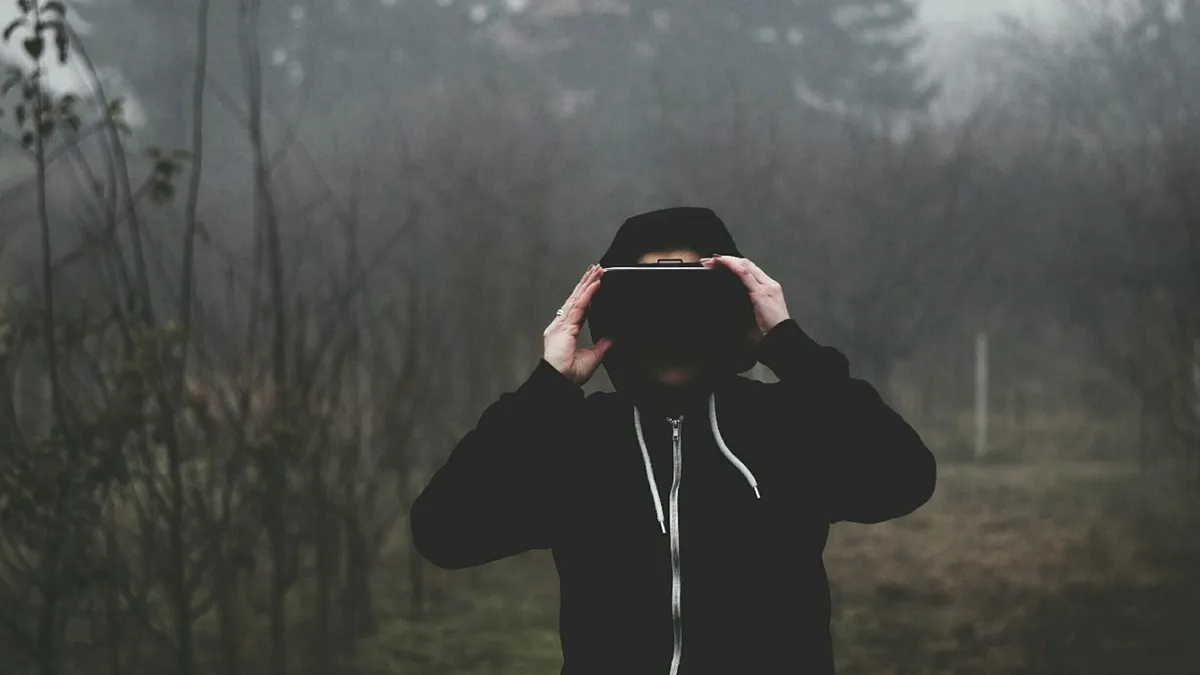
How can the virtual become reality? Answering this question really means looking at how far scientific technology has advanced and how flexible the human mind is. Virtual reality uses modern technology, including hardware and software, to transform programming code into a virtual environment that the human mind believes is real and interacts with just as it would with the physical world.
How the Human Mind Interacts with Virtual Reality

Virtual reality technology represents the most advanced form of human-computer interaction, enabling real-time engagement between users and computer-generated environments. How does this work? It is simple: the human mind functions and reacts to information and neural signals from senses such as hearing, sight, touch, and others. Modern technology works the same way by creating a three-dimensional visual environment and auditory effects that the ears hear, allowing the mind to interact with them as if they were real. The more a person’s senses are isolated from the real world, the more believable the virtual environment becomes to the mind.
Virtual Reality Is Not Just for Entertainment
This term has spread widely in recent times, and most of us associate it with entertainment technology, such as modern video games, art exhibitions you can attend from home, and international museums that use it to increase visitor numbers. However, virtual reality is a growing force that goes beyond entertainment, serving as an important tool in education, science, business management, manufacturing, medicine, and more.

Virtual Reality as a Learning Tool
Although virtual reality technologies are not new, international educational institutions have turned to using them for practical student training by creating virtual workspaces, testing student interactions, and correcting their mistakes.
Virtual Reality in Science
Many laboratories and research centers use this modern technology in their tests before moving on to real-world trials, relying on artificial intelligence to predict experimental outcomes, which cuts down the costs of failed trials significantly.
Virtual Reality in Commerce
As internet users, we find that the internet has become like a large global marketplace allowing us to shop and select numerous products and services from anywhere at any time. Through virtual reality, this experience transforms into an advanced interactive setup where users can examine products and select goods in a more realistic way.

Virtual Reality in Medicine
With massive developments in artificial intelligence and virtual reality, alongside advanced technology and necessary equipment, doctors have achieved great success in orthopedic and spine surgery. Surgeons can perform operations with greater precision and avoid human error. Science is still evolving continuously, and the use of this technology in surgery remains recent, carrying certain drawbacks and challenges because systems cannot effectively simulate physical touch, which is vital for surgeons.
The Expected Future of Virtual Reality
Although these technologies are not new, their potential applications extend far beyond their current uses. If we imagine for a moment that we live in a more advanced world, the virtual world will surround us in all our daily activities, as technology scientists predict. Yet the virtual world and sensory deception cannot actually replicate our real environment and real senses. No matter how successfully computers trick sight and the senses, reality remains reality and the virtual remains virtual.

References
Castiblanco Jimenez, I.A.; Cepeda García, L.C.; Violante, M.G.; Marcolin, F.; Vezzetti, E. (2021). Commonly Used External TAM Variables in e-Learning, Agriculture and Virtual Reality Applications. Future Internet 2021, 13, 7. https://doi.org/10.3390/fi13010007.
Hamid Ghaednia, PhDᵃ,ᵇ, *; Mitchell S. Fourman, MD, MPhilᵃ,ᵇ; Amanda Lans, MD, MSᵃ; Kelsey Detels, BScᶜ; Hidde Dijkstra, BScᶜ,ᵈ; Sophie Lloyd, BScᶜ; Allison Sweeney, BScᶜ; Jacobien H.F. Oosterhoff, MDᵃ; Joseph H. Schwab, MD, MSᵃ,ᵇ (2021). Augmented and virtual reality in spine surgery, current applications and future potentials. Future Internet 2021, Published: March 24, 2021. DOI: https://doi.org/10.1016/j.spinee.2021.03.018PlumX
Anouk de Regt and Stuart J. Barnes (2019). V-Commerce in Retail: Nature and Potential Impact. https://link.springer.com/book/10.1007/978-3-030-06246-0
Jocelyn Parong¹,² | Richard E. Mayer¹ (2020). Cognitive and affective processes for learning science in immersive virtual reality. The peer review history for this article is available at https://publons.com/publon/10.1111/jcal.12482.
Morimoto, T.; Kobayashi, T.; Hirata, H.; Otani, K.; Sugimoto, M.; Tsukamoto, M.; Yoshihara, T.; Ueno, M.; Mawatari, M. XR (Extended Reality: Virtual Reality, Augmented Reality, Mixed Reality) Technology in Spine Medicine: Status Quo and Quo Vadis. J. Clin. Med. 2022, 11, 470. https://doi.org/10.3390/jcm11020470
Hui, J.; Zhou, Y.; Oubibi, M.; Di, W.; Zhang, L.; Zhang, S. Research on Art Teaching Practice Supported by Virtual Reality (VR) Technology in the Primary Schools. Sustainability 2022, 14, 1246. https://doi.org/10.3390/su14031246


Latest video
تابع معنا تحليل قراءة الصحف اليومية مع الكاتب الصحفي Hany Sallam عبر