
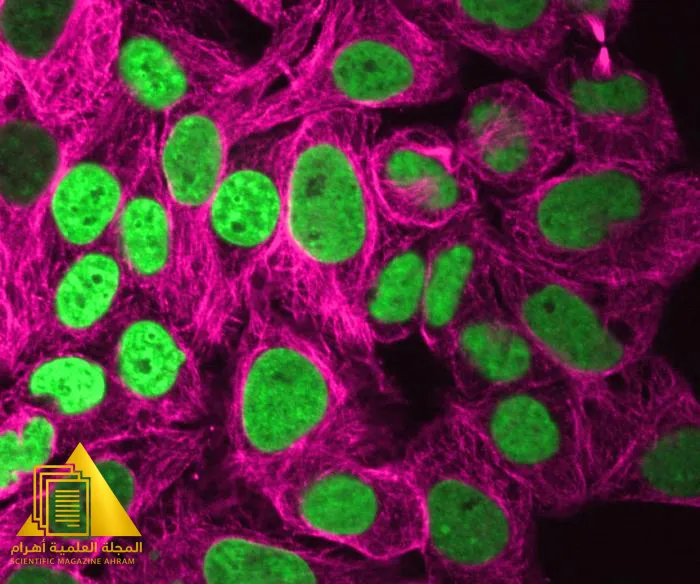

A Journey into the Depths of Our Genetic Code in Space
The dream of exploring distant planets has long faced a central challenge no less important than building rockets: protecting the human body from the harsh space environment. A pioneering scientific study recently published in the journal Science Advances has revealed new secrets about how DNA responds to long-term residence in a microgravity environment, opening new horizons for understanding the health risks astronauts face on future missions to Mars and beyond.
The Impact of Microgravity at the Cellular Level
Research indicates that the transition from Earth’s gravity to near-weightlessness places human cells under unprecedented biological stress. When astronauts spend long periods on the International Space Station, their bodies begin to adapt to strange conditions, but this adaptation comes with a genetic toll. Scientists observed that gene expression inside cells changes noticeably, as certain genes are activated while others are suppressed, leading to alterations in immune functions and DNA repair processes—a natural defensive response to try to survive in an environment where our bodies do not belong.
The Biggest Challenge: DNA Repair
One of the most striking discoveries is the impact of accumulated space radiation combined with microgravity on DNA integrity. The results indicate that the natural ability of cells to repair breaks in DNA strands may be adversely affected over time. This not only causes disruption to daily biological processes, but also raises serious questions about an increased likelihood of genetic mutations that could elevate the risks of chronic diseases upon returning to Earth. Despite the body’s remarkable ability to recover after return, understanding these changes remains a fundamental pillar for designing more efficient protection systems for long-duration spaceflights.
Toward a Safer Future in Space
This research is not merely a theoretical exploration, but a technical and medical roadmap. By identifying the genes most affected by space stress, scientists can develop dietary supplements or preventive medications that help protect astronauts at the molecular level. Our understanding of how DNA interacts with space will ultimately determine our ability as a human species to transform into a multi-planetary species and ensure astronauts remain healthy during their journeys that may last for years.
By: Hany Sallam
Source: universetoday.com


Latest video
تابع معنا تحليل قراءة الصحف اليومية مع الكاتب الصحفي Hany Sallam عبر