
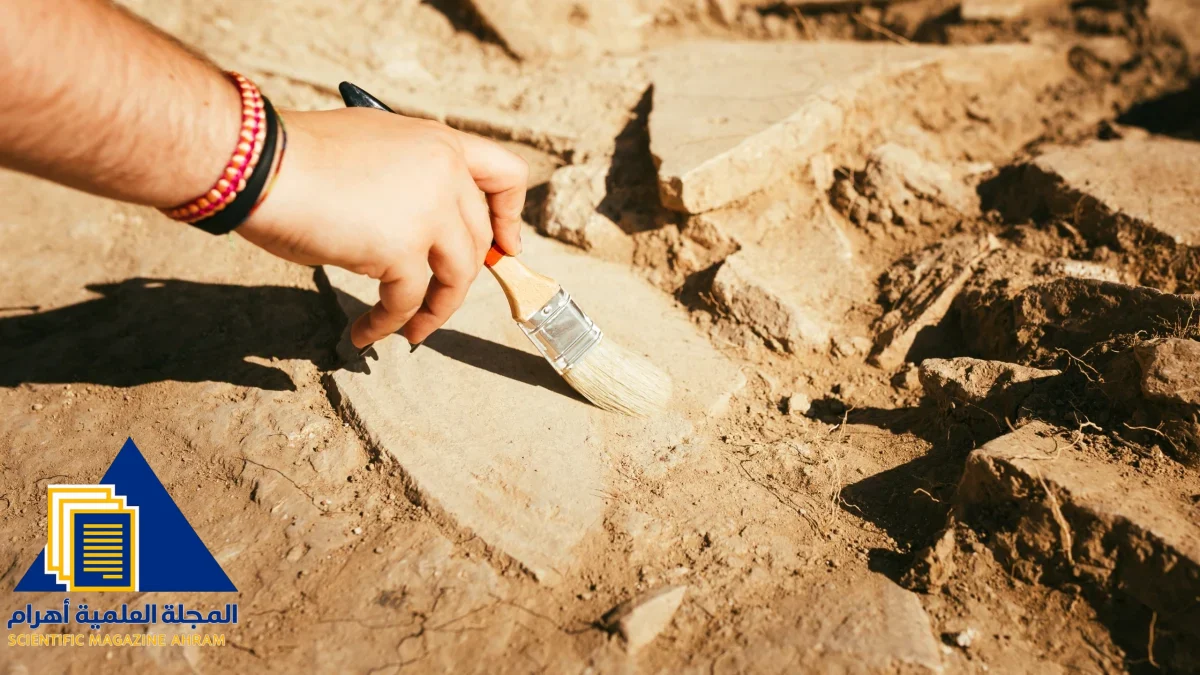

The Forgotten Footprints of History in Cave Soil
Scientists have long believed that studying human genetic history depends exclusively on finding complete human fossils, such as bones and teeth. Yet incredible advances in modern genetics have proven that the past can leave its mark in the simplest of places. Recently, an international research team achieved an unprecedented scientific breakthrough by extracting ancient human DNA—dating back about 22,000 years—from mere specks of dirt and cave dust.
How Scientists Caught Genes from Rocks
Soil is not just dirt; it carries silent records of what happened in a place over thousands of years. When ancient humans inhabited caves, they left behind shed microscopic cells, sweat, and biological traces that gradually mixed with the earth’s soil. Using extremely precise and sensitive laboratory techniques, scientists managed to separate this degraded DNA from mineral particles and read it with remarkable accuracy despite the passage of tens of thousands of years.
A New Window into Human Secrets
This revolutionary technique opens up broad horizons that were previously unimaginable. Many caves and important archaeological sites are completely devoid of human bone remains, which used to prevent scientists from knowing who inhabited them. Now, cave soil can tell the complete story and answer lingering questions about the migration and interactions of ancient human lineages, without the need to search for a needle in a haystack at traditional archaeological sites.
By: Hany Sallam
Source: sciencealert.com


Latest video
تابع معنا تحليل قراءة الصحف اليومية مع الكاتب الصحفي Hany Sallam عبر