
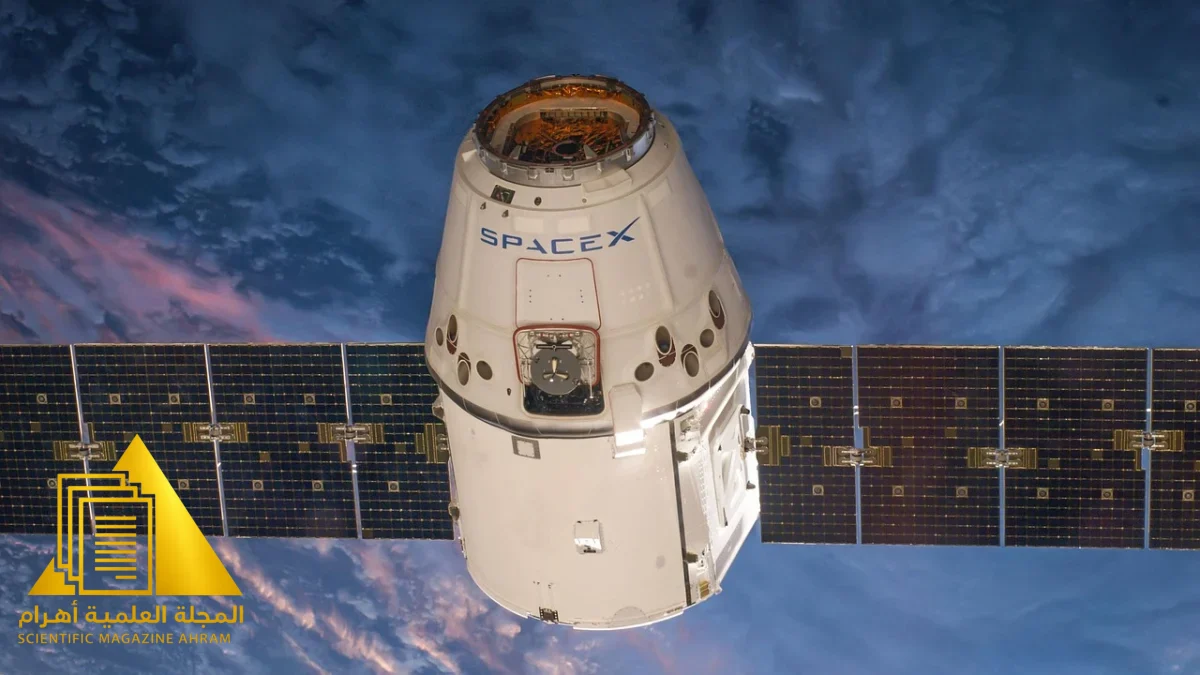

Invasion of Orbit: A Technological Revolution or an Environmental Catastrophe?
In a fierce race to dominate internet and space data services, technology companies are putting forward ambitious plans to launch massive constellations of satellites, which could reach one million in Earth’s orbits. Despite the clear benefits of this expansion in communications, a recent scientific study has sounded the alarm, warning that these plans may lead to unprecedented environmental repercussions in our planet’s upper atmosphere.
Metal Pollution: Phantoms in the Sky
These satellites rely on a relatively short lifespan, meaning thousands of satellites will periodically enter the atmosphere to burn up and disintegrate at the end of their service. This process is not merely the evaporation of metal; it is the release of microscopic metal particles into the upper atmospheric layers. Scientific estimates indicate that launching one million satellites could raise molecular pollution rates in these sensitive layers to more than 100 times current natural levels, raising serious questions about the long-term impacts on the chemical balance of the atmosphere.
Invisible Risks in the Upper Layers
What worries scientists is that these particles resulting from satellite combustion are not inert; rather, they may react with chemical compounds in the upper atmosphere. While our attention is usually focused on surface pollution and climate change, the upper atmosphere plays a vital role in protecting Earth from harmful cosmic radiation. The accumulation of metal oxides resulting from this massive mass of debris may alter the nature of these layers, and may affect their ability to reflect or absorb rays, which could create unexpected disruptions in the global climate.
Toward a Sustainable Balance
This does not necessarily mean stopping space exploration or developing communication technologies, but it invites us to think seriously about the “environmental cost” of innovation. The upcoming challenge lies in inventing eco-friendly, recyclable satellites, or developing strategies to decommission these satellites without leaving chemical traces in the atmosphere. Earth is not merely a platform for digital services; it is an integrated ecosystem whose protection begins from the upper atmospheric layers down to the depths of the oceans.
By: Hany Sallam
Source: scientificamerican.com


Latest video
تابع معنا تحليل قراءة الصحف اليومية مع الكاتب الصحفي Hany Sallam عبر