


Meta’s New Virtual Reality Headset

By: Ayman Shaban
Mobile Software Designer
The business-focused headset, arriving on October 25, blends virtual reality and augmented reality with eye and face tracking.
Meta’s new virtual reality headset costs $1,500. For anyone accustomed to spending $300 to $400 on the Meta Quest 2 as an entry ticket to the metaverse, this may come as a shock.
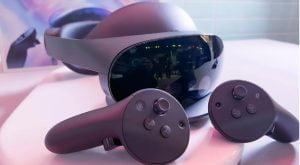
The Meta Quest Pro arrives, having been announced at the Meta Connect conference on Tuesday, October 25.
In fact, after using it for about an hour or two, it reminded me more of the professional-grade Microsoft HoloLens 2 than any consumer VR headset I have ever worn. And while its price seems expensive at first, it falls within the range where AR and VR headsets sit anyway.

The Quest Pro remains a fully standalone VR headset just like the Quest 2, but its capabilities extend to scanning the real world using cameras and depth sensors and overlaying it with virtual objects. The mixed reality experience it creates feels like the augmented reality experiences created by Magic Leap and HoloLens, but instead of using see-through lenses with 3D ghost images on top, it displays full-color video of the world around you on its screen, with VR added to the mix.
The Quest 2 headset has some of these capabilities too, but with a grainier black-and-white camera. The new controllers are smaller, have better capabilities, and promise more reliable tracking—and they also have their own cameras now.

The Pro also features a more powerful processor—the new Qualcomm Snapdragon XR2 Plus, which promises up to 50% more performance power than the Quest 2—and inside-out eye and face tracking. Meta plans to use these features for both enhanced graphics over time and creating more emotionally engaging VR avatars that can smile, frown, or make true eye contact. This will not be the last headset to do mixed reality like this. Qualcomm stated in a release that upcoming headsets this year will also use the XR2 Plus platform.
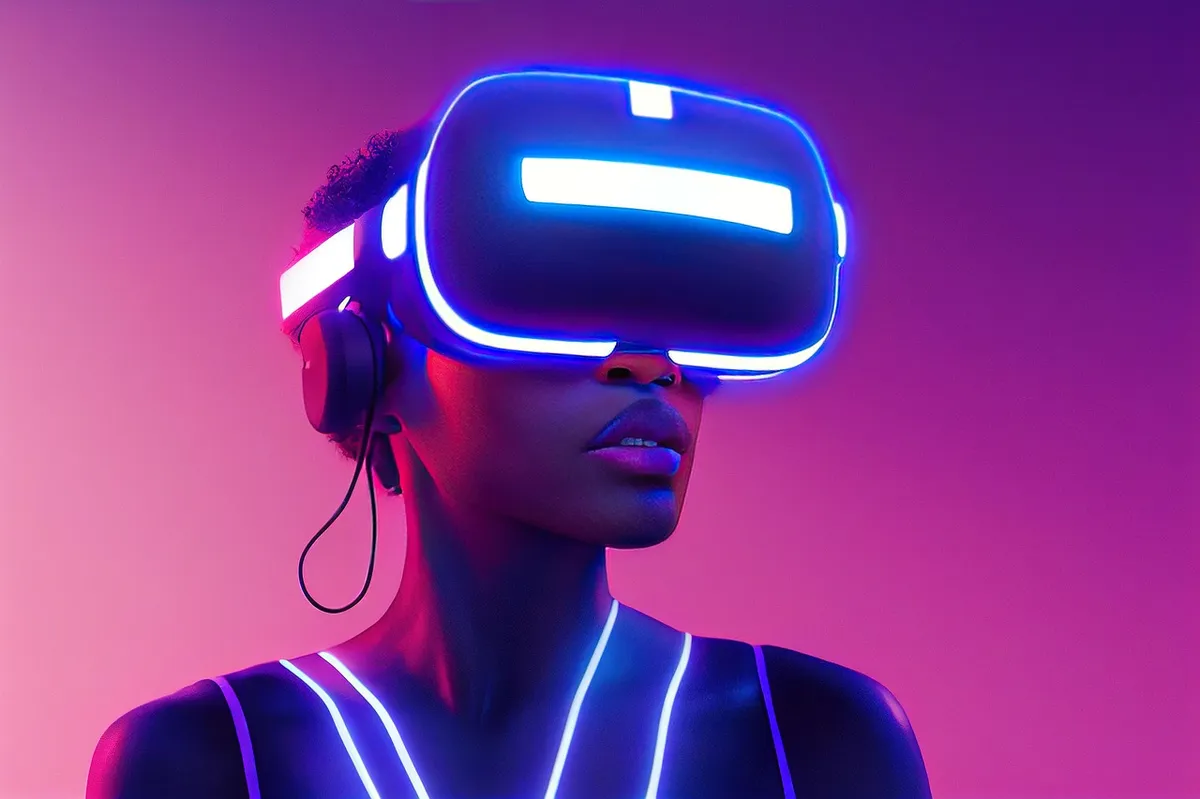
As I shifted the less bulky headset onto my face, I immediately realized it fit my glasses perfectly. Also, the outside world was not blocked from my peripheral vision, even when I saw virtual objects, rendered in VR, placed on top of the world around me. It was like the augmented reality experiences you have on a phone, but in full three dimensions. I could reach out and move things using the Pro’s upgraded controllers. When one of my demos ended, someone near me said, “Welcome back.” But the funny thing is that with the Quest Pro’s mixed reality, I feel like I never left the room. Instead of being transported to virtual places, the virtual objects came to me.

While Meta dreams of carrying everyone into a billion-person metaverse that looks like the future of computing, current VR headsets have limits to their usefulness, as they block out the outside world. Reaching everyday AR glasses is the ultimate goal, but for now, the Quest Pro is a bridge that begins to bring augmented reality into a Meta headset while keeping virtual reality in the mix. However, this type of $1,500 device is not looking to bring in everyday consumers. Instead, it aims to capture the business and research market that has, up to this point, been the domain of companies like HTC, Microsoft, and Magic Leap.
Sources:


Latest video
تابع معنا تحليل قراءة الصحف اليومية مع الكاتب الصحفي Hany Sallam عبر