
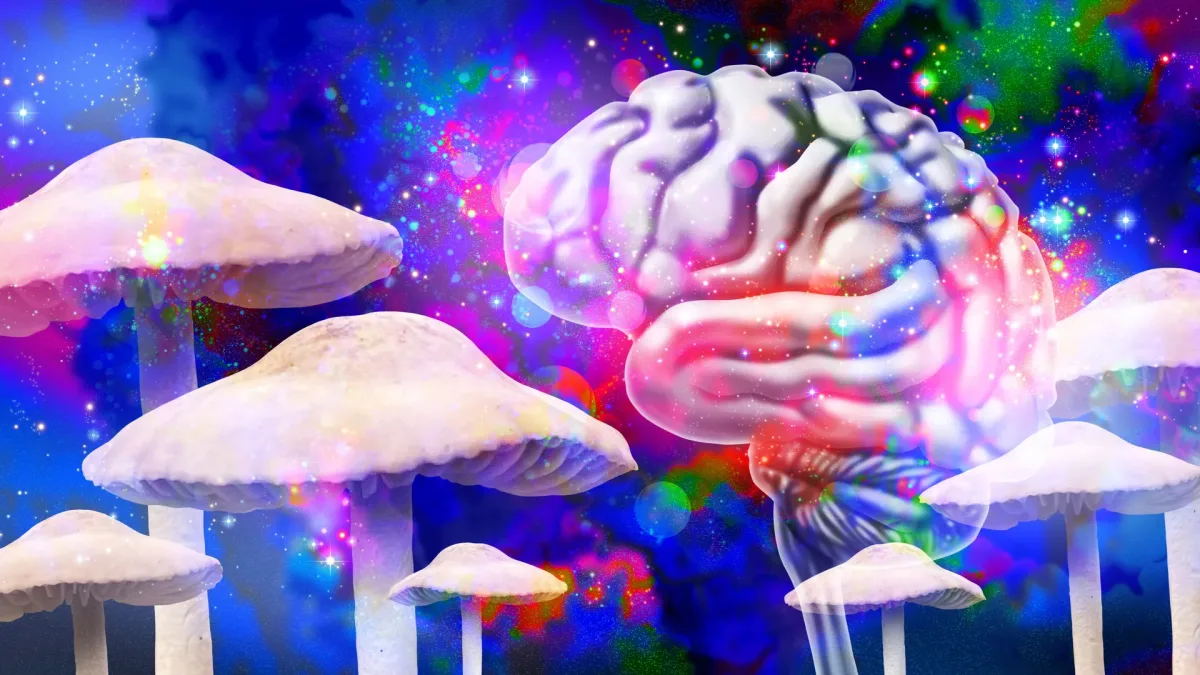

A New Window Into Brain Plasticity
Have you ever considered that a natural substance could redraw the maps of our thinking? Recent scientific discoveries place psilocybin—the active compound in magic mushrooms—before us not merely as a controversial substance, but as a biological tool that may hold the ability to reshape the structure and activity of the human brain. Rather than having a fleeting, temporary effect, studies indicate that a single dose can leave functional imprints that last for many weeks.
Breaking Free From Rigid Mental Patterns
The significance of these findings lies in their ability to explain why recovering individuals or participants in clinical trials experience a psychological “awakening.” During the experiment, the brain was observed stepping away from its strict routine patterns, becoming more flexible and diverse in its activity. This neural openness allows individuals to break repetitive or depressive thought loops that often take hold of the mind, opening the way for new personal insights and a deeper understanding of the self.
From Activity to Structural Transformation
What is truly striking is that these changes are not merely a temporary emotional state, but extend to shifts in the structure of the brain itself. Data showed that participants who displayed the greatest degree of flexibility in their brain activity after taking the substance were the ones who achieved the most tangible improvements in their long-term mental health. This indicates that the brain possesses a latent capacity for a “reset,” as these compounds help stimulate new neural pathways that were dormant or restricted.
New Hope in Psychotherapy
Of course, the road ahead remains long before we fully understand the mechanisms by which these compounds work, but the results open a wide door for the future of psychological treatments. The goal here is not to seek an exceptional experience, but to harness this neuroplasticity to help people suffering from chronic psychological disorders by freeing their minds from the prisons of old thought patterns. We are on the cusp of a new understanding of the brain—not as a fixed organ, but as a dynamic entity capable of transformation and recovery if it finds the right chemical key.
By: Hany Sallam
Source: ScienceDaily


Latest video
تابع معنا تحليل قراءة الصحف اليومية مع الكاتب الصحفي Hany Sallam عبر