
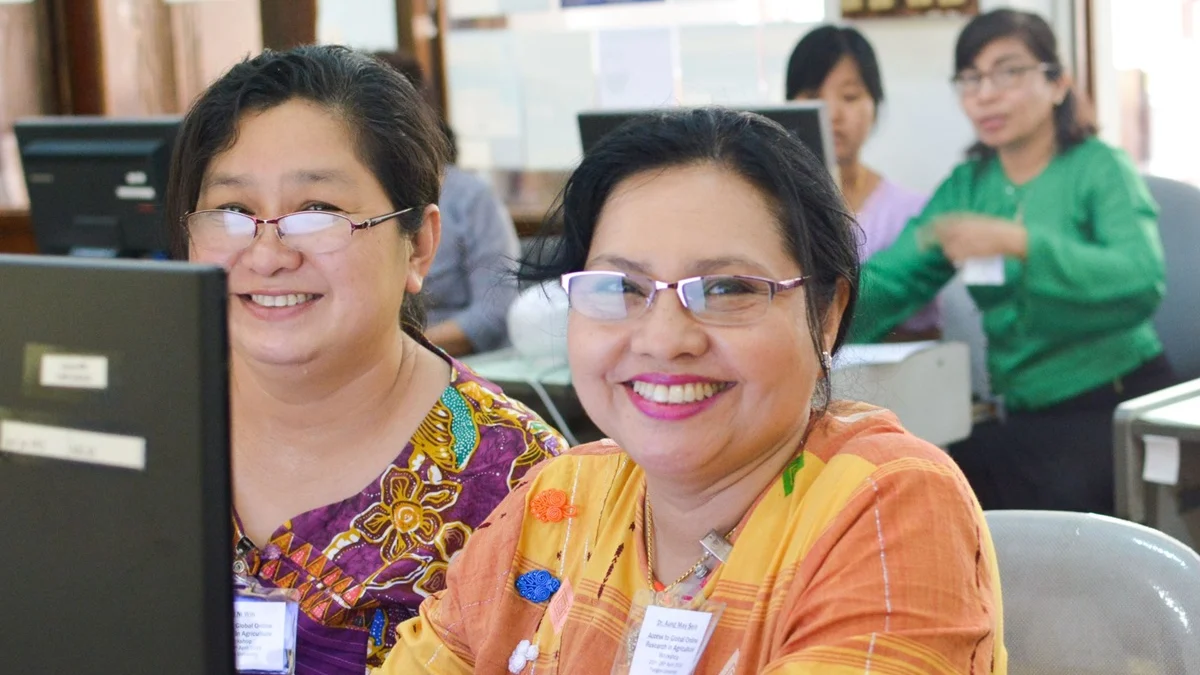

A Quarter Century of Knowledge Democracy
Over the past 25 years, the World Health Organization has led a quiet revolution in the world of scientific research through the Research4Life initiative. This was not merely a partnership, but a bridge that allowed thousands of researchers in developing and poor countries to cross the high-cost barriers that once barred them from accessing the latest international scientific studies and journals. Today, we celebrate a journey that has made knowledge a shared right rather than a privilege reserved for wealthy institutions.
Transcending Geographical and Economic Boundaries
The knowledge gap was one of the greatest challenges facing health systems in more than 120 countries. While researchers in developed countries drank deep from the oceans of science, their counterparts in the developing world suffered from a lack of resources and prohibitively expensive scientific subscriptions. The Research4Life initiative changed this equation, enabling universities, hospitals, and research institutions to access thousands of scientific journals and e-books for free or at a nominal cost. This has enhanced the ability of these experts to confront epidemics and develop local health solutions based on the latest scientific theories.
More Than Just Access to Information
The impact of the initiative is not limited to providing article reading alone, but extends to supporting decision-makers and frontline physicians. When a doctor in a remote area is armed with the latest treatment protocols published in major international journals, the result is saved patient lives and improved quality of health care. It is the democracy of science that ensures research does not remain trapped inside major laboratories, but moves out to serve the most needy communities.
A Promising Future with Open Data
As a quarter century passes since its launch, this initiative remains a living model of what public-private cooperation can achieve. The future requires the sustainability of these partnerships to ensure that no one is left behind in the march of scientific progress. As we look forward to the coming decades, the goal remains constant: building an equal global scientific community where knowledge is the primary key to eradicating disease and achieving health equity for all, regardless of geographic location or financial capability.
By: Hany Sallam
Source: WHO


Latest video
تابع معنا تحليل قراءة الصحف اليومية مع الكاتب الصحفي Hany Sallam عبر