

By:
Prof. Dr. Zainab Attia Nagdy
Emeritus Research Professor, Central Laboratory for Aquaculture Research
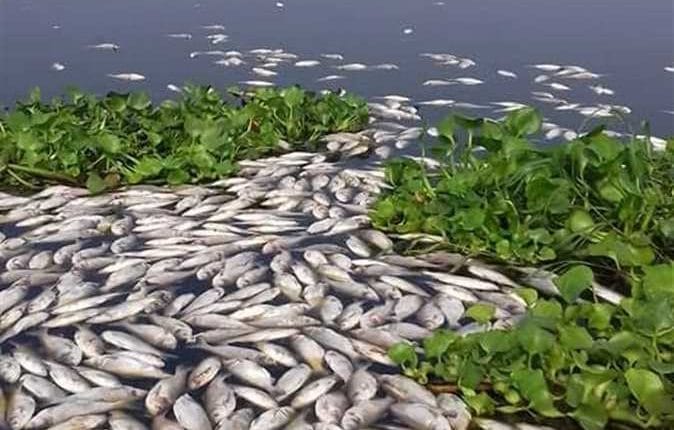
□ Ammonia is toxic to fish if allowed to accumulate in fish production systems.
– When ammonia accumulates to toxic levels, fish cannot extract energy from feed efficiently.
– If the ammonia concentration rises high enough, fish become lethargic, enter a coma, and eventually die.
□ Effects of pH and Temperature on Ammonia Toxicity
Ammonia in water exists either as un-ionized ammonia (NH3) or as the ammonium ion (NH4+).
– Techniques used to measure ammonia yield a value equal to the sum of both forms, evaluated as “total ammonia” or simply “ammonia.”
– The relative proportion of the two forms present in water is affected by several factors:
• pH primarily. Un-ionized ammonia is the toxic form and predominates when the pH is high. The ammonium ion is relatively nontoxic and predominates when the pH is low. Generally, less than 10% of the ammonia is in the toxic form when the pH is below 8.0. This proportion increases sharply as the pH increases (Figure 1).
– In ponds, pH fluctuates with photosynthesis (which raises pH) and respiration (which lowers pH) by pond organisms. Therefore, the toxic form of ammonia predominates during the afternoon and early evening (Figure 2), while ammonium predominates from before sunrise until early morning.
• Temperature. The balance between NH3 and NH4+ is also affected by temperature. At any given pH level, a larger amount of toxic ammonia is present in warm water compared to cold water (Figure 1).



Latest video
تابع معنا تحليل قراءة الصحف اليومية مع الكاتب الصحفي Hany Sallam عبر