
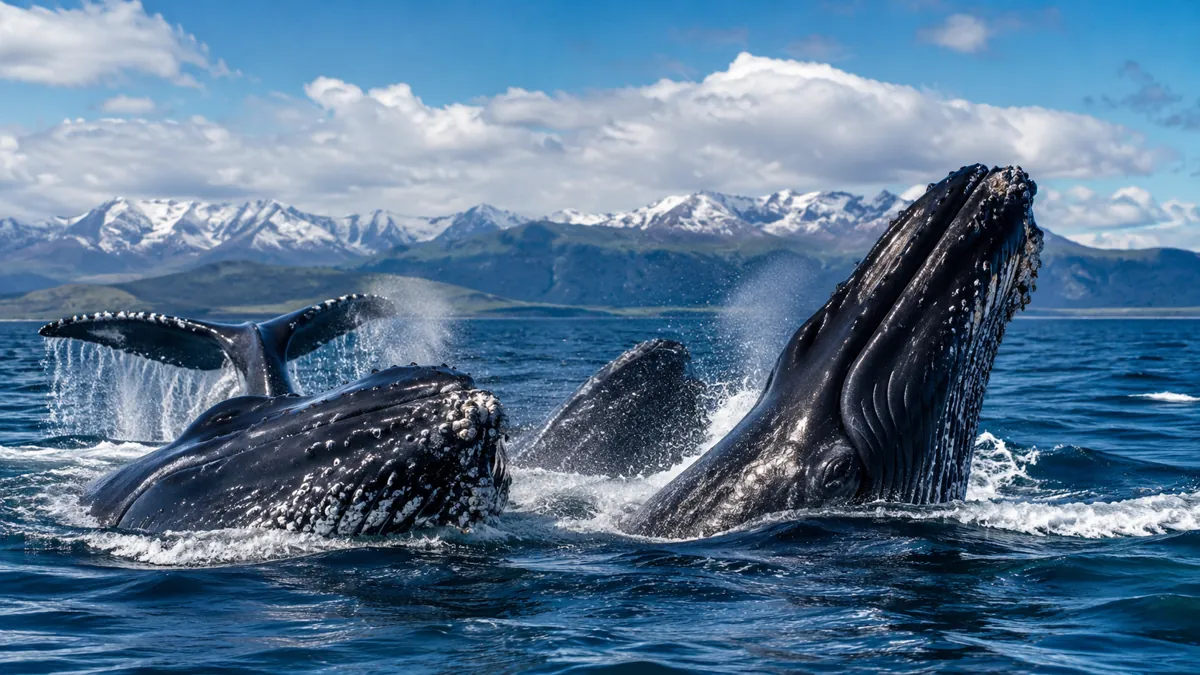

Marine researchers in Japan have documented unusual behavior among a group of humpback whales during their seasonal migration near the northern Pacific coasts, a phenomenon that has drawn the interest of marine biologists over recent days.
Scientists explained that the whales exhibited a rare collective pattern while swimming and feeding, moving in coordinated circular formations for extended periods in a manner not previously recorded in this region in this form.
Monitoring Lasting Several Days
The research team tracked the whales using drones and underwater acoustic tracking devices after local fishermen noticed unfamiliar movements near the coast of Hokkaido, Japan.
Scientists also recorded marine sounds and frequencies that differed from the usual patterns known for humpback whales, prompting researchers to expand the study to understand the reasons behind this behavior.
Why Are Scientists Interested in This Discovery?
Marine biologists believe that the whales may have developed this collective behavior to communicate or to protect their calves during migration, especially with the increase in marine noise and environmental changes in the oceans.
Some researchers also think that rising water temperatures and changes in fish movement may affect the traditional migration routes of whales, which may drive them toward new behavioral patterns.
Global Interest in Marine Life
The behavior of humpback whales receives wide attention within the scientific community because these creatures are among the most intelligent and complex marine mammals in communication.
In recent years, research related to whales has expanded to understand the impact of climate change and marine pollution on these giant creatures in the oceans.
Calls to Protect Whales
Marine environmental experts have demanded increased monitoring of commercial vessels and a reduction in underwater noise in key migration areas, because whales rely heavily on sound for communication and navigation.
Researchers have also called for strengthening marine life protection programs in the Pacific Ocean amid growing environmental risks threatening giant marine organisms.
Hany Sallam


Latest video
تابع معنا تحليل قراءة الصحف اليومية مع الكاتب الصحفي Hany Sallam عبر