
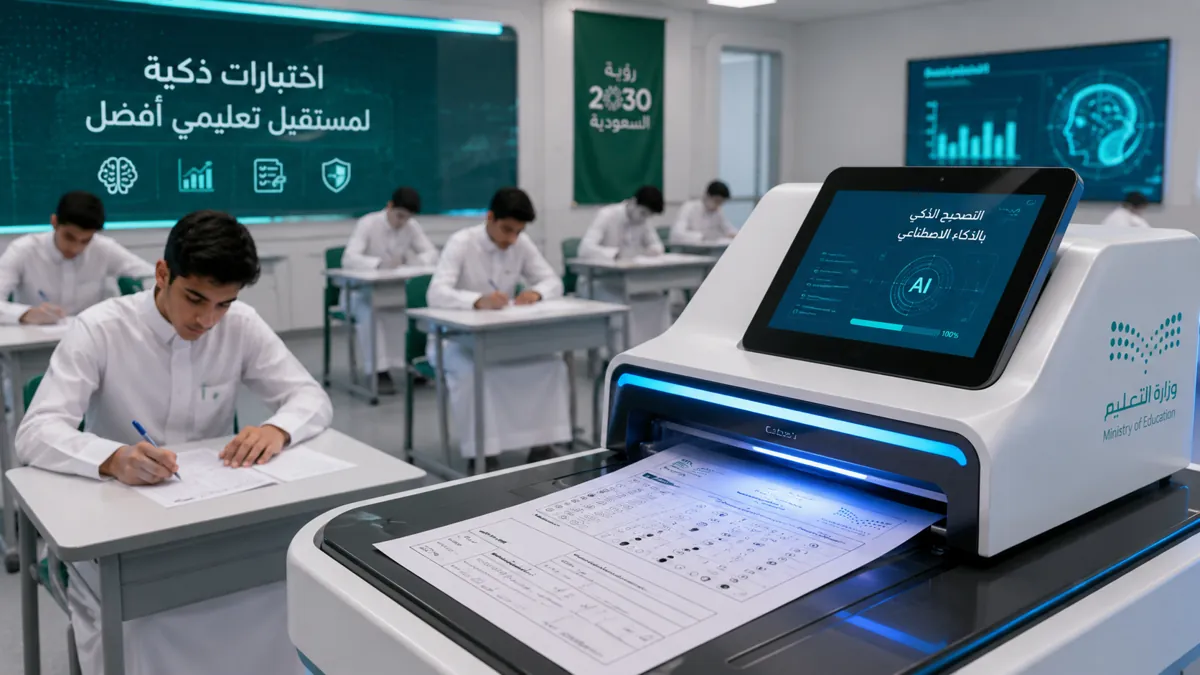

Educational authorities in Saudi Arabia have begun expanding the use of AI-powered smart grading systems in a number of educational tests, in a move aimed at speeding up the announcement of results and reducing human error.
This step coincides with the final exam season, as the new systems rely on response analysis technologies and accurate digital score recording.
How Do Smart Grading Systems Work?
Modern systems rely on algorithms capable of:
Reading answer sheets
Analyzing data
Detecting errors
Reviewing scores very quickly
These technologies also help reduce the time required to grade thousands of tests compared to traditional methods.
At the same time, educational authorities confirm that teachers still supervise final review processes to ensure result accuracy.
Reducing Pressure During Exams
Specialists believe that using smart grading may ease pressure on schools and teachers during exam seasons, especially with large student numbers.
The new systems may also help to:
Speed up the release of results
Reduce error rates
Improve data archiving
Raise the efficiency of the educational process
Digital Transformation in Saudi Education
Saudi Arabia has seen an expansion in the use of technology within the education sector in recent years, particularly in the areas of:
Digital testing
Educational platforms
Artificial intelligence
Educational analysis
This comes within plans to develop education and support digital transformation in various educational institutions.
Growing Interest in Educational Technologies
Education experts expect the future to see a greater expansion in the use of AI systems within exams and academic assessment.
Specialists also believe that modern technologies may help develop the experience of students and teachers and improve the efficiency of exam management over the long term.
Hany Sallam


Latest video
تابع معنا تحليل قراءة الصحف اليومية مع الكاتب الصحفي Hany Sallam عبر