
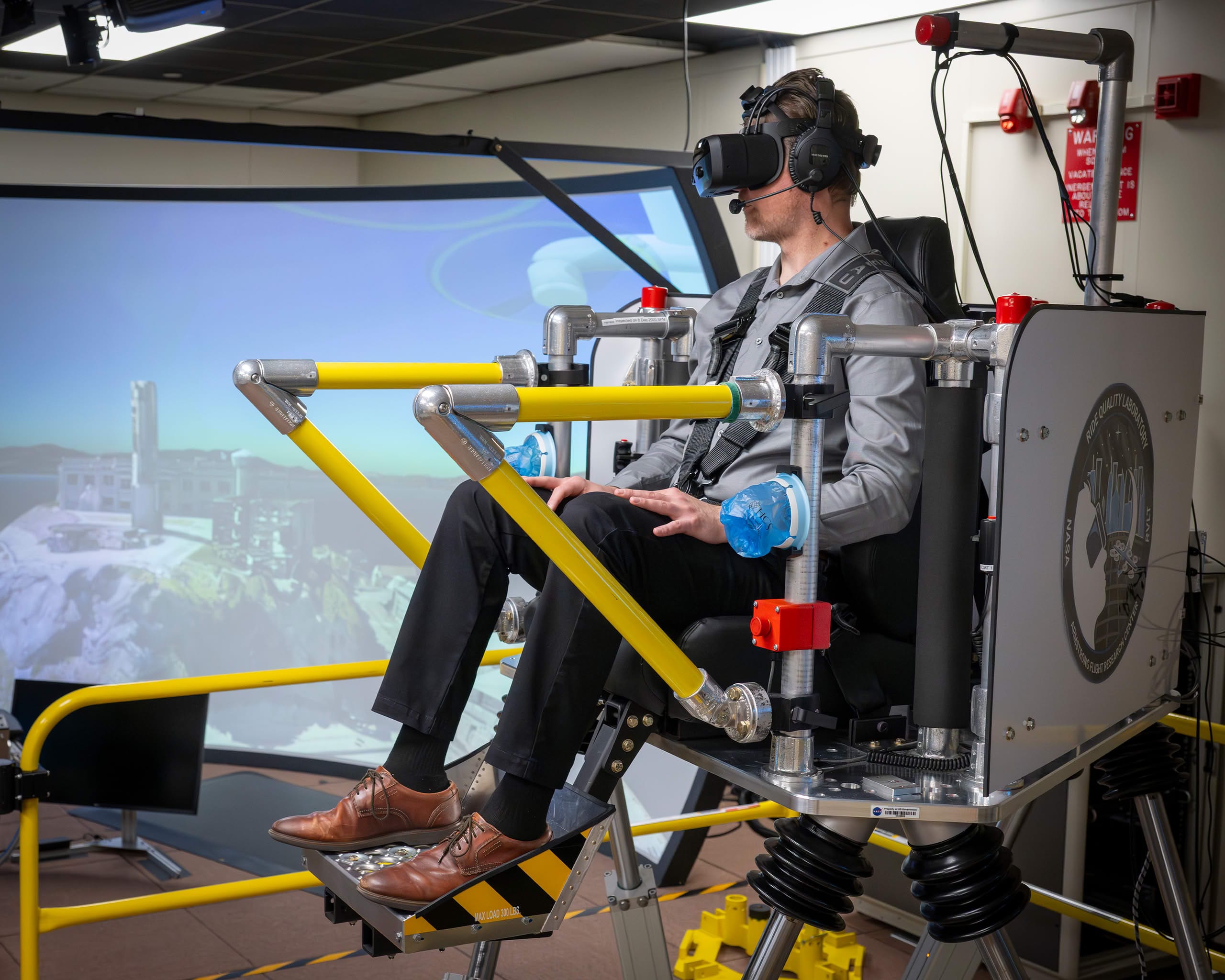

In its relentless pursuit of shaping the future, NASA is laying the groundwork for a new era in sustainable urban transport. As the “flying taxi” moves from a mere idea in science fiction to a tangible reality soon gracing our skies, a fundamental hurdle emerges that goes beyond the bounds of mechanical engineering and flight: passenger comfort. No one wants to board a vehicle that induces anxiety, dizziness, or stress, and this is where innovative scientific research comes in to ensure smooth, safe journeys suited for everyone.
The Urban Mobility Revolution and the Challenge of Public Acceptance
The electric vertical takeoff and landing (eVTOL) aircraft industry, commercially known as the flying taxi, is witnessing rapid growth and billions of dollars in investments. These small vehicles designed for short trips promise to end the era of suffocating traffic crises in major cities and cut travel time in an unprecedented way. However, NASA experts emphasize that the commercial success of this technology depends not only on the efficiency of electric motors or battery power, but primarily on the public’s psychological and physical acceptance and trust in experiencing unique vertical flight.
The NASA Equation: How Comfort Connects to the “Desire to Fly”
A recent NASA study focused on decoding the deep relationship between different comfort levels and consumers’ readiness to adopt the flying taxi as an essential means of transport. By analyzing passengers’ physiological and psychological responses to flight variables such as sudden vibrations, cabin noise levels, and acceleration forces during takeoff and landing, researchers were able to identify the critical points that separate an enjoyable flight from an upsetting one. This precise data will help manufacturing companies design cabins that effectively insulate sound and minimize the impact of motion turbulence.
Drafting New Standards for the Future of Aviation
This study sets new standards that allow the emerging aviation sector to plan flight routes with extreme precision, choosing altitudes and maneuvering speeds that ensure vehicle stability. The ultimate goal is not merely to transport passengers from point to point quickly, but to deliver a travel experience that surpasses traditional cars in comfort and smoothness. With these research efforts combining, we appear to be stepping steadily toward an era where comfort merges with advanced technology high in the sky.
Source: NASA


Latest video
تابع معنا تحليل قراءة الصحف اليومية مع الكاتب الصحفي Hany Sallam عبر