
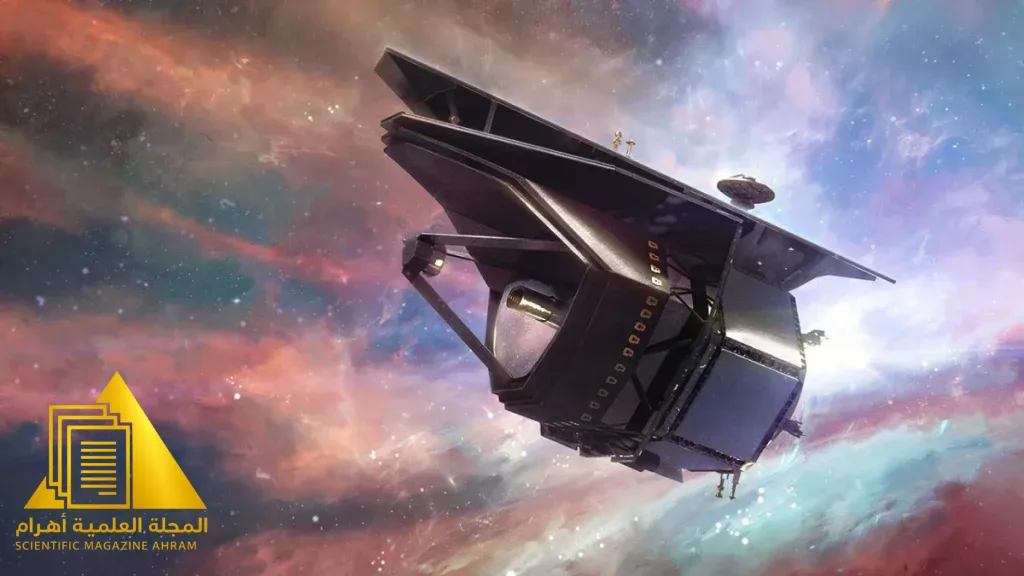

A New Window Into the Secrets of the Universe
In a historic step that opens unprecedented horizons for astronomy, NASA has announced the selection of the PRobe Infrared Mission for Astrophysics (PRIMA) observatory to lead the new generation of space missions. This observatory is not merely an ordinary telescope; it is the first embodiment of an innovative class of NASA missions known as probe explorers, which aim to bridge the knowledge gaps left by current telescopes, giving scientists more precise tools to explore the depths of space.
Why Far-Infrared Light?
The power of PRIMA lies in its exceptional ability to observe far-infrared light. Unlike visible light, which we see with our eyes, this light can pierce dense clouds of cosmic dust that block nascent stars and galaxies from our traditional telescopes. Thanks to this technology, scientists will be able to monitor the cosmic kitchens where stars are born and planets take shape, giving us a clearer view of how the universe has evolved over billions of years.
What Awaits Us in the Depths of Space?
The PRIMA project aims to uncover the hidden mechanisms of complex cosmic processes that have long remained a mystery. By studying cosmic dust and cold gases, the observatory will provide vital data on how massive black holes grow at the centers of galaxies, and how galaxies themselves evolve across cosmic time. We are on the path to scientific answers about the origin of the fundamental chemical components of life, which were forged deep within distant stars.
A Scientific Legacy in a New Guise
This observatory falls under NASA’s renowned Explorers program, yet it represents a qualitative leap in design and technology. As its launch date arrives, we will have a highly sophisticated scientific tool—not as massive as giant telescopes, but specialized and incredibly efficient. We stand on the threshold of a new golden era for astronomy, where what is impossible to see today will become a tangible reality tomorrow thanks to PRIMA.
By: Hany Sallam
Source: nasa.gov


Latest video
تابع معنا تحليل قراءة الصحف اليومية مع الكاتب الصحفي Hany Sallam عبر