

A New Era for Space Maintenance: Robots Extend the Lifespan of Satellites
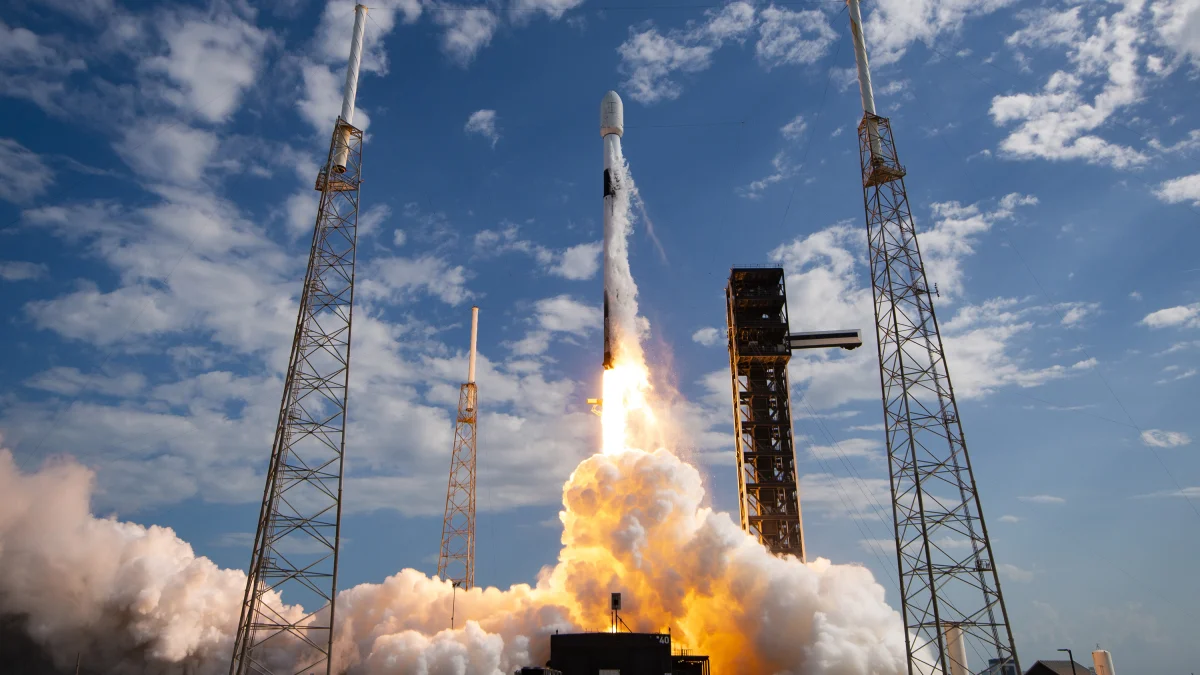
Cape Canaveral witnessed a milestone in the history of space exploration with the launch of a revolutionary robotic mission aboard a Falcon 9 rocket. This mission is not just an ordinary flight, but a strategic step aimed at changing the rules of the game in how we handle the space infrastructure orbiting our planet. The Mission Robotic Vehicle (MRV) carries advanced technologies capable of performing precise maintenance operations on satellites in their orbits.
Farewell to the Satellite Graveyard
Satellites have long suffered from reaching the “end of their operational lifespan.” Once their fuel runs out or a minor technical glitch occurs, these multibillion-dollar devices turn into mere space junk drifting in orbit. However, this innovative mission arrives to end that era. Equipped with precise arms, the robots inspect satellites, refuel them, and even repair mechanical faults, securing the continuity of communication, navigation, and climate monitoring services for many additional years.
Robotics Technology at the Service of Geostationary Orbit
The mission primarily targets geostationary Earth orbit (GEO), home to the most critical satellites. The use of artificial intelligence and remote control technologies enables engineers to perform delicate tasks requiring extreme precision—something previously considered science fiction. This technology is not limited to maintenance, but also paves the way for establishing integrated space service stations, reducing the volume of space debris and saving billions of dollars that used to be spent on launching new replacement satellites.
Toward a Sustainable Space Economy
The success of this mission opens the door to a “sustainable space economy.” Instead of periodically launching new satellites, we will be able to upgrade technology already present in space. This approach reflects a new vision for the future of space, transforming Earth orbits from mere flight paths into an interactive work environment subject to continuous maintenance. This enhances our ability to understand the universe and benefit from its technologies without wasting resources.
By: Hany Sallam
Source: NASA


Latest video
تابع معنا تحليل قراءة الصحف اليومية مع الكاتب الصحفي Hany Sallam عبر