
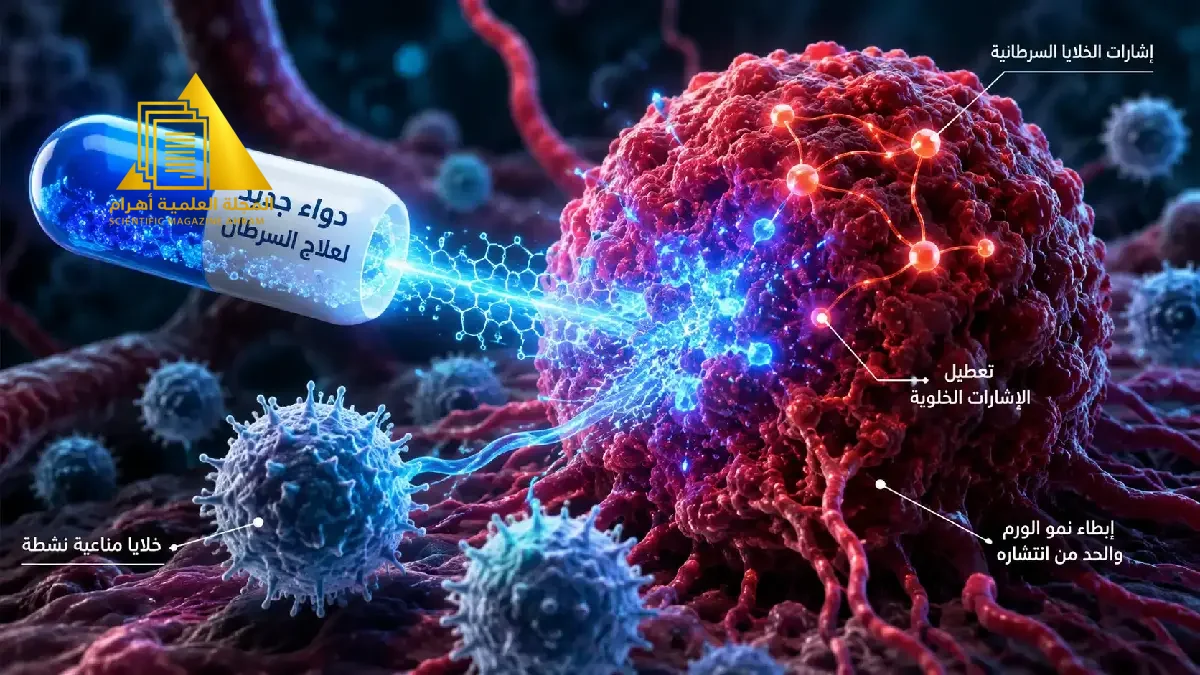

In a new medical development that may change the future of cancer treatment, researchers have announced an experimental drug that has shown promising ability to slow the growth of tumors by disrupting the cancer cell signals responsible for rapid division and spread inside the body.
This discovery comes as medical research accelerates to understand how cancer cells communicate with their surroundings and evade the immune system.
How Do Tumors Grow Inside the Body?
Cancer cells rely on a complex network of cellular and chemical signals that help them divide rapidly, invade tissues, and migrate to new areas within the body.
These biological signals act like an intelligent system, matching the complexity of the neural networks that artificial intelligence uses to analyze data and make decisions.
What Is New About This Drug?
The new drug works by disrupting these cellular signals to block the commands that help tumors grow and survive.
Rather than simply attacking the tumor directly, the treatment targets the internal framework that cancer relies on to survive.
Disrupting Genetic Pathways
The drug targets the genetic pathways that control cancer cell growth.
Boosting Immune Response Efficiency
The treatment helps immune cells and T cells detect the tumor faster and more accurately.
Reducing Cancer Spread
Initial results showed a clear decline in the ability of tumors to invade neighboring tissues.
The Treatment’s Relationship With Artificial Intelligence
Researchers used artificial intelligence techniques to analyze millions of genetic data points and biological signals specific to tumors, helping identify therapeutic targets with higher precision.
This integration of artificial intelligence and biomedicine has become one of the most powerful tools in modern drug development.
What Did the Trials Show?
Initial trials revealed a clear decrease in cancer cell activity and an improvement in immune system efficiency, alongside enhanced immune memory that helps the body resist tumor recurrence.
Researchers also observed improved repair in damaged tissues as a result of the treatment’s effect on the surrounding cellular environment.
Does It Represent the Beginning of a New Generation of Drugs?
Scientists believe this drug may be a step toward a new generation of smart therapies that combine an understanding of cells, biological signals, genes, and immune responses.
In the future, personalizing treatment for each patient based on their genetic makeup and cellular nature may become possible.
Conclusion
Disrupting cancer cell signals may mark a major turning point in modern medicine’s battle against cancer, especially with advances in artificial intelligence and genetic data analysis.
As research continues, this drug could mark the beginning of a new era of precise and more effective treatment against tumors.
Hany Sallam


Latest video
تابع معنا تحليل قراءة الصحف اليومية مع الكاتب الصحفي Hany Sallam عبر