

Written by Prof. Osama Maher Hussein
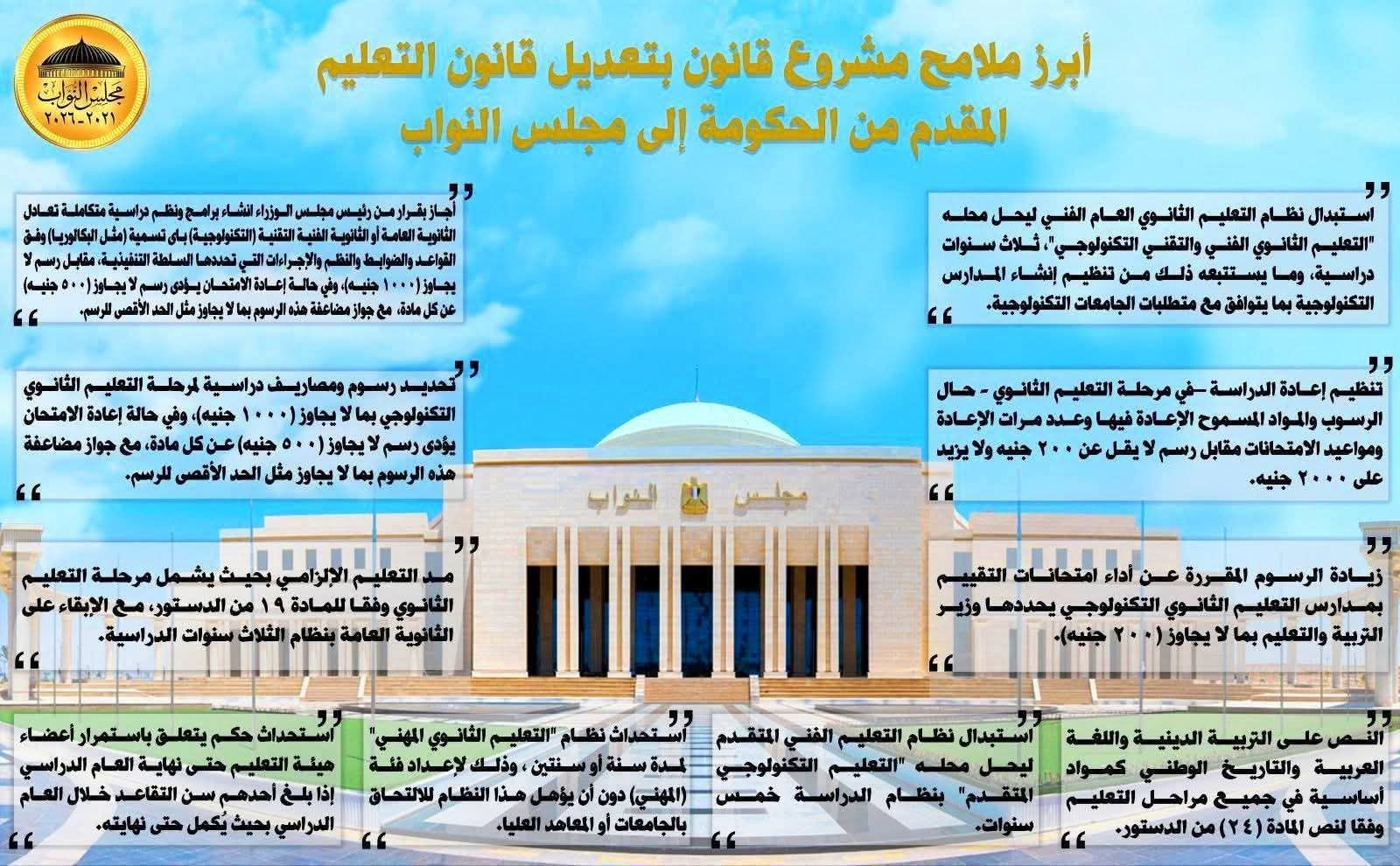
Substantial proposals to amend the new education law before its enactment…
In light of the draft law currently before the House of Representatives, and given that education is the gateway to social justice and human development, we offer a set of necessary proposals to ensure the law’s effectiveness and achieve its true goals:
1. Developing the assessment system on modern foundations
A diverse assessment system should be adopted, including:
Research projects, practical activities, and a student portfolio (student profile), while reducing reliance on the standardized exam as the sole method of evaluation.
2. Supporting education in rural and underserved areas
Account for weak infrastructure in certain areas when implementing any law, while allocating additional support to overcrowded schools and providing technological solutions appropriate for the educational environment to improve quality and reduce congestion.
3. Establishing a national system to create an “educational footprint” for each student
A digital file is built for each student from the early stages, containing their abilities, skills, inclinations, and activities. This file is used later to guide the student academically or professionally in a scientific and personalized manner.
4. Setting a gradual maximum limit for classroom density and linking funding to density
The state should be bound by a clear timeline to reduce classroom density, and part of the general budget should be allocated to building new classrooms and hiring teachers, while providing additional support to schools suffering from high density.
5. Reviewing fees for alternative programs such as “Baccalaureate”
It is necessary to account for the social and economic dimension when imposing fees on alternative tracks, while providing scholarships or support for unable groups, and ensuring equal opportunities among all students without class or financial discrimination.
6. Establishing an independent national authority for evaluation and measurement
This authority will undertake setting educational quality standards, monitoring their application across all stages, and issuing annual reports at the local and national levels to serve as an independent reference for developing educational policies.
7. Ensuring the participation of teachers and students in educational policymaking
Representatives of teachers and students should be involved in committees drafting bylaws and laws, while organizing community hearings before passing any substantial changes affecting the educational system.
8. Implementing mandatory aptitude and guidance tests for middle school students
Comprehensive scientific tests must be conducted in the third year of middle school to measure students’ mental preparedness, vocational inclinations, and skill abilities. These tests are to be prepared and implemented by the National Center for Examinations and Educational Evaluation, and their results are used to guide the student to the most suitable path for their abilities, whether general, technical, or technological education.
Toward an education law that reflects the reality of Egyptian society and builds a future based on justice, competence, and equal opportunities.


Latest video
تابع معنا تحليل قراءة الصحف اليومية مع الكاتب الصحفي Hany Sallam عبر