

An Exceptional Journey: The Psyche Probe Takes a Close Look at the Red Planet
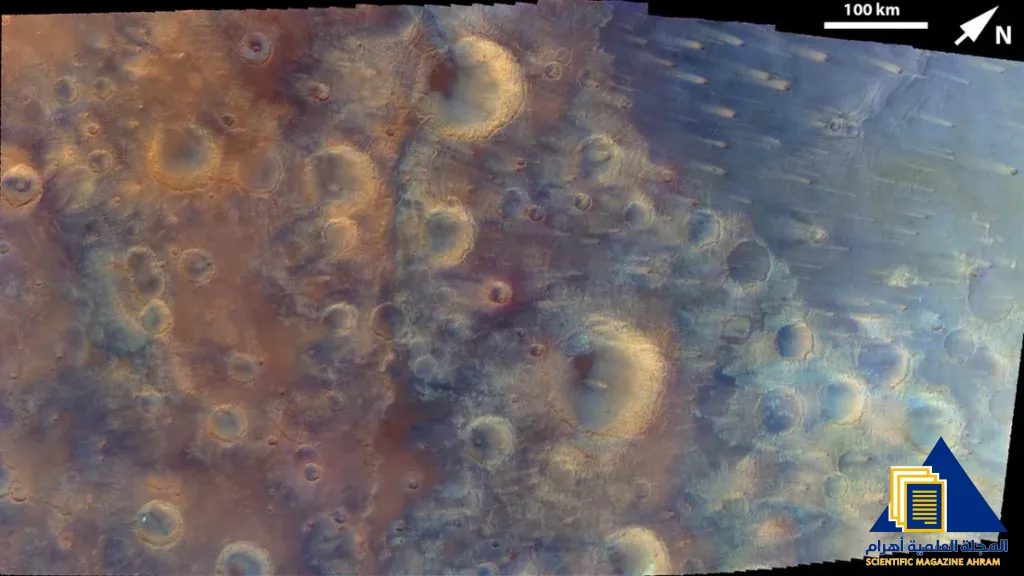
In a new scientific milestone added to the annals of space exploration, NASA’s Psyche probe has captured a series of stunning, detailed images of the Martian surface. This came during a precise flyby performed by the probe near the Red Planet
in May 2026, granting scientists a rare opportunity to view Martian terrain from unusual angles using advanced imaging techniques.
Advanced Optical Technology Unveils Martian Secrets
For its observation mission, the probe relied on the “multispectral imaging
” instrument, a technology that captures fine details invisible to the human eye. By combining four separate images taken over six minutes of flight, the technical team succeeded in creating an enhanced “color mosaic” highlighting the geological and compositional contrasts of the Martian surface. These images are not merely photographs; they are scientific data opening a new window into the nature of soil and rocks in the regions the probe passed over during its journey.
From a Flyby Perspective: How Were the Images Captured?
Moving from northeast to southwest over the Martian surface, the Psyche probe was on full technical alert. Although the probe’s primary mission is dedicated to studying an asteroid of the same name in the asteroid belt, its passage near Mars was a golden opportunity to test its imaging instruments and update our mapping data of the planet. Capturing these images took just six minutes, yet the results showed extreme precision in recording surface features despite the probe’s speed and set trajectory.
The Significance of These Images for the Future of Exploration
The importance of these snapshots lies in boosting our ability to analyze the geological formations of Mars with greater accuracy. Understanding surface composition helps researchers study the geological history of Mars and its climate evolution across eras. With every image the Psyche probe captures, we take another step toward a deeper understanding of our neighbors in the solar system, paving the way for more ambitious future missions—whether robotic or even crewed—that will benefit from this massive momentum of information.
By: Hany Sallam
Source: NASA


Latest video
تابع معنا تحليل قراءة الصحف اليومية مع الكاتب الصحفي Hany Sallam عبر