
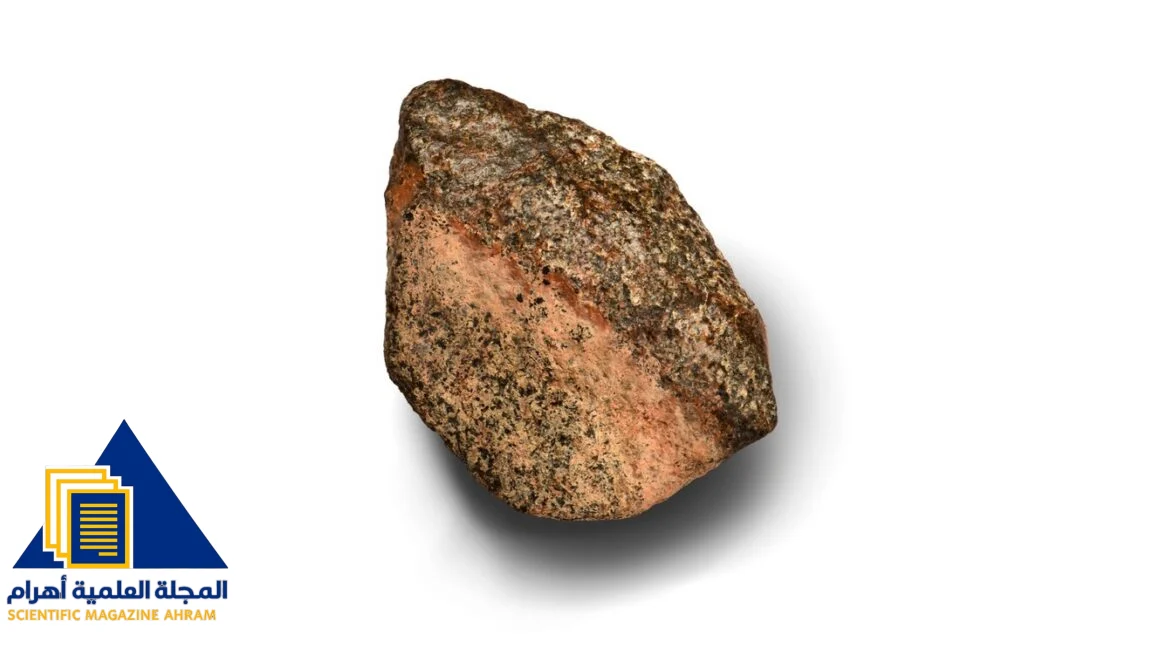

A Message from the Red Planet in the Desert Sands
The sands of the Sahara in North Africa continue to amaze scientists by yielding invaluable cosmic secrets. In a new treasure added to the record of astronomical discoveries, researchers have found a unique meteorite that fell from the sky, carrying within its fragments a story dating back billions of years—specifically from Mars. This rare silvery rock is not just an ordinary stone; it is a wide-open time window that allows humanity to glimpse a crucial stage in the deep geological history of the Red Planet, which remained mysterious for long periods.
A Rare Window Into the Ancient Martian Crust
The supreme importance of this meteorite lies in its distinct nature, as it represents a genuine and rare sample of the ancient Martian crust. Unlike common Martian meteorites, which usually consist of relatively young volcanic rocks, this discovery belongs to what are known as primitive rocks that formed during the earliest periods of the planet’s formation. By studying the chemical and mineral makeup of this silvery debris, planetary geologists are able to redraw the geological map of Mars and understand how its solid crust evolved long cosmic generations ago.
Decoding Deep Geological History
These rare rocks open the door to major questions regarding the deep past of Mars, and whether it experienced conditions that supported water environments or early thermal activity. Scientists view these meteorites as “free samples” that traveled through space for thousands of years before landing in Earth’s desert, providing them with data that sometimes surpasses what rovers send back. As precise laboratory tests continue, humanity moves an extra step closer to understanding the secrets of our red neighbor and how it transformed from an active, early planet into a cold, desert world.
By Hany Sallam
Source: arstechnica.com


Latest video
تابع معنا تحليل قراءة الصحف اليومية مع الكاتب الصحفي Hany Sallam عبر