
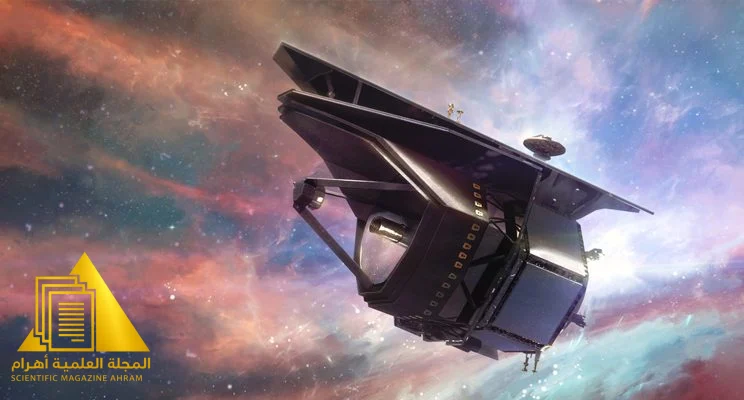

A New Era of Space Exploration
Throughout history, humanity has never witnessed scientific tools of such astonishing power to explore the depths of space. The Hubble Space Telescope unlocked the doors of imagination, revealing stunning details of distant galaxies, while James Webb has allowed us to dive into the origins of the early universe. Now, the new Roman Space Telescope is preparing to map one of the most comprehensive cosmic charts ever made. It may seem to some that we have reached the peak, but the truth is that the secrets of the vast universe are endless, and the most exciting discoveries are still waiting for us.
Upcoming Telescopes: New Eyes on the Universe
Major global space agencies, such as NASA and the European Space Agency, are developing an entirely new generation of giant observatories. These telescopes are not just conventional magnifying tools, but advanced technologies designed to answer the biggest questions: How did life originate? And what is the nature of the dark matter that makes up most of our universe? These projects rely on combining advanced optical technologies with artificial intelligence to process massive amounts of data coming from galaxies billions of light-years away.
Unprecedented Horizons in Deep Space
The upcoming observatories promise to spark a genuine revolution in modern astronomy. Through their superior capabilities in infrared observation and the analysis of the light spectrum of rocky planets outside our solar system, these telescopes will be able to monitor the atmospheres of Earth-like planets and search for potential signs of life. Today, we stand on the threshold of a new era that will change our understanding of our place in this vast universe and reveal mysteries that have remained hidden for generations.
By: Hany Sallam
Source: universemagazine.com


Latest video
تابع معنا تحليل قراءة الصحف اليومية مع الكاتب الصحفي Hany Sallam عبر