

Real-Time Disease Detection
Reporting by Mohamed El-Amin – Programmer and Graphic Designer
The deep neural network provides robust, real-time detection of disease biomarkers.
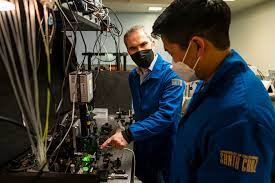
Holger Schmidt, distinguished professor of electrical and computer engineering at the University of California, Santa Cruz, and his group have long focused on developing unique, highly sensitive devices called optofluidic chips to detect biomarkers.
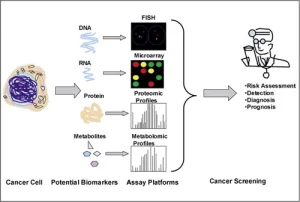
When biomarker detection devices are taken to a point-of-care setting, such as a health clinic, the signals received by the sensors may not be of as high a quality as those in a laboratory or controlled environment.
This may be due to factors such as the need to use cheaper chips to lower costs, or environmental conditions like temperature and humidity.
To tackle the challenge of weak signals, Schmidt and his team developed a deep neural network that can identify the source of those weak signals with high confidence.
The researchers trained the neural network using known training signals, teaching it to recognize potential variations it might encounter so that it can recognize patterns and identify new signals with very high accuracy.
The entire system is designed to be used completely locally, meaning that data processing can occur without internet access.
Unlike other systems that rely on cloud computing, this also provides a data security advantage because results can be produced without sharing data with a cloud server provider.
Source:
Materials provided by the University of California, Santa Cruz.


Latest video
تابع معنا تحليل قراءة الصحف اليومية مع الكاتب الصحفي Hany Sallam عبر