
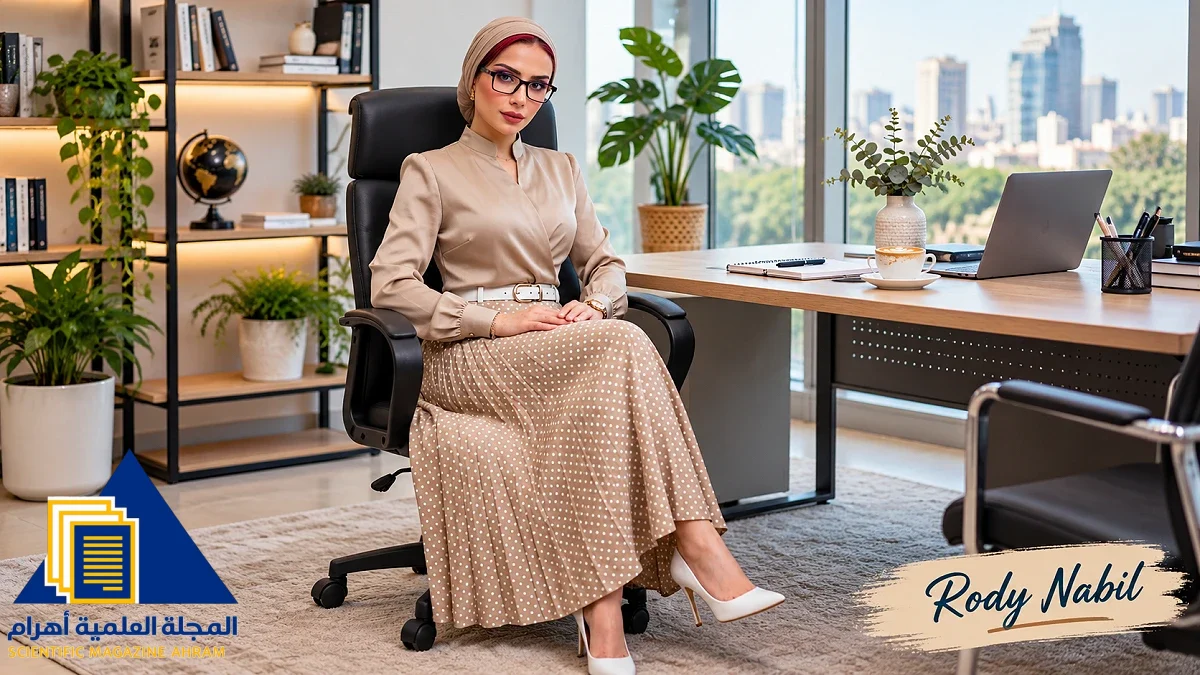

Why Does a Parent Pay for Both School and a Tutoring Center? Where Does Your Child Learn, and Can You Trust Who Is Teaching Them?
Written by Rody Nabil
Why Do Parents Turn to Tutoring Centers and Private Lessons?
I follow with interest the discussions lately on whether there is a crisis of trust between parents and educational centers, given their sheer numbers. Here, I find myself as a mother facing a question that troubles me every day: Why do I pay the school, then pay for the center, or pay for private lessons in pursuit of excellence? Is the flaw in the school or in my own trust? Do tutoring centers solve the crisis or expose it? What increases my worry is not just the expense, but the issue of educational safety. At a center, I cannot guarantee who is teaching my child. They might not even be a real teacher, they might not be trustworthy or reliable, and I do not know the scientific material they present to my child. I do not know what happens to my child inside that place, and I cannot be sure whether the person teaching my child uses educational methods or not, whether they adhere to the same curriculum set by the Ministry of Education, or whether they care about the child’s psychological well-being or treat them like a number in a crowded room. Have I asked myself before leaving my child there: Who is this person, and what is their background? What will they teach my child apart from the curriculum—from what cultural, religious, moral, or national background, or something even more dangerous? Is it right to leave the piece of my heart with a stranger just because they are famous on social media?
The School and the Need to Restore Trust and Its Educational Role
Here, I commend the ministry’s clear efforts in recent times to restore discipline, raise attendance rates, reduce class densities, and bring back the school’s role relatively—though I hope the method of return becomes engaging and nurtures students’ talents and abilities through activities.
However, I believe the matter needs more attention on certain points. We need to treat the student as a complete entity, not just a mind. We need to treat them as a whole human being with a heart, mind, and body, with boundaries, abilities, and other needs such as activities that make the school a place where they can release energy and discover their talents, turning it into an engaging element. Is it enough for them to memorize the curriculum while feeling uncomfortable? And who will give them this pure knowledge other than the school teacher who knows them, knows their name, and knows their circumstances?
Holistic Education and Building Student Character
Holistic education means education that views the student as a complete entity and does not fragment them. Holistic education looks not only at grades, but also at confidence, belonging, mental health, and role models. The school is not a place of rote learning, but a place of upbringing. Perhaps upbringing and belonging come before education and character-building. Do tutoring centers provide upbringing, or do they just provide study booklets? Have we thought about why we leave the real school and go to a place we do not know? Have we asked ourselves: If the school’s true role returns strongly, will we need all this running around between centers, lessons, and platforms? Is the solution in more centers, or in restoring trust in the school and bringing back the missing element? Perhaps the return of activities is the solution.
A Proposal for a Participation Class to Restore Trust in the School
Why do we not set aside a part of the week and call it the “participation class”? It would be a fixed weekly class inside every school where the classroom teacher offers free review sessions or sessions at nominal prices for their students inside their classroom, under the supervision of the school administration, with an open door for representatives of respected parents to attend and see with their own eyes who is teaching their child and how they teach. When I see the teacher with my own eyes, hear them with my ears, and see my child safe and reassured, I will return my trust to the school and will not look for an unknown entity outside. Trust is built through seeing, not advertising, and reassurance is built through knowledge, not rumors.
The Safe School Builds a Confident Student Who Loves Learning
Can we restore the school’s true role as a safe home for learning, and can we teach our children that excellence starts in their classroom rather than in a crowded hall where we do not know who is inside? When the school is a place sufficient for knowledge, sufficient for refining the soul, and a place to release energy, it becomes rich. When the school is nurturing, it becomes enough. And when the school sees the child as a complete human being, not just a seat number or academic material, it gives us back a confident, reassured generation that loves learning and loves its school.
Written by Rody Nabil


Latest video
تابع معنا تحليل قراءة الصحف اليومية مع الكاتب الصحفي Hany Sallam عبر