
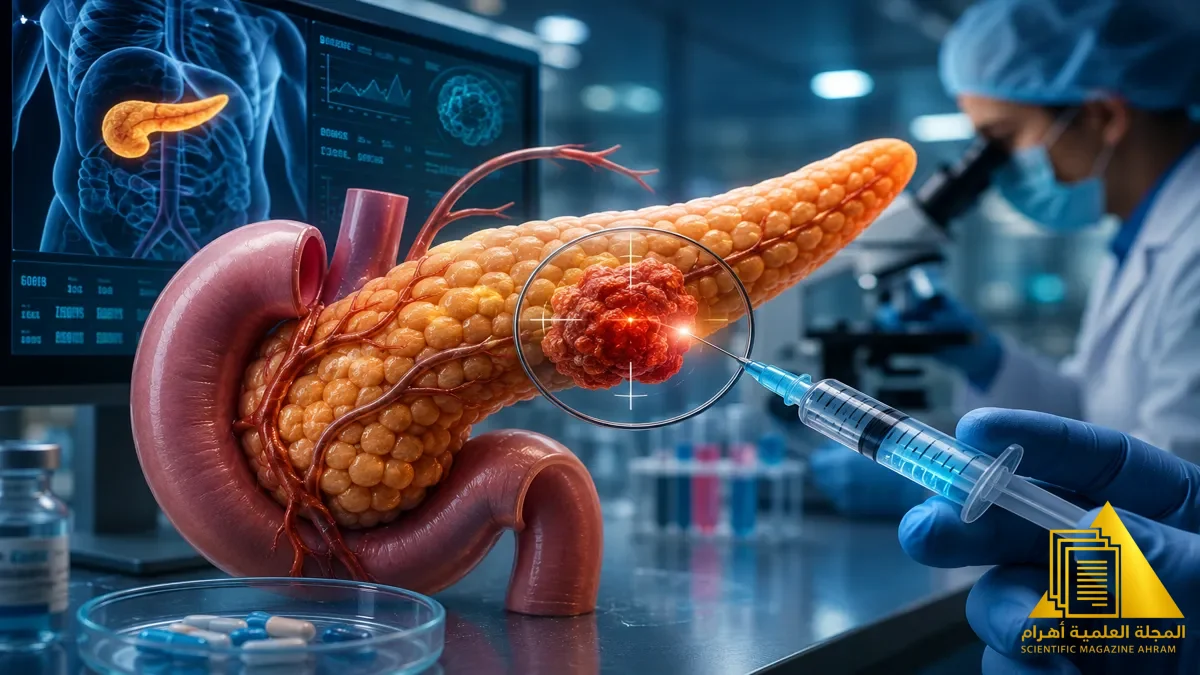

A team of researchers announced the development of a new experimental treatment showing promising ability to slow and prevent the spread of pancreatic cancer during its early stages, in a step that may mark an important shift in tackling one of the deadliest types of cancer.
Pancreatic cancer is one of the hardest cancers to treat because it is detected late and spreads rapidly through the body.
How Does the New Treatment Work?
The treatment targets cancer cells with high precision and blocks them from sending the signals that help them spread.
Disabling Tumor Growth
Initial results showed that the treatment clearly reduced cancer cell growth.
Slowing the Spread
It also limited the movement of the tumor to neighboring tissues.
Raising the Chances of Early Intervention
In addition, the treatment may help doctors control the disease before it reaches advanced stages.
Why Is This Important?
Patients with pancreatic cancer have low survival rates compared to other types of cancer, due to the difficulty of early diagnosis.
Therefore, any progress in this field matters greatly to modern medicine.
What Is the Next Step?
Researchers are preparing to start broader phases of clinical trials to evaluate the effectiveness of the treatment on a larger scale.
However, experts noted that current results are encouraging.
Conclusion
The new treatment represents real hope for improving survival rates from pancreatic cancer, and may open the door to more effective treatment strategies in the coming years.
Hany Sallam


Latest video
تابع معنا تحليل قراءة الصحف اليومية مع الكاتب الصحفي Hany Sallam عبر