

From Yellow Fever to the Secrets of the Universe
For more than a century, the small town of Lead in the Black Hills of South Dakota was a destination of choice for those seeking quick riches and the allure of gold. But times have changed, and we now see the famous historical mine moving away from mineral prospecting to enter a new scientific era, carrying greater and more complex ambitions. Scientists are no longer searching for pure gold; instead, they are pursuing the most precious treasures of human knowledge: unlocking the secrets of existence itself.
A Journey into the Depths of the Earth
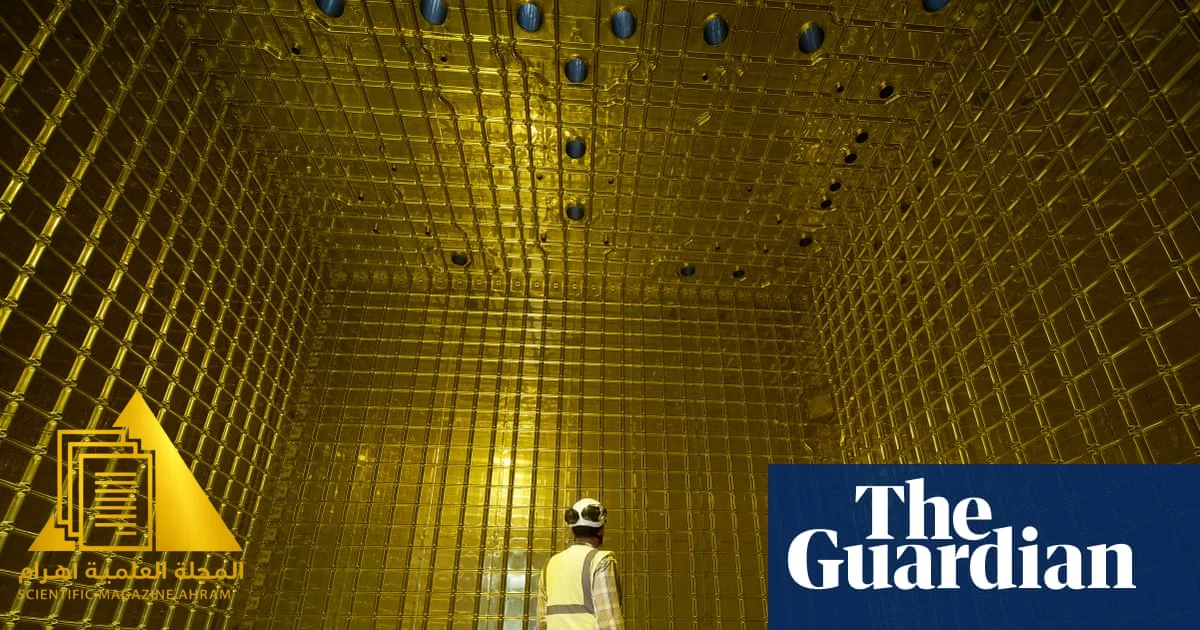
One full mile beneath the surface of the earth, inside massive caverns carefully carved into the heart of the old mine’s rock, engineers and scientists have begun setting up a groundbreaking and astonishing scientific experiment known by the acronym DUNE. This unique engineering undertaking involves building four massive, giant detectors specifically designed to observe and monitor tiny, mysterious particles known as neutrinos.
Why Do We Gather in the Dark to See the Light?
Neutrinos are nicknamed “ghost particles” in physics circles due to their immense ability to penetrate matter constantly without almost ever interacting with it. Because these particles reach us carrying the fingerprints of the universe’s earliest history from the moments of the Big Bang, studying them requires complete isolation from the radiation and cosmic noise that floods the Earth’s surface. This is why such a profound depth in the South Dakota mine was chosen, as the deep layers of rock act as a protective shield allowing scientists to capture these rare cosmic signals with unprecedented precision, taking a major step closer to understanding the greatest mystery: Why are we here?
By: Hany Sallam
Source: theguardian.com


Latest video
تابع معنا تحليل قراءة الصحف اليومية مع الكاتب الصحفي Hany Sallam عبر