


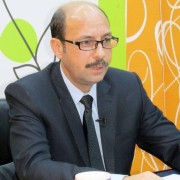
Interview conducted by Hany Sallam
Returning once again to Dr. El-Gizawey, we continue the conversation we started with him regarding education in Alexandria. Our aim is to uncover certain matters that have remained out of sight, or that have been deliberately concealed so that the public does not know what is happening in Alexandria’s education system, and to set the record straight.
We place this matter before His Excellency the Governor of Alexandria, Major General Mohamed Taher El-Sherif, His Excellency the Minister, Dr. Tarek Shawky, and His Excellency Dr. Reda Hegazy, Deputy Minister for Teachers’ Affairs.
I spoke at length with Dr. El-Gizawey about many sensitive issues, and we will certainly publish large parts of them. Today, let us begin with Borg El-Arab and one of Alexandria’s departments, which I believe officials in the Ministry of Education know a great deal about, while the man on the street might consider it exile or punishment for any official—though we may disagree with that view.
Dr. El-Gizawey, what was the reason for your transfer to Borg El-Arab, and was what happened a normal procedure or were there surrounding circumstances behind the transfer decision?
The reason was unknown, apart from what was announced at the time: that the former general manager was on leave and there was no one better to manage things than myself!
Was it intended to cause you to fail?
In my view, the reason was to remove me from the directorate.
What was the reason for that… or the secret behind your removal from the directorate and the insistence upon it?
I withhold the answer, but it is enough to note that the best person on my team, Mohamed Zaki, director of the coordination department and the best person to hold office in general coordination, was ousted. Following that, many reshuffles were issued, along with the transfer of supervisors and others, and some were seconded outside the ministry to other entities despite being in specialties with shortages.
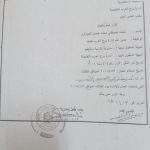
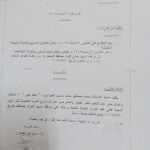
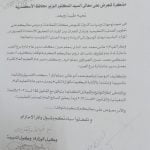
Note:
The Administrative Prosecution’s decision came in response to the complaint submitted by Mohamed Zaki and myself, doing us justice by establishing the violation committed by those who issued the decisions we objected to, following the prior decision of the inspection committee from the governorate. Thus, our objection was not merely for the sake of opposing or objecting, but because we were in the right.
Yet allow me to believe that you were also against some of the decisions issued by the official in the directorate?
Indeed, there were some objections to certain decisions that we felt would lead to disruption in the organizational work of education in Alexandria. Accordingly, we clarified the matter to the decision-maker to place the complete facts before them so they could take what they deemed appropriate to advance the educational process.
However, I would like to remind you that these objections were not made for the sake of opposition, but for the sake of greater transparency and to save the situation.
To name a few examples, my objection was that the procedures for transferring certain supervisors and managers—particularly managers of official language schools—were a mistake on the part of those who issued the decision, and that we were not opposing or rejecting for the sake of rejection.
Were there no other reasons for the disagreement?
First, I would like to clarify an important point: there were absolutely no other reasons for disagreement with anyone, because in my work I do not allow personal disputes to affect the educational process and… but certainly, this was not the only disagreement at work. For example:
• The insistence on placing certain individuals and transferring them from the Borg or Amreya administration to execute the directive of a former high-ranking official was a mistake… and this is what led to Mohamed Zaki’s transfer after me.
• It also happened that a promoted supervisor in the Central Administration was seconded to public relations by orders of the undersecretary, and afterwards requested to return to his administration without giving reasons.
• Regarding the computer science supervisor, around whom transfer doubts hovered regarding the execution of her request, she insisted on a swap as undersecretary, which I and the director of the coordination department refused. Because of this, the director of the coordination department was replaced, and he was returned as a teacher to his school!
Is it normal to transfer a general manager of general education and technical guidance to a department manager?
No, of course not, and we note that the person behind the transfer decision refused to assume another administration and insisted on taking up the post in the administration he applied for at the time.
There are rumors circulating in Alexandria that a hidden hand was behind the decision to transfer you to the Borg El-Arab administration. Do you support these rumors, or do you have another view? And was there a former senior official in the ministry who had a desire to remove you permanently, or… do you prefer not to publish this?
As I agreed with you, the subject must be presented in full so that senior ministry officials can decide on the matter. But so that we do not lose the thread of the conversation, let us address it in another part of the interview dedicated to it.
Then let us continue talking about Borg El-Arab…
Did you accept the assignment to work in the administration, noting that some readers might agree with me that any official requires a period of no less than two months to study all aspects and obstacles in order to deliver outstanding work?
Do you know that my tenure in the Borg El-Arab administration began on April 2 and ended on July 1, after which I returned once again to the directorate!
Although many expected me to step back and leave work behind, what was accomplished at Borg in three months was acknowledged as a resounding success by my critics even before my supporters, focusing on restructuring the administration and caring for its employees.
The biggest problem was the financial dues owed to the Borg employees, such as hardship allowances and others. The funds were indeed bolstered by the directorate and the Ministry of Finance, and exam bonuses were even disbursed as the first administration to do so.
On the student front, an agreement was reached with Major General Akl, head of the Borg city center at the time, to establish high school tutoring groups, which were attended by a large number of high school students. I must not fail here to thank the principal of Rabia Al-Adawiya School and all the distinguished teachers there.
There was a problem with the administrative building of the administration, so the new building was equipped, and construction and renovation work was completed in record time.
Did you face challenges during this short period, which did not exceed three months?
• The severe shortage at Borg: An agreement was reached with the school boards of trustees to put solutions in place for this problem, in coordination with the board of trustees and the supervisors.
• The file on administrative housing and the squandering of public funds was opened, a permanent committee was formed, and the matter has now been referred to the Administrative Prosecution to restore rights to the state.
• Extremism was also fought in some sectors, with a focus on supporting activities that counter extremist thought. A play was produced that exposes terrorism and urges national unity.
• Contributions from community participation in the administration rose to an unprecedented level.
• An executive plan was drawn up for the administration aimed at increasing its resources, especially since it possesses the basic components in the fields of industrial and agricultural education.
Here ends the interview with Dr. Mohamed Mostafa El-Gezawy. This part focused on the Borg Al Arab administration when he was transferred to it, and there are many secrets that we have not yet revealed; there may be a review of what took place in Borg Al Arab.
We await the publication of the third part, which is considered one of the strongest installments in the published series of interviews with Dr. Mohamed Mostafa El-Gezawy.

Latest video
تابع معنا تحليل قراءة الصحف اليومية مع الكاتب الصحفي Hany Sallam عبر