
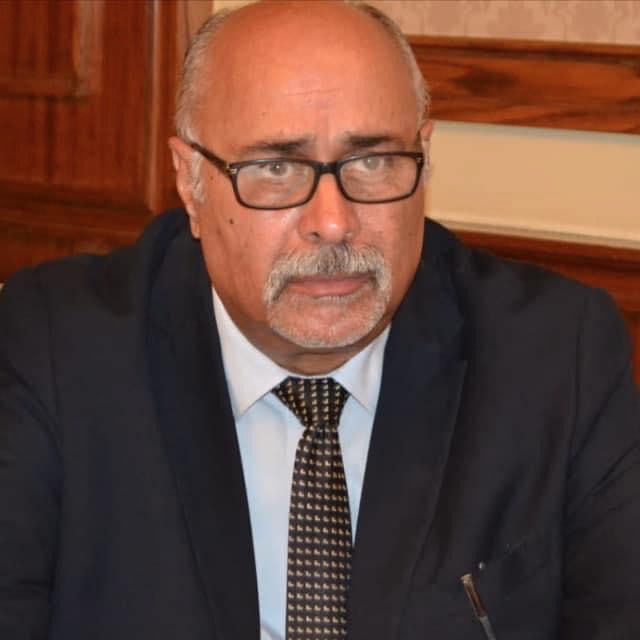

By Dr. Hisham El-Sherbini
PhD in International Commercial Arbitration – Oslo Institute for Legal Studies
Postgraduate Diploma in Marketing – Faculty of Commerce, Suez Canal University
BSc in Engineering – Faculty of Engineering, Suez Canal University
Engineering Master’s Researcher – Tabbin Institute for Metallurgical Studies
Governments view launching projects to provide jobs or establish new communities as a primary economic and political goal. They pursue this through various methods to secure domestic and foreign investment, driven by the need to cope with population growth while achieving social equity. This helps bring greater stability to the national economy, meets the commitment to provide basic resources for daily and future life challenges, and drives the development necessary for society and future generations.
In light of continuous scientific development, experts need to keep pace with change and bring about required modifications. Pursuing change is not merely about achieving social equity, but also about making the changes needed to achieve environmental equity so that the two serve as the twin pillars of economic equity.
Therefore, steps need to be taken—whether preparing to issue new legislation or amending provisions in current laws regulating arbitration—by adding environmental arbitration to commercial arbitration. Necessary amendments should also be made to study environmental contracts at the national or international level and incorporate them into standard contracts to ensure adequate readiness for future challenges.
Setting up any project generally divides into two main phases: the first is negotiation and contract signing, and the second is operation and actual production. In the first phase—negotiation and contracting—the relationship is bilateral and specific between the project owner and the technology supplier, and is typically governed by an important rule known as win-win situation. One of the main goals of this rule is the constant pursuit of shared objectives for both parties, culminating in the signing of a contract that serves as a primary reference for the parties involved in case of disagreement over how to apply a specific mechanism in one of the contract clauses, or if a dispute arises…

Agreement is also reached on a specific mechanism to apply if any dispute arises, with the choice typically resting between resorting to the judiciary or arbitration following negotiations. The clause covering this expresses the freedom of will of both contracting parties and establishes the arbitration process or decides against it. Given that optional arbitration is an important part of legal justice, embodied in respecting the desire of contract parties to choose the appropriate mechanism for resolving any dispute that may arise between them, arbitration at this stage can be described as commercial arbitration. During this phase, the contract is typically bilateral, as mentioned, between the project owner and the technology supplier, and concludes once the project preparation phase for production is complete. In this phase, the contracting parties focus on meeting requirements, including technical and environmental requirements that comply with laws and regulations to secure the licenses needed to begin operating the project. In other words, the environmental framework is what governs operations during this stage. As for the second phase—the start of operation and actual production—a tripartite relationship begins here between the project owner, the direct consumer, and the indirect consumer (society) in general, and the surrounding environment in particular. Shedding more light on this phase clarifies the importance of what we need to establish and the changes we seek that align with the future vision and the shift toward achieving environmental equity for all living creatures, not just humans.
As mentioned, the transformation in this phase must take place under a governing environmental contract (a green sustainable contract)—whether for the construction process (focusing on infrastructure) or the operational process (focusing on waste management)—marking the transition from the bilateral rule with its environmental legal framework to the tripartite rule with its sustainable development framework.

This phase (negotiation and contracting) is the starting point where sustainable development projects must be applied pursuant to governing contracts to ensure optimal and cleanest use of materials and energy. To complete the vision, the shift must be activated from viewing arbitration solely as commercial arbitration to recognizing the importance of environmental arbitration as well.
References
https://www.almaal.org/types-of-contracts-in-civil-law
https://www.egyarbitration.com/blog/diplomacy/what-are-the-means-of-conflict-resolution/
https://www.lexology.com/library/detail.aspx?g=1dca3a47-324a-4686-8a57-eda3322f3439


Latest video
تابع معنا تحليل قراءة الصحف اليومية مع الكاتب الصحفي Hany Sallam عبر