

Summer Heat Imposes New Rules
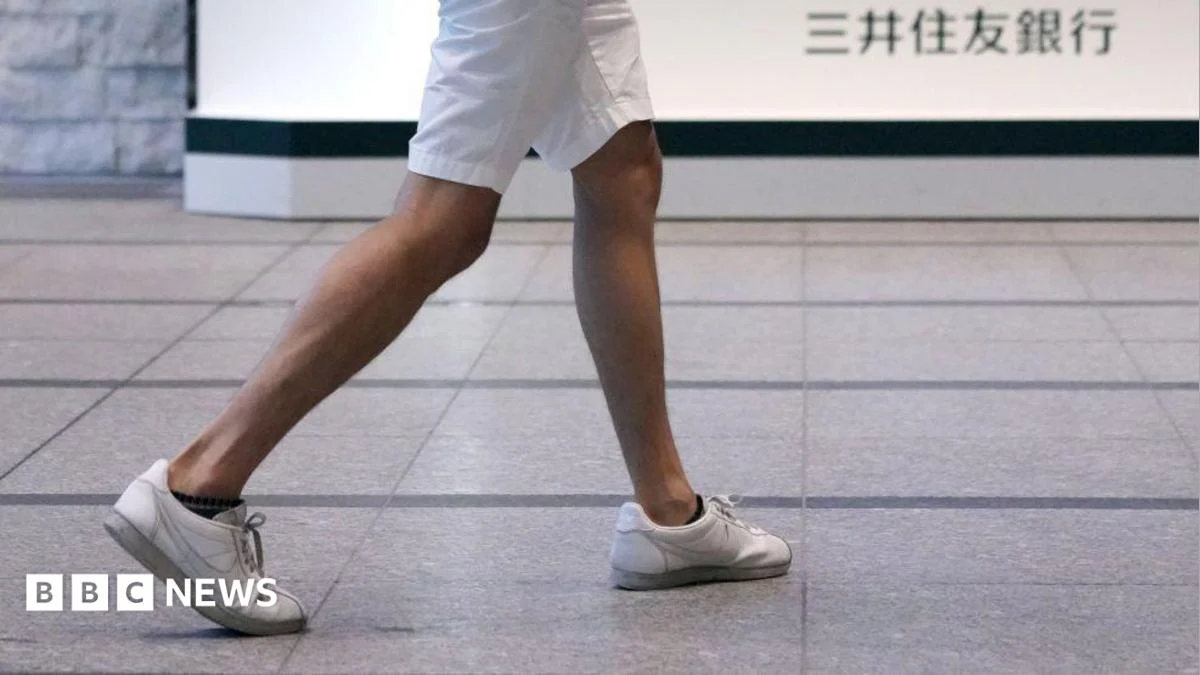
In what seems at first glance like a scientific and practical response to record-breaking temperatures in Japan, the Tokyo government has launched an ambitious initiative to change traditional work culture. The initiative encourages employees to ditch formal suits and ties in favor of more comfortable attire, such as light shirts, sneakers, and even shorts, aiming to ease the heat stress that threatens the health and productivity of workers during the humid Japanese summer.
The Clash Between Climate Adaptation and Public Taste
This recommendation is based on the principles of meteorology and thermal comfort, as wearing clothing that allows for better heat exchange reduces the risk of heat exhaustion. However, this scientific approach has collided with complex social traditions. A broad segment of female Japanese employees has expressed opposition to the initiative, describing it as opening the door to what is known as “leg hair harassment.” They view the appearance of men’s legs with natural hair in a formal work environment as lacking professional etiquette, which has created a sharp gap between climate adaptation and aesthetic and social considerations.
The Psychological and Social Dimension of the Dress Code
From a sociological standpoint, this controversy reveals that changing the dress code is not simply a matter of heating or cooling, but a struggle over professional identity. In Japan, the formal uniform remains a symbol of discipline and respect. While experts strive to cut carbon emissions by lowering air conditioner use—the primary goal behind the initiative—society remains hesitant to accept a new lifestyle that breaks traditional rules. This leaves policymakers in Tokyo facing a genuine challenge: how to balance the need to stay in a comfortable work environment with social expectations that have been rooted for decades.
The Future Between Technology and Tradition
This crisis remains an interesting case study on how societies accept change when the climate asserts itself forcefully. Solutions may not rely solely on reducing clothing, but on inventing smart fabrics that cool the body without needing to reduce fabric coverage, thereby solving the scientific and social dilemma at once. The question remains: Will Japanese society one day accept the “office shorts” as an environmental necessity, or will the formal suit remain the last bastion against the summer heat?
By: Hany Sallam
Source: BBC Science


Latest video
تابع معنا تحليل قراءة الصحف اليومية مع الكاتب الصحفي Hany Sallam عبر