
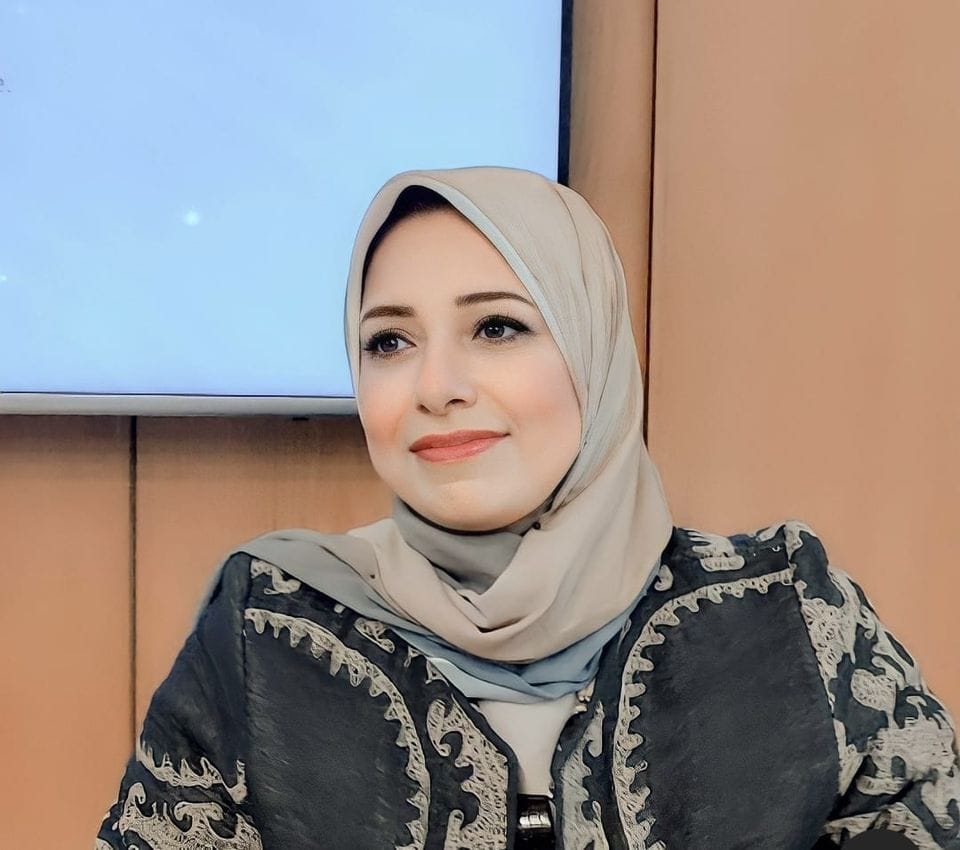

By Prof. Dr. Randa Shahin
Throughout history, Egypt has experienced numerous and diverse conflicts, which has kept its leadership, institutions, and people perpetually vigilant. Let us look back at our contemporary history and the restoration of national dignity and military strategic control during the glorious October War, alongside the liberation of the land of paradise (beloved Sinai). It is worth noting that the battle of liberation was not merely a military one; it was also a diplomatic battle rooted in peace built on strength. We could not speak of peace after the June 1967 setback. Instead, it was necessary to marshal available weapons and equipment, prepare the individual soldier, and achieve a high level of combat readiness—all of which was accomplished during the War of Attrition. When the valiant Egyptian Armed Forces regained their military strength, they crossed the bridge of defeat and taught the Israeli enemy a harsh lesson in combat arts and battle strategies that continue to be taught in military academies worldwide. The Israeli army was surprised by an Egyptian soldier forged in victory, pride, and dignity. The war did not begin merely with the crossing of the Suez Canal, but with a psychological crossing that instilled self-confidence in the Egyptian soldier. It was a decisive, to-be-or-not-to-be battle, where the cry of "Allahu Akbar" on the battlefield not only shook the enemy and the earth but reached the heavens, shattering the myth of an invincible enemy. Salutations to the souls of the nation’s martyrs who gave their most precious possessions to restore the nation’s dignity. Through them, Egypt acquired a shield and a sword, as the hero of war and peace, the late President Anwar Sadat, put it. It is also worth noting that the symphony of victory was played by all classes and institutions of the Egyptian state at the time. The Egyptian Red Crescent and the Ministry of Health played an active role in treating the injured and wounded, and every segment of the people donated blood and supplies. Notably, the Egyptian streets recorded zero crimes during that period, reflecting the unity of all segments and the fabric of the people to achieve victory, advance the process of restoring Egyptian dignity, and prevent any disruption to it.
We might ask: Why all this focus on the land of turquoise? Because it is the security valve on Egypt’s eastern flank and one of the most important pillars of Egypt’s strategic security. Furthermore, it is the land of all heavenly religions (Islam, Christianity, and Judaism). Sinai remains across the ages the land blessed by Almighty God, mentioned in His holy scriptures, and walked and sought refuge in by the prophets of God. It stands as a symbol of all civilizations and a meeting point for all peoples, abounding in religious and archaeological landmarks with a rich history mentioned in the Quran, including:
Mount Sinai and the Sacred Valley of Tuwa—also known as Mount Sinai—is a mountain located in South Sinai Governorate, Egypt, rising 2,285 meters above sea level. It was named after Moses, the interlocutor of God, who spoke with his Lord on this mountain and received the Ten Commandments. It is one of Sinai’s most famous and blessed mountains, considered among the best of God’s mountains on Earth, and is mentioned in the Quran, which also mentions Sinai because the mountain is located there. God said of it in His Holy Book: "Indeed, I am your Lord, so remove your sandals. Indeed, you are in the sacred valley of Tuwa." The mountain houses a small Greek church and a small mosque. Another religious holy site is Saint Catherine’s Monastery in South Sinai. Beloved Sinai is also home to the Burning Bush and Oyoun Moussa. Moreover, the Holy Family’s journey from Bethlehem to Gaza entered Egypt through Sinai via the northern route.
Sinai’s tourism potential lies in several features, including beach tourism along 220 kilometers of the Mediterranean coast, which is characterized by enchanting and breathtaking landscapes. There is also wellness tourism utilizing the sands and water springs of Sinai for their distinctive therapeutic effects. Additionally, Sinai serves as a major tourist attraction due to its monuments and religious sites.
The importance of developing and building Sinai is also evident because it possesses numerous natural resources, such as quarries, mines, petroleum and natural gas wells, and vast areas suitable for agriculture, and so on. Sinai must be connected to the Delta and the Valley through physical and human bridges by expanding land reclamation, developing infrastructure and basic utilities, and providing public services such as water networks, sewage, roads, and communications to encourage investment in the land of Sinai. Urban expansion should be pursued by encouraging investors to establish developmental projects, residential communities, and new cities to attract Egyptians from all governorates and help alleviate population congestion and overcrowding in the Valley and the Delta. Work must also be done to instill a spirit of belonging and citizenship among the people of Sinai by offering plots of land for ownership with convenient payment systems suited to middle-income earners and matching the financial capabilities of the people of Sinai.
Education serves as Egypt’s security shield, and sustainable development in Sinai provides a fertile environment for maintaining safety and security. The Cabinet has drawn up an integrated plan to achieve comprehensive development in North Sinai over a five-year period (2023–2028). In this regard, the Ministry of Education has also sought to contribute to Sinai’s sustainable development in the field of education by:
Working to extend the school day in Sinai’s schools.
Expanding the establishment of schools in both forms (formal and community education).
Expanding efforts to equip students with the life skills needed to cope with psychological pressures resulting from crises, in cooperation with the Ministry of Youth and Sports and the Ministry of Culture, with the aim of helping build a positive student personality that supports and defends the nation.
Providing meals for pupils in Sinai throughout the school year for all groups across different educational stages.
Encouraging students to set up productive unit projects (production, marketing, services, and software) based on Sinai heritage and local environmental activities, and marketing their products through productive school exhibitions at the school, educational administration, and directorate levels.
Recommending the organization of educational trips for school students from various Egyptian governorates to visit beloved Sinai to foster a psychological and moral connection to the land of paradise.
*Last but not least, Sinai is the jewel in Egypt’s crown, and Egypt is no ordinary country; Egypt is a sun around which other planets orbit, Egypt is hope and light to those around it, and a source of regional and international strategic security.
May God protect Egypt, its leadership and its people, across all ages.


Latest video
تابع معنا تحليل قراءة الصحف اليومية مع الكاتب الصحفي Hany Sallam عبر