
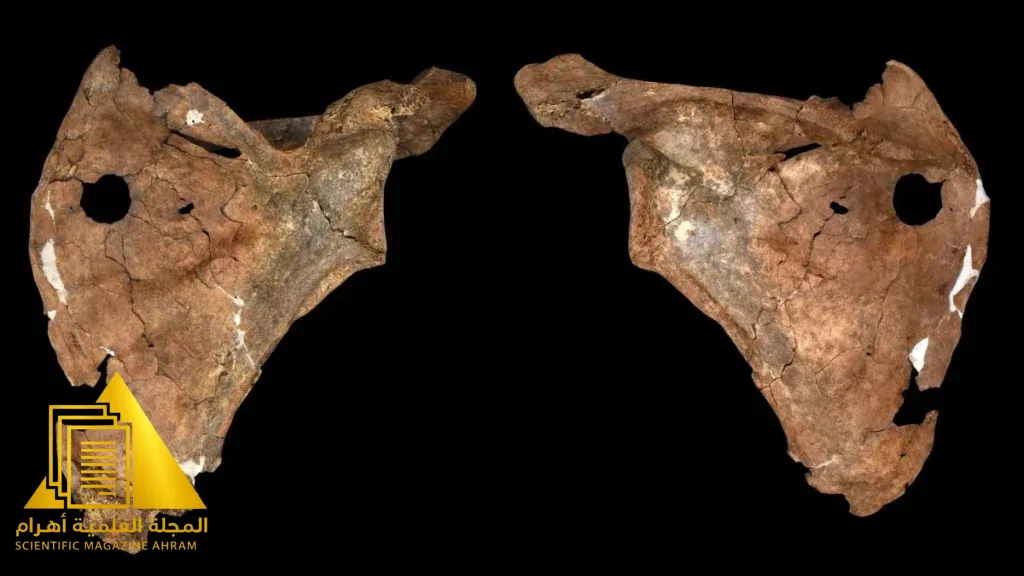

An Archaeological Mystery: Was the Death of the Neanderthal a Crime or Mercy?
Deep in history, specifically 75,000 years ago, a mysterious incident left its mark on Neanderthal bones, opening the door today to wide questions about social life and primitive conflicts. A recent scientific study on skeletal remains found in ancient archaeological sites revealed that the owner of this skeleton suffered a fatal penetrating injury from a sharp spear thrust, which reshapes our understanding of our ancestors’ lifestyle.
Prehistoric Forensic Analysis
Scientists used advanced scanning techniques and osteological forensic analysis to examine the discovered remains. The scars on the bones showed extreme precision, pointing to the use of a sharp weapon, in this case a spear. This injury was not merely an accidental mishap during hunting; rather, it points to a direct and intentional confrontation. Researchers believe that this physical evidence reflects an evolution in the combat tools Neanderthals possessed and their ability to use them to settle scores or defend themselves.
Social Conflict: Between Murder and Mercy
Moving away from the traditional explanation linking the injury to violent conflict, scientists are putting forward a more human and intriguing hypothesis: could this stab have been a form of “mercy killing”? In primitive societies facing harsh environmental pressures, putting an end to the suffering of an injured or immobile individual may have been a collective choice to ensure the group’s survival. This question makes us view the Neanderthal as a complex social creature possessing feelings and moral concepts, rather than a mere barbarian as older studies portrayed them.
What Do These Bones Tell Us About Our Past?
The discovery is not limited to determining the cause of death; rather, it serves as a window through which we look at the complexities of life tens of thousands of years ago. Violence, whether driven by anger or pity, is an inherent trait in human history. Scientists are still working on studying the geographical distribution of similar remains to understand whether these conflicts were exceptional cases or an integral part of the daily social dynamics of prehistoric humans, which changes our view of the roots of violence and empathy in human evolution.
By: Hany Sallam
Source: popsci.com


Latest video
تابع معنا تحليل قراءة الصحف اليومية مع الكاتب الصحفي Hany Sallam عبر