
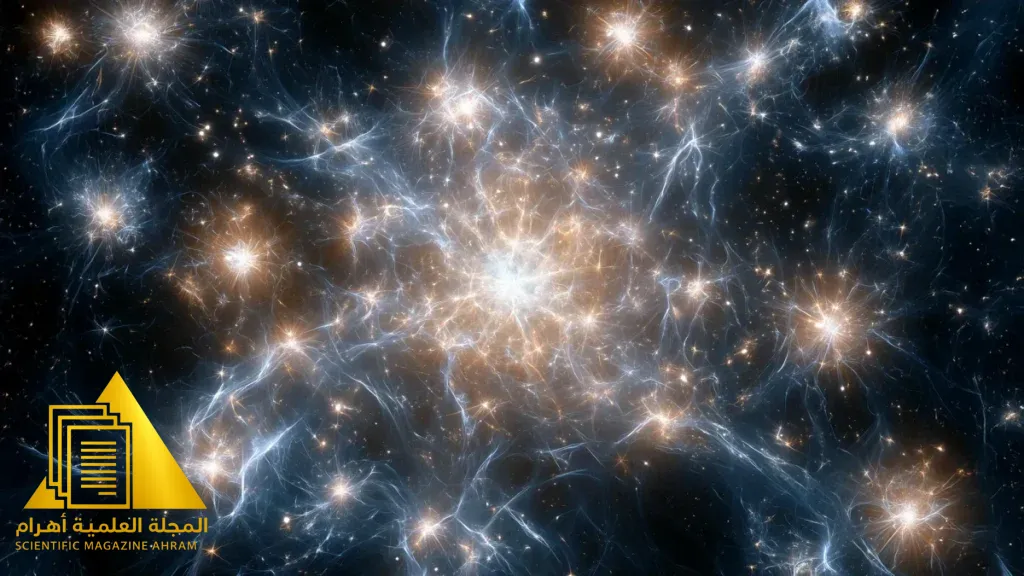

The Dark Energy Mystery: Is the Universe’s Hidden Engine Changing?
Scientists have long viewed “dark energy” as the mysterious constant driving the accelerating expansion of the universe since its birth. However, a major new astronomical study based on precise analysis and observation of 2,884 exploding stars (supernovae) has turned these beliefs upside down, pointing to the possibility that this force may not be as constant as we once thought, but rather changes over time.
A Revolution in Modern Cosmology
Since the discovery of the accelerating expansion of the universe in the 1990s, modern physics has relied on the hypothesis that dark energy possesses a constant, unchanging density. Yet this new analysis of supernovae presents a direct challenge to one of the most important foundation stones in contemporary cosmology. If it is proven that this energy changes, scientists will need to rewrite the theories that explain the past of the universe and its distant future.
How Did Astronomers React to This Discovery?
The researchers relied on advanced observations of massive stellar explosions that serve as “standard candles” for measuring immense distances in space. When scientists compared the data of these stars across different cosmic eras, they noticed unexpected variations in how the universe expands. These results open a wide door to new and puzzling questions about the nature of the hidden forces that hold sway over our galaxy and the universe as a whole.
New Horizons for Understanding the Fate of the Universe
Rethinking the nature of dark energy simply means we need deeper and more precise theoretical and observational tools. While modern observatories try to capture more cosmic signals, this discovery remains a giant step toward unlocking the secrets of the unknown, and possibly changing humanity’s enduring understanding of how this vast universe works.
By: Hany Sallam
Source: ScienceDaily


Latest video
تابع معنا تحليل قراءة الصحف اليومية مع الكاتب الصحفي Hany Sallam عبر