

By Mona Abu Ghali
Over two consecutive days, the Ministry of Education invited specialists and stakeholders to discuss and develop STEM schools.
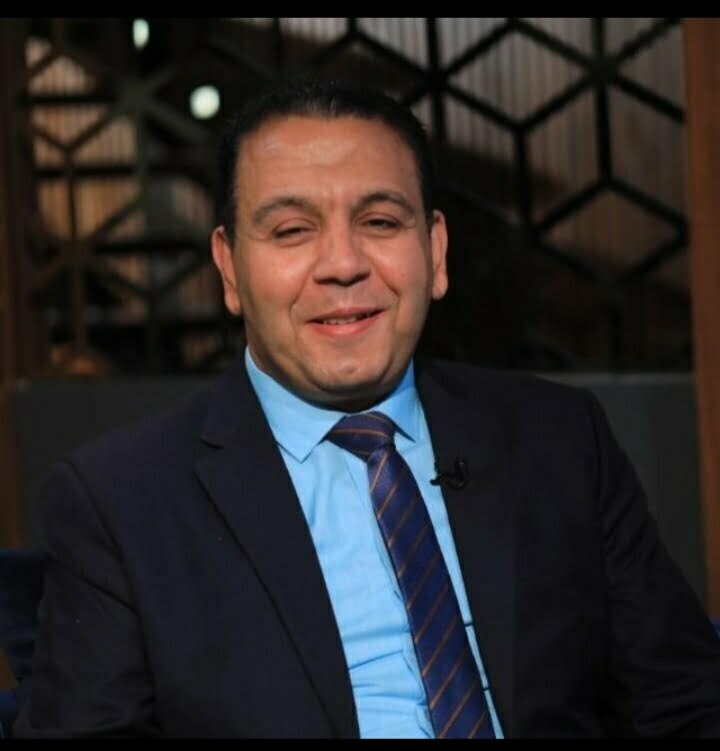
In this context, Dr. Tamer Shawky, an educational expert and professor of psychology at Ain Shams University, stated:
There are certain cautions associated with proposals to develop STEM schools. STEM schools are one of the distinctive models of education at the high school level, focusing on science, technology, engineering, and mathematics, and consequently centering on future sciences. In light of the recommendations adopted by the conference, the following cautions need to be taken into account:
Although moving toward establishing a STEM school in every governorate is desirable and necessary, achieving this requires considering the following:
. The exorbitant costs needed to build and equip these schools, and to provide specialized teachers and leadership for them.
. Why existing schools are not being developed instead of establishing new ones at the present time.
. STEM schools require a small number of high achievers in science, mathematics, and foreign languages. Furthermore, many high-achieving students prefer to enroll in the science and mathematics tracks of general secondary education and gifted schools, and avoid STEM schools not because of their location, but due to the difficulty of studying in them, along with restrictions on their enrollment in top-tier colleges compared to general secondary students.
. Will expanding STEM schools in terms of quantity undermine the quality of education in them?
. Are there enough STEM teachers available to staff these planned schools, especially since their numbers require specialized and more costly training?
. On the other hand, there are problems related to canceling boarding facilities in STEM schools and implementing the extended-day system. These problems include:
Is it logical to cancel student boarding under the pretext of high lodging costs while simultaneously moving toward establishing a school in every governorate, which requires doubled costs?
. Canceling boarding facilities contradicts the distinctive nature of STEM schools, which relies on students continuously meeting and working together.
. These schools provide students with technological and informational infrastructure that they can use at any time of day while boarding, whereas such equipment is not available in students’ homes, which reduces their research capability.
. The boarding system is currently the magic solution to postpone the idea of establishing new schools because it accommodates students from different governorates and provides them with lodging.
. With the conversion of STEM schools to the extended-day system, there is no guarantee that students will commit to regular attendance, and consequently absence rates may rise.
. Converting STEM schools to the extended-day system deprives students of acquiring important personal traits they are supposed to develop, such as cooperation, responsibility, and collective accountability.
. There is no guarantee that the extended-day system will be implemented in a real way.
. On the other hand, there is difficulty in applying the research project system used in STEM schools to general education schools, given that students and teachers lack the skills necessary to prepare such projects and have not been trained for them. Moreover, the nature of curricula and courses in general education differs completely from the nature of study in STEM schools, which is based on the integration of curricula and knowledge in addressing major national issues. In contrast, general education curricula are separate subjects that address issues differing from one subject to another, making it impossible to apply research projects in the required manner.


Latest video
تابع معنا تحليل قراءة الصحف اليومية مع الكاتب الصحفي Hany Sallam عبر