
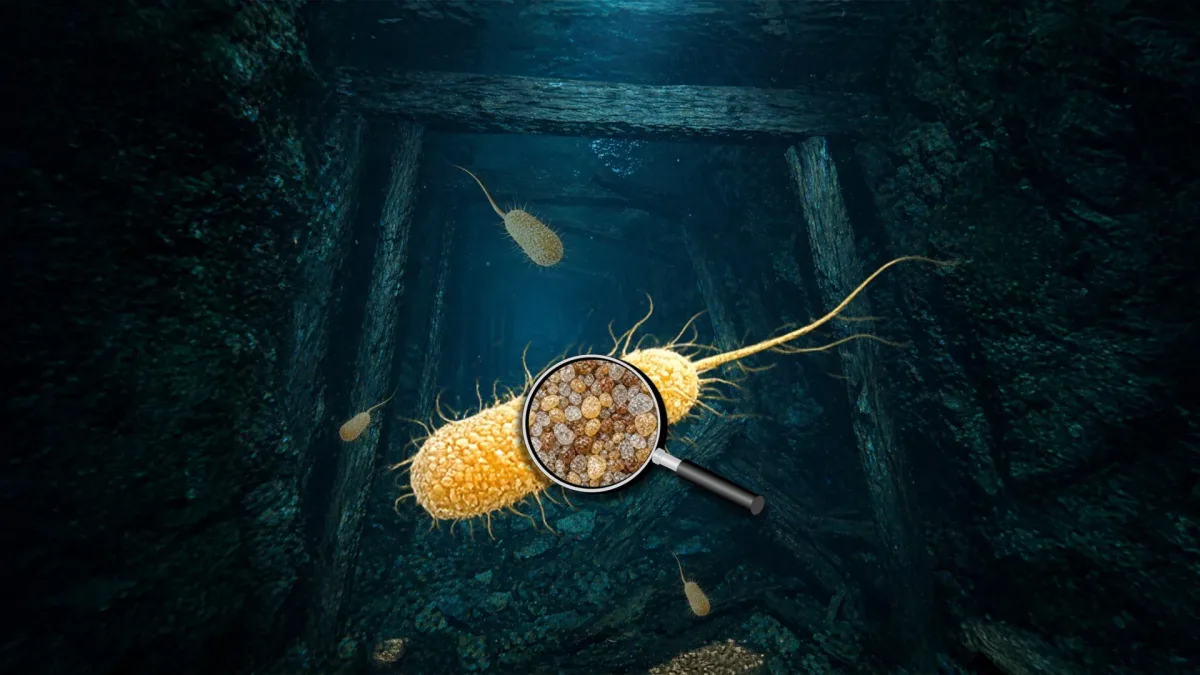

Microscopic Miracle Beneath the Earth
In the depths of Earth’s strata, where you might think radioactive contamination would persist for centuries, scientists have discovered an unexpected ally in their battle against toxic uranium. Recent research has shown that strains of microscopic bacteria possess an exceptional ability to “trap” uranium atoms and prevent them from spreading into groundwater, opening new and unprecedented horizons in the environmental cleanup of abandoned mines and contaminated areas.
How Does This Biological “Broom” Work?
These microbes rely on a clever survival strategy. When researchers fed these bacteria glycerol in a laboratory environment simulating contaminated mine water, the microorganisms responded remarkably. The bacteria did not just survive; they initiated a complex chemical transformation, successfully removing nearly 95% of the dissolved uranium in the water in just 130 days.
Unprecedented Radiological Stability
The most exciting part of this discovery is not merely the removal of uranium, but the fundamental shift it undergoes. The bacteria convert the toxic metal into a highly stable chemical compound rarely seen in nature before. This stability means that uranium no longer poses a dissolved threat that can seep through soil pores or contaminate groundwater reservoirs, but instead turns into a solid, inert substance that remains trapped in place.
A Glimmer of Hope for Environmental Remediation
This scientific approach, known as bioremediation, represents a more eco-friendly and less costly alternative to complex traditional chemical methods. Instead of using expensive excavation and drilling techniques, we may rely in the future on injecting these bacteria into contamination sites so they can take on the task of cleaning water and immobilizing radioactive metals, paving the way for the reclamation of vast areas of land once considered dead zones that could never be recovered.
By: Hany Sallam
Source: ScienceDaily


Latest video
تابع معنا تحليل قراءة الصحف اليومية مع الكاتب الصحفي Hany Sallam عبر