
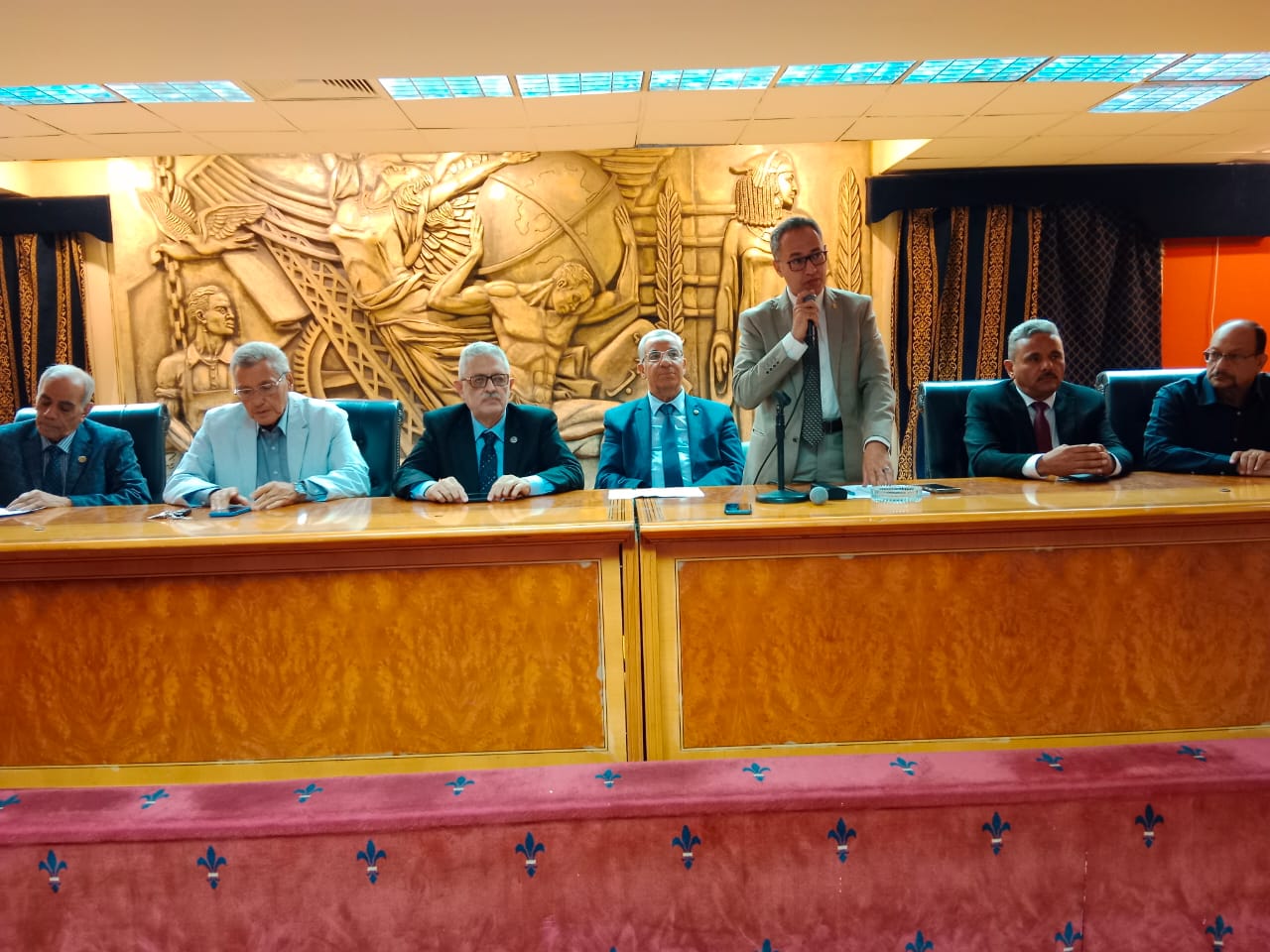

The Economic Committee of the Journalists Syndicate, headed by journalist Mohamed Kharaga, organized a seminar titled “Sustainable Development, Egypt’s Vision 2030, and Its Relationship to New and Renewable Energy.” The event was held at the Journalists Syndicate headquarters and attended by Dr. Hussein Abaza, Senior Advisor on Sustainable Development at the Ministry of Planning; Dr. Salah Arafa, Secretary-General of the Association of the Council of Egyptian Scientists and Professor at the American University in Cairo; Engineer Hatem Al-Roumy, Head of the Renewable Energy Committee at the Association of the Council of Egyptian Scientists; Dr. Ashraf Abdel Aziz Mansour, Secretary-General of the Arab Union for Sustainable Development and Environment; Dr. Mohamed El-Yamani, Head of the Arab Council for Sustainable Energy; Dr. Wael Mohamed Reda, Vice President of the Association of the Council of Egyptian Scientists and Assistant Secretary-General of the Arab Union for Sustainable Development and Environment; Dr. Mervat Abou El-Yazid, Head of the Agricultural Syndicate in Cairo; and Dr. Mahmoud Bakr, Head of the Association of Environmental and Development Writers.
Dr. Hussein Abaza, Senior Advisor on Sustainable Development at the Ministry of Planning, stated that the entire world is facing an existential problem due to climate change. He pointed to the fact that the world used to view environmental issues as a luxury, believing that the environment might hinder the rate of economic development. However, he noted that this approach has recently proved unsuccessful in light of recent climate change. Abaza added that the African continent enjoys rich natural resources and that future wars will be fought over natural resources, including water.
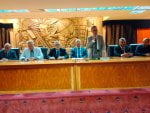
Dr. Abaza commended the vital role of the media in conveying information to various segments of society by simplifying information about sustainable development and the environment.
Dr. Salah Arafa, Secretary-General of the Association of the Council of Egyptian Scientists, emphasized the importance of partnership and building green bridges between universities, civil society, and Egypt’s villages, pointing to successful models of agricultural and environmental investment in Egypt through what is called the “journey back to roots.” This focuses on how to utilize natural resources to create eco-friendly communities in rural areas, which has a major impact on developing the capacities and competencies of rural residents. Arafa added that the Al-Busaisa project in Sharkia Governorate dates back to the 1970s and has gained worldwide fame as a model for one of the most successful sustainable development projects in Egypt.
Engineer Hatem Al-Roumy, Head of the Renewable Energy Committee at the Association of the Council of Egyptian Scientists, emphasized the importance of relying on renewable energy. He noted that environmental farms powered by solar energy and biogas aim to create an integrated, homogeneous, self-sufficient, and developed clean environmental community for a better future for coming generations, by preserving the environment and utilizing its resources for cleaner and more sustainable production.
Al-Roumy highlighted the importance of relying on green hydrogen to produce clean energy in the best and purest ways possible, using solar and wind energy to provide the power needed for production so that the final product is manufactured entirely from natural resources.
Dr. Mohamed El-Yamani, Head of the Arab Council for Sustainable Energy, stated that as part of the Egyptian government’s ambitious vision to transform into a regional hub for energy trade, it has adopted a comprehensive strategy to advance the energy sector and make it an attractive area for foreign investments, leveraging its strategic location, natural wealth, and the availability of new and renewable energy sources.
He added that the sector is witnessing unprecedented reforms and a boom in terms of securing supplies, sustainability, and rational management, alongside the establishment of new power generation plants and the diversification of production sources. This has reflected on Egypt’s ability to overcome the major challenges it faced in providing energy to the domestic market during a previous phase.
Dr. Ashraf Abdel Aziz Mansour, Secretary-General of the Arab Union for Sustainable Development and Environment, stressed the need to cooperate with all development partners, including major international organizations, universities, and Egyptian and Arab research centers, with the aim of establishing the correct vision for the Arab environmental protection and sustainable development system. Dr. Ashraf Abdel Aziz also thanked the Economic Committee for holding the scientific seminar at the syndicate.
In turn, Dr. Wael Reda, Vice President of the Council of Egyptian Scientists and Official Spokesperson, emphasized the importance of networking between the private sector and civil society organizations alongside government efforts to achieve the desired development, thereby completing the pillars of the development triangle in any country.
Dr. Reda pointed to the major role played by the Journalists Syndicate in its 82nd year in spreading awareness and knowledge among all segments and classes of Egyptian society.
Dr. Mervat Abou El-Yazid, Head of the Agricultural Syndicate in Cairo and member of the Council of Egyptian Scientists, highlighted the importance of training young graduates of agricultural colleges and raising their awareness of the practical application of their research, noting that they help implement graduation projects that qualify them to enter the field of work and secure a place on the map of agricultural innovation in Egypt.
Dr. Mahmoud Bakr, Head of the Environment and Development Writers Association, affirmed cooperation with civil society organizations and Egyptian universities to work on disseminating everything related to sustainable development, renewable energy, and environmental protection and preservation. He noted that the association has numerous contributions in the field of environmental protection and provides activities that help raise awareness among citizens and journalists across all fields.
At the end of the seminar, Engineer Hatem Al-Roumi announced the organization of a visit for members of the Press Syndicate to the Reef Farm in Ismailia Governorate to witness and learn about a sustainable environmental model.


Latest video
تابع معنا تحليل قراءة الصحف اليومية مع الكاتب الصحفي Hany Sallam عبر