

An Exceptional Celestial Show
The night sky this week is preparing to host one of the most stunning annual astronomical displays as the Orionid meteor shower reaches its peak, giving astronomy enthusiasts and stargazers a golden opportunity to view fragments of the most famous comet in human history: Halley’s Comet. This recurring astronomical event every October offers a unique visual journey that takes us on a tour through centuries-old remnants of space dust.
What Is the Secret Behind This Meteor Shower?
The Orionid phenomenon occurs when Earth crosses its path around the sun through a region filled with tiny particles and debris left behind by Halley’s Comet during its orbit around the sun. When these minute particles—most no larger than grains of sand—collide with our planet’s atmosphere, they enter at a blistering speed of about 66 kilometers per second. This extreme speed compresses the air in front of them and generates intense heat, causing them to glow and vaporize in the atmosphere, producing the fleeting streaks of light we call meteors.
How to Best View the Event
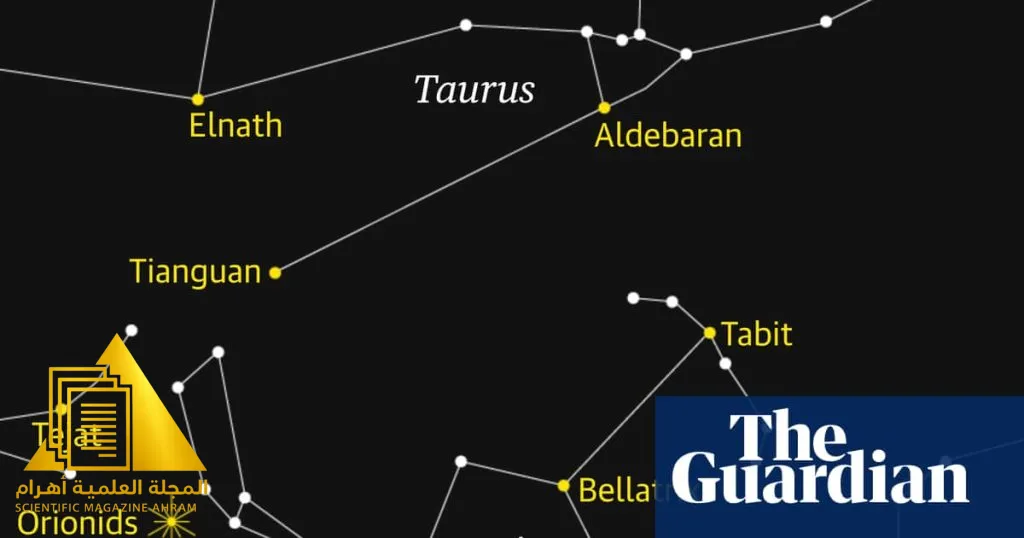
Astronomers note that observers may catch between 10 and 20 meteors per hour during the peak period. To enjoy this display, viewers do not need complex equipment or telescopes; the naked eye is the ideal tool. It is recommended to get away from noisy city lights, head to areas with clear, dark skies, and give your eyes about 20 minutes to adapt to the dark. All you need to do is lie on your back and direct your gaze toward the constellation Orion, where the meteors appear to originate specifically from this region, which explains why they are named the Orionids.
Moments from the Comet’s History
Witnessing these meteors is not merely a visual pleasure, but a direct connection to Halley’s Comet, a comet that has sparked scientific and historical fascination across the ages. Although we may not see the comet itself on our horizon except every 75 or 76 years, these dusty remnants continue to bear witness to its existence, gifting us every autumn with a dazzling light show that reminds us of the grandeur and vastness of the universe.
By: Hany Sallam
Source: theguardian.com


Latest video
تابع معنا تحليل قراءة الصحف اليومية مع الكاتب الصحفي Hany Sallam عبر