
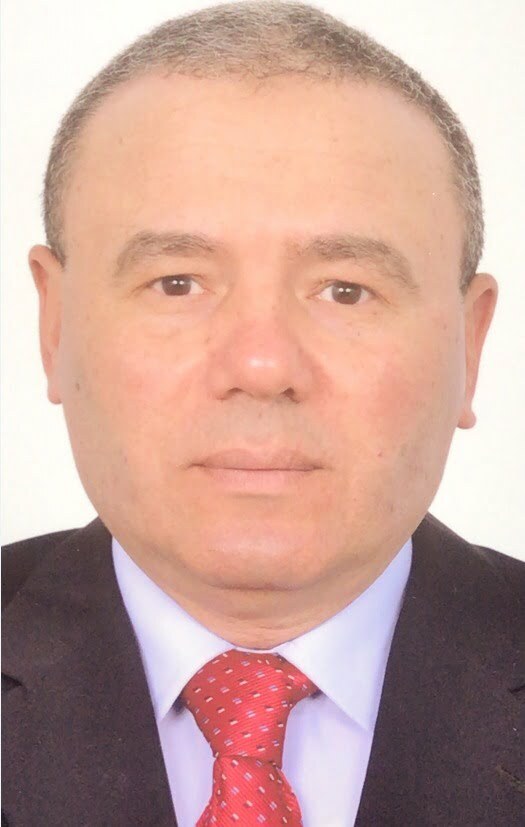

Major General Engineer Assem Abdullah Shokr
Vice Chairman of the Board of Directors – Holding Company for Water and Wastewater
Current Status and Future Vision of Water Desalination in Egypt Amid Climate Change
Wastewater Treatment and Water Desalination Technology
- It holds strategic importance for Egypt to bridge the gap between available water resources and growing water demands for various aspects of life in the country.
Egypt’s Current Water Resource Needs
- Estimated at approximately 100 billion cubic meters annually as a minimum requirement for essential life needs across various sectors (agriculture, industry, tourism, residential requirements, etc.). These needs increase annually due to population growth and the implementation of comprehensive development plans across all fields in Egypt.
- Available water resources in Egypt are estimated at approximately 70 billion cubic meters annually from natural sources such as the Nile River, groundwater, flash floods, rainfall, and natural springs. These resources are insufficient to meet annually increasing water needs, as the deficit in the water resource balance is estimated at about 30 billion cubic meters annually. This water is necessary to meet the requirements of development plans and population growth, and to cope with severe climate changes that have emerged in many surrounding countries, such as desertification, drought, and floods that devastate national resources.
To cope with severe climate changes expected currently
and in the near future—for which the world’s major industrial nations (the G20 group) bear responsibility—Egypt has planned to increase its reliance on new and renewable energy (such as solar energy, wind energy, and expanding reliance on green and blue hydrogen) and to reduce dependence on fossil fuels to lower Egypt’s carbon footprint in partnership with the global community to mitigate climate change risks.
- A few years ago, Egypt established the largest solar energy plant in Benban, Aswan, alongside other sites in Kom Ombo, and wind power plants in Ras Ghareb and West Minya, among others. Plans were also made to produce hydrogen to contribute alongside global community partners in curbing the climate changes facing the world currently and in the future.
- Therefore, under the directives of His Excellency the President of the Republic, the Egyptian government has formulated several future plans (the Strategic Water Desalination Plan, and the Wastewater Recycling and Reuse Plan) that help provide unconventional water sources to increase Egypt’s water resources and bridge the gap between available water sources and the water required for various purposes of life in Egypt.
- To narrow the gap between Egypt’s available water resources and its growing water demands, the government has implemented several measures, including:
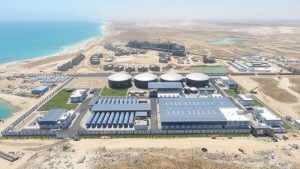
- 1. Expanding the construction of water desalination plants. Over the past period, the capacity of desalination plants increased from 80,000 cubic meters per day in 2014 to 920,000 cubic meters per day by 2022, and will reach 1.4 million cubic meters per day by the end of 2023.
- 2. Developing a strategic plan up to 2050, by which drinking water production capacity from desalination plants will reach approximately 10 million cubic meters per day. This represents an addition of about 4 billion cubic meters annually, aiming to provide drinking water to about 45 million citizens by the target year 2050.
- 3. Expanding the treatment of wastewater (sanitary, agricultural, and industrial), recycling it, and reusing it in agriculture, industry, and other purposes, which will reach about 6 to 8 billion cubic meters of water, added to Egypt’s water resources as an unconventional source.
- 4. Expanding the drilling of water wells to provide additional water sources to bridge the gap between available resources and growing water demands. This is in addition to raising awareness on rationalizing consumption and avoiding water waste, alongside other measures too numerous to list here.
- To achieve this goal at the lowest possible economic cost, the Egyptian government has allowed the local and global private sector to partner with the Egyptian state in the drinking water and sanitation sector by executing engineering projects that fulfill the state’s objective of securing non-traditional water sources at a low economic cost. At the same time, the state regulates and monitors operations under regulations and parameters that prevent environmental harm, improve services for citizens, and mitigate climate change by ensuring that clean green energy sources power water desalination projects.
The Ministry of Housing, Utilities, and Urban Communities has planned to execute 45 sites
for water desalination to provide drinking water and meet various needs in old and new coastal cities, improving drinking water services for citizens as part of efforts to utilize coastlines stretching about 3,000 km along the Mediterranean and Red seas.
- In the near future (before 2030), Egypt will become the largest market in the Middle East for engineering work in water desalination technology and wastewater treatment and reuse for various purposes.
- There are major efforts underway by the Egyptian government to harness every drop of water from torrents and rainfall, which have increased significantly over the past few years due to climate change affecting the planet. This is being done by building dams to store water falling on mountainous areas in Sinai and along the Red Sea coast, and by constructing wells to store torrential water underground to increase groundwater reserves.
The Ministry of Housing, Utilities, and Urban Communities is
- constructing torrential water and rainfall collection networks separate from urban sewage networks in cities such as New Cairo and Alexandria to utilize this water without disrupting residents’ normal daily lives. Implementation is being planned for other cities according to future plans established to cope with climate variables affecting people’s lives.
- The Egyptian government is making extensive efforts, guided by His Excellency the President of the Republic, to provide water for various needs of life in Egypt and to bridge the gap between available resources and required demands. This is achieved by increasing water supplies from non-traditional sources, utilizing climate change to turn challenges into opportunities, and transforming the adversity of climate variables into a benefit that can be harnessed to increase the state’s water resources and utilize them effectively for various life purposes.
As a future vision for the Egyptian state,
- future plans have also been established involving the participation of the local and global private sector to localize and transfer water treatment and desalination technology within Egypt. The state plans to increase employment opportunities for Egyptians working in the drinking water and sanitation sector and raise training levels for designing and operating treatment and desalination plants using the latest desalination technology through local private sector participation alongside specialized international companies. It also aims to encourage public and private sector companies to assemble desalination plants locally as a first phase and develop a plan to encourage international companies to manufacture desalination plant components in industrial zones across Egypt.
- This has been supported by domestic and international interest, the echoes of which we have witnessed in the scramble by major international companies from America, Europe, Korea, China, and Japan to submit expressions of interest to form consortia for executing water desalination projects. More than 200 international and local companies have applied, working to form consortia in accordance with regulations and parameters set by the High Committee formed by a decree from His Excellency the Prime Minister from the concerned ministries (Ministry of Housing, Utilities, and Urban Communities; Ministry of Electricity and Renewable Energy; Ministry of Finance; Ministry of Planning; and the Armed Forces Engineering Authority). The committee established guidelines that were published and received widespread interest from all major specialized international companies, and the execution levels for the companies were set into four groups,
- as follows:
- Companies capable of executing desalination projects up to a capacity of 1 million m3/day.
- Companies capable of executing desalination projects up to a capacity of 600,000 m3/day.
- Companies capable of executing desalination projects up to a capacity of 400,000 m3/day.
- Companies capable of executing desalination projects up to a capacity of 200,000 m3/day.


Latest video
تابع معنا تحليل قراءة الصحف اليومية مع الكاتب الصحفي Hany Sallam عبر