

Cyberwarfare (Strategic Information Technology Wars)

By: Mohamed El-Amin – Programmer and Graphic Designer
The Concept of Cyberwarfare

War in general is a reality that exists as long as humanity exists, and since the dawn of creation, peace and war have alternated in dominating humanity.

Every era has its own tools for war, which evolve alongside human development; the more advanced the adversary, the greater the chances of winning and overcoming the opponent.
If we describe this era as the age of information technology and digitization, it is entirely logical that information technology should provide the shields and swords for warfare.
The concept of cyberwarfare is the use of information and communications technology as a tool for war and to pressure the enemy.
How Cyberwarfare Impacts
Most modern nations rely on information technology to manage their affairs, and their digital space holds all information—from citizens’ personal data, official documents, and bank balances to the control codes for satellites and complex technological warfare tools.

No matter how complex and modern the protection systems a country uses, no system is entirely without vulnerabilities.
Cyber warriors, or cyber hackers, breach systems and firewalls to take control of an opponent’s data and information.
No loss of life has occurred so far as a result of cyberwarfare, but by targeting data—which is the second most important element after human personnel—there is a significant impact on the adversary.
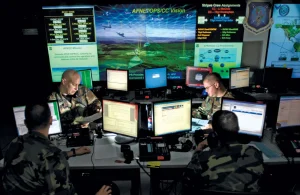
By hacking confidential data and information, the party holding the information gains the advantage in winning the war.
Capabilities of Cyberwarfare
In military theory, cyberspace has been designated as the fifth combat domain alongside water, air, land, and space.
As a realistic phenomenon, cyberwarfare can encompass all of a state’s information, including budgets, soldiers, and politicians.
Once the enemy breaches cyberspace, a state may not be able to defend its electronic networks, prevent aviation accidents, ensure reliable financial transactions, allow the president to communicate with the government over secure communications, or mobilize troops in preparation for combat.
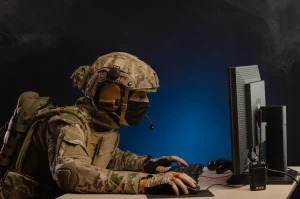
As we explained earlier, information technology spreads across all aspects of life, making the threatened areas limitless.
The Future of Cyberwarfare
In the world of the internet and cyberspace, there are no basic rules, no traditional borders, and no clarity.
The connections between digital and physical systems are increasing, raising risks for both network and physical infrastructure security, and almost everything is managed digitally, which increases the danger of this war in the future.
Electronic warfare may not target the military alone, but cyberattacks can strike water distribution systems, financial systems, gas pipelines, and hospitals, and may be coupled with a broad physical attack.


Cyberwarfare tools have the ability to blow up and destroy energy infrastructure, and can also destroy multiple targets simultaneously, amplifying the impact to the scale of natural disasters; in some places, merely disrupting power leads to human casualties.
From the above, I find that cyberwars have boundless impacts, and the matter must be taken seriously due to its danger, especially in a future that is creeping forward with rapid development.
Science Represents the Necessary Preparation
If science is a lethal weapon of this magnitude, it is logical to arm ourselves with it to counter anyone who uses it as a destructive tool.
The matter is not limited to simply acquiring modern technologies and systems sold to us, but we must possess development capabilities, discover vulnerabilities in current protection systems, and develop solutions to close these gaps.

All state agencies must also adapt and work with digital experts to keep pace with this evolution and defeat cyber threats.
References:
Dunn Cavelty M. Cyberwar: concept, status quo, and limitations. CSS Analyses in Security Policy. 2010;71.
Arquilla J, Ronfeldt D. Cyberwar is coming!. Comparative Strategy. 1993 Apr 1;12(2):141-65.
Robinson M, Jones K, Janicke H. Cyber warfare: Issues and challenges. Computers & security. 2015 Mar 1;49:70-94.


Latest video
تابع معنا تحليل قراءة الصحف اليومية مع الكاتب الصحفي Hany Sallam عبر