
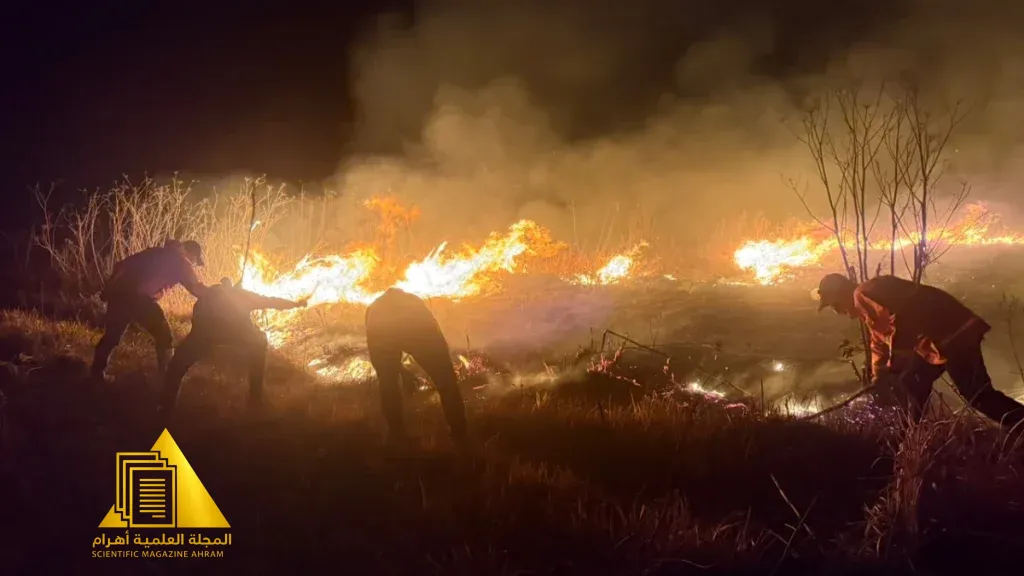

Environmental Disaster in the Heart of Java
Indonesia recently witnessed a natural disaster that cast a shadow over the ecological balance in one of the world’s most important nature reserves, as massive fires broke out in Bromo Tengger Semeru National Park on the island of East Java. These fires, which spread to consume about 899 hectares of savanna and dense forests, were not just an accidental incident, but a heavy blow to one of the country’s most prominent tourist and environmental centers, prompting authorities to make an immediate decision to completely close the area to visitors to ensure their safety.
Threat to Unique Biodiversity
Considered the Bromo Reserve
a fragile ecosystem characterized by unique geological and botanical features, the area harbors a biodiversity that researchers constantly strive to protect. The loss of nearly 900 hectares of vegetation means the destruction of natural habitats for many living creatures that depend on these ecosystems to survive. Experts warn that fires in such areas do not merely destroy trees, but extend to affect the soil and natural water cycles, making the restoration of ecological balance in the region a long and complex process that requires years of monitoring and natural rehabilitation.
Climate Change and Human Activity
While firefighting teams and relevant authorities continue their efforts to gain full control over remaining pockets of fire, the question arises about the reasons for the recurrence of these disasters. Data indicates that the combination of harsh weather conditions, such as prolonged dry spells, and unchecked human activities creates an ideal environment for fires to spread extremely fast. Known for its imposing volcanic terrain, the reserve remains a testament to the vulnerability of ecosystems to rapid climate shifts, which places a responsibility on the international community to strengthen protection and fire prevention measures in sensitive natural areas to ensure the survival of this natural heritage for future generations.
By: Hany Sallam
Source: news.mongabay.com


Latest video
تابع معنا تحليل قراءة الصحف اليومية مع الكاتب الصحفي Hany Sallam عبر