
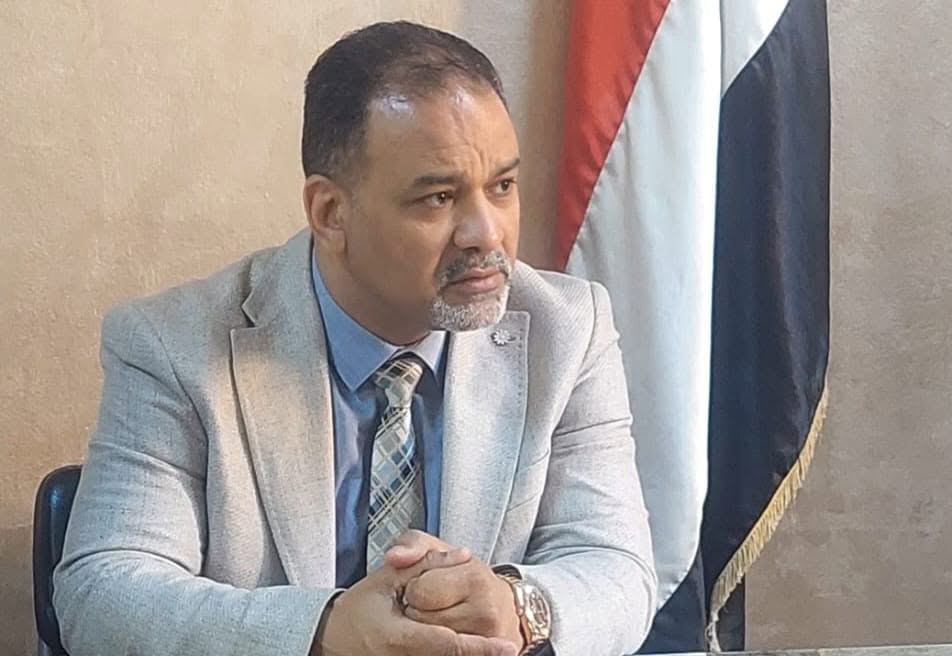

By: Educational Expert
Dr. Nasser El-Gendy
Did you ever imagine that we would actually start saying goodbye to the old Thanaweya Amma system, with all its psychological pressure, nervous tension, and the fear that students and their families live with for a whole year, if not longer?
As an educational administration official—and as a father too—I always wondered: why should a student’s future depend on a single exam? And why do we raise an entire generation on fear instead of understanding, confidence, and imagination? Perhaps that is why, when I heard about the Egyptian Baccalaureate, I felt for the first time that there was real hope of changing the story from its roots, rather than just painting it in different colors and calling it “development.”
The Egyptian Baccalaureate is a new system approved by Parliament, and people are already talking about it—from schools to homes, from teachers to students, and from parents to people on the street. It is not a mandatory system, and that in itself is something different. Students can choose between the traditional Thanaweya Amma system or enter the Baccalaureate track, depending on their inclinations and ambitions. For the first time, this gives us an opportunity to respect individual differences among students, to recognize that not everyone has to walk down the same path, and that not all roads lead to top-tier faculties.
As an educational administration director, over the years I have seen how students are treated unfairly, not because they are not smart, but because the system failed to accommodate them. The new system offers four clear educational tracks: Medicine and Life Sciences, Engineering and Computer Science, Business, and Arts and Humanities. For the first time, a student with artistic talent or a business mind can find a genuine path to follow early on, instead of being forced to lock themselves into a science or arts track that they do not believe in.
The first year of secondary school will remain a general preparatory year, so that students can experiment and get to know themselves, before choosing their specialization starting in the second year. This is very important, because a large part of Egypt’s education crisis is that we push students to choose their future before they even know who they are or what they love.
Moreover, one of the most important things that encouraged me is that this system breaks the concept of the “single chance.” Instead of students being terrified of the end-of-year exam, they have two exams in each subject, as well as an opportunity to retake the exam to improve their grades. This makes a mistake not the end of the world, and gives them a real chance to learn, rather than just pass.
As an administration director, I believe that if this system is implemented seriously and with good intentions, it will be a true turning point. But we must say clearly: there are major challenges, and we cannot ignore them. Are all schools ready with the necessary infrastructure? Have teachers been trained in modern teaching methods and alternative assessment? Have plans been put in place to raise awareness among parents and help them understand the new idea and accept it? These are questions that must be answered honestly, without downplaying or exaggerating.
I have begun to notice myself in our daily meetings and field visits that there is a state of anticipation, mixed with both fear and hope. Parents need someone to explain things to them, teachers need support, and administrations need tools and clear plans, not general instructions. Amidst all of this, the student is the priority, and we must put their psychological well-being and personal development at the top of our list.
Once, when I was at a school, I met a first-year secondary student who asked me: “Does this new system mean I can learn something I love, instead of just memorizing to pass?” At that moment, I felt that this simple question is the core of the whole story. Yes, the goal of the Baccalaureate is to give students the space to choose, make mistakes, learn, try again, and discover themselves, rather than living in an exhausting and frustrating race for grades.
Education is not just about books, curricula, and exams; education is about building human beings. When we have a system that sees students as human beings, rather than just numbers in a control room, we are on the right path. Is the road long? Certainly. Are there difficulties? Of course. But the start has begun, the intention is there, and the opportunity is before us.
Ultimately, after everything I have seen in the field, I can say that the Egyptian Baccalaureate is not just a project on paper; it is an idea being born, still moving and growing. If we manage to embrace and nurture it with awareness and responsibility, in a few years we will see a different generation—one that learns out of love, thinks, dreams, and is not terrified of exams. A generation that chooses its path and walks it with its head held high, rather than bowed before a total score.
The real question is not whether we will succeed or not, but rather: are we ready to change our minds, not just our curricula? Because what will determine the fate of the Baccalaureate is not the law, but the way we implement it, and the belief we plant in people’s hearts that it deserves a better chance… and so do our children.


Latest video
تابع معنا تحليل قراءة الصحف اليومية مع الكاتب الصحفي Hany Sallam عبر