

Rituals of Fear of the Unknown
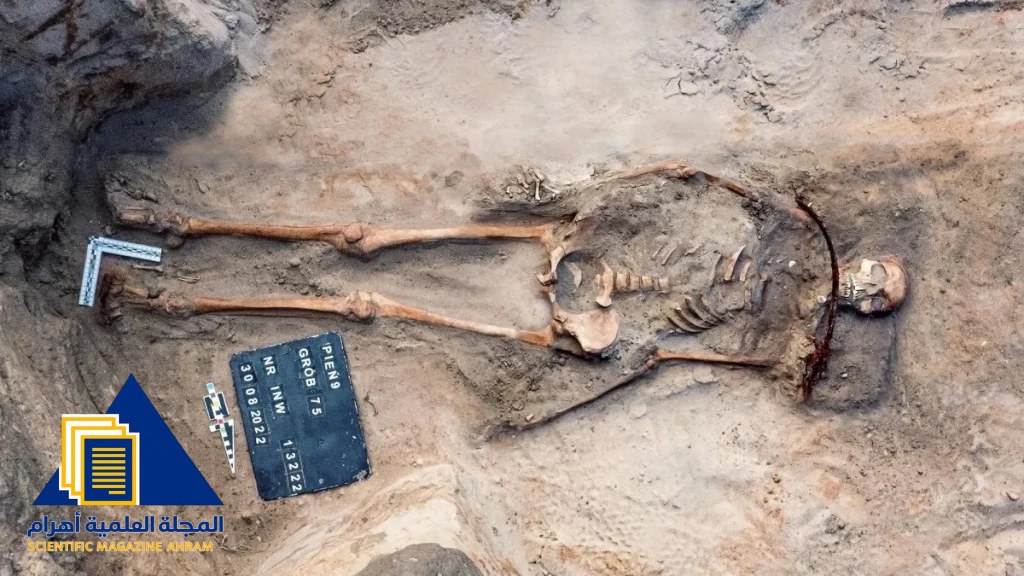
Deep in the Polish soil, archaeologists have uncovered a find that brings together history, sociology, and myth. Dating back about four centuries, the grave holds the remains of a wealthy young woman who was not buried like others. A sharp sickle was placed around her neck, and an iron padlock was fastened to her big toe. These strange rituals are not mere funeral decorations; they are physical evidence of a terror that swept seventeenth-century communities regarding the idea of “vampires,” or creatures that might return to life to harm the living.
Why the Sickle and the Padlock?
Experts point out that burying the dead in this way reflects popular beliefs that took root in that era. The sickle, positioned in a way that would cut off the head if the body tried to rise, was believed to be a means to prevent the dead person from returning from the grave. As for the padlock, it symbolized finally closing the door on the return of the soul to the body, or perhaps keeping the “dead person” from leaving the grave. These are rituals expressing ancient societies’ anxiety about misunderstood death, where anyone showing unusual symptoms before dying was seen as a supernatural threat.
A Look at the Past
This girl was no exception; archaeologists have found similar graves in various locations across Eastern Europe containing iron tools or stones placed in the mouths of corpses to keep them from “feeding” on the blood of the living. The discovery of this grave provides us with a unique window into collective psychology in the Middle Ages and the early modern era, when limited science mixed with superstition to confront the unknown. Thus, these remains stand as witness to humanity’s eternal struggle with the fear of death, and how myths managed to shape funeral practices that lasted for centuries, leaving an indelible mark on the records of human history.
By: Hany Sallam
Source: popsci.com


Latest video
تابع معنا تحليل قراءة الصحف اليومية مع الكاتب الصحفي Hany Sallam عبر