

By: Dr. Assem Abdel Moneim Ahmed Mohamed
Assistant Professor, Central Laboratory for Agricultural Climate
Member of the First Intergovernmental Science-Policy Platform on Biodiversity and Ecosystem Services (IPBES)
On Monday, October 11, 2021, the official opening sessions began for the first part of the 15th Conference of the Parties to the Convention on Biological Diversity (COP15), alongside the tenth meeting of the Conference of the Parties serving as the meeting of the Parties to the Cartagena Protocol on Biosafety, and the fourth meeting of the Conference of the Parties to the Convention on Biological Diversity serving as the meeting of the Parties to the Nagoya Protocol on Access to Genetic Resources and the Fair and Equitable Sharing of Benefits Arising from Their Utilization, under the presidency of the People’s Republic of China.
Before examining the goals and expected outcomes of the 15th session of the Conference of the Parties to the Convention on Biological Diversity, I must first point out the history of the convention. In 1992 in Rio de Janeiro, Brazil, 20 years after the first UN Conference on the Human Environment in Stockholm, leaders, politicians, diplomats, scientists, journalists, and civil society members from some 179 countries gathered for the Earth Summit. Three highly significant conventions were signed there, including the Framework Convention on Climate Change (whose 27th Conference of the Parties Egypt had the honor of hosting in Sharm El-Sheikh a few weeks ago), the Convention on Biological Diversity (whose 14th and final session Egypt had the honor of hosting in Sharm El-Sheikh in 2018), and the Convention to Combat Desertification. Together, these three agreements are known as the Rio Conventions.
The Convention on Biological Diversity now has 196 parties, entered into force in December 1993, and has three main objectives: first, the conservation of biological diversity; second, the sustainable use of biological resources; and third, the fair and equitable sharing of benefits arising from the utilization of genetic resources.
To make sure the objectives of the Convention on Biological Diversity are met, the parties convene during Conferences of the Parties and sign agreements alongside goals and targets. Each Conference of the Parties and its outcomes are usually named after the host city, such as the Nagoya Protocol on Access and Benefit-Sharing (2010) and the Cartagena Protocol on Biosafety (2000), which are supplementary agreements to the Convention on Biological Diversity.
The 15th meeting of the Conference of the Parties was scheduled to be held in China in 2020, but the conference experienced several delays due to the COVID-19 pandemic. For the first time, this 15th session was held in two phases. The first part of the 15th meeting of the Conference of the Parties to the Convention on Biological Diversity took place from October 11 to 15, 2021, and aimed to issue the Kunming Declaration, which adopted the establishment of an effective post-2020 global biodiversity framework (GBF) and its implementation to offset current losses witnessed in biodiversity while ensuring biodiversity is placed on a path to recovery by 2030 at the latest, in order to fully achieve the 2050 Vision carrying the slogan “Living in Harmony with Nature.”
Due to the ongoing COVID-19 pandemic at the time, the high-level segment was held primarily online alongside limited in-person participation in Kunming, China. The conference adopted the title “Ecological Civilization: Building a Shared Future for All Life on Earth.”
The high-level segment was chaired by Huang Runqiu, China’s Minister of Ecology and Environment and President of COP15.
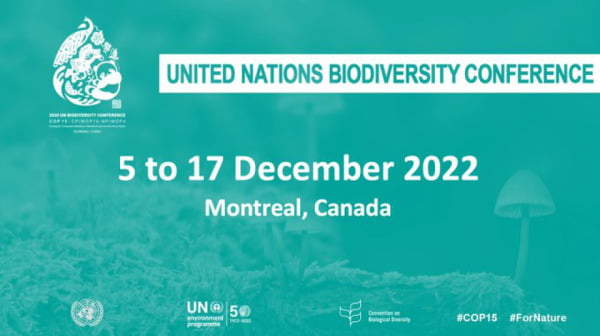
The second phase of the 15th meeting of the Conference of the Parties to the Convention on Biological Diversity was scheduled to be held from December 7 to 19, 2022, in Montreal, Canada, under Chinese presidency, but was organized in Montreal for health reasons. Governments from around the world gathered there to agree on a new set of goals to guide global action through 2030 to halt and reverse nature loss, and to adopt a roadmap for the current decade—the “Post-2020 Global Biodiversity Framework.” The primary goal of the conference is to halt the loss of biodiversity by agreeing on an action program for “Living in Harmony with Nature” by 2050, and biodiversity parity with carbon neutrality in the climate field.
An important question crosses the minds of many specialists and non-specialists alike regarding what needs to be addressed during the 15th Conference of the Parties in the coming week, beyond the goals of the conference.
Undoubtedly, there are several goals that must be addressed and discussed seriously, including:
- Adopting a fair and comprehensive framework backed by the resources needed for implementation.
- Setting clear targets to address overexploitation, pollution, fragmentation, and unsustainable agricultural practices.
- A plan to safeguard the rights of indigenous peoples and recognize their contributions as protectors of nature.
- Financing biodiversity and aligning financial flows with nature to channel funds toward sustainable investments and away from environmentally harmful ones.
- Mainstreaming biodiversity across all economic sectors without delay.
- Establishing binding laws for all parties to conserve marine and coastal biodiversity and ensure its sustainable use.
- Biodiversity and agriculture must play a major role in the upcoming meeting, and a project must be submitted in cooperation with relevant organizations to ensure the conservation and sustainable use of soil biodiversity.
References
Convention on Biological Diversity
United Nations Environment Programme
https://www.cbd.int/conferences/2021-2022/cop-15/documents


Latest video
تابع معنا تحليل قراءة الصحف اليومية مع الكاتب الصحفي Hany Sallam عبر