
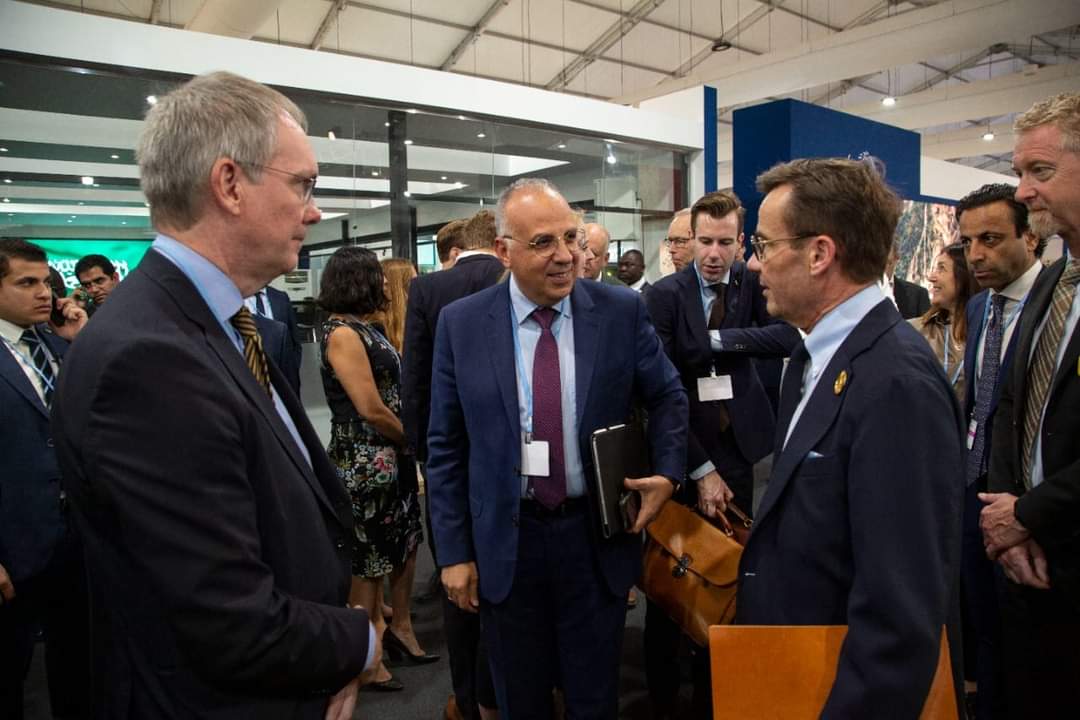

Coverage by Dr. Meissa Salah El-Din
Follow-up by Eng. Reham Adel Kamal
“Ministry of Water Resources and Irrigation at COP27”:
“During COP27… Dr. Swelam participates in the session ‘Enhancing Scientific Innovations to Increase Resilience in Africa to Climate Issues'”
- Dr. Swelam pointed out that Egypt seeks to deliver Africa’s voice to the world during the climate conference, given that the continent is the least responsible for carbon dioxide emissions and the most harmed by climate change.
- He also urged the need to search for sustainable solutions to address increasing climate change, and to expand the use of water and agricultural systems that are more resilient and suited to climate change.
- He also explained the importance of scientific research for managing water in advanced ways and maximizing the return from a unit of water in food production.
- He pointed to the need to support scientific research, particularly by empowering researchers to apply their research results to solve actual problems on the ground.
- The importance of exchanging ideas regarding smart and sustainable agricultural systems, taking into account the technological gap between the West and Africa, and noting that solutions relying on advanced technology may not be suitable for smallholder farmers due to their lack of economic feasibility.
- The official launch of the “Water Adaptation Initiative” during “Water Day,” which Egypt will launch on November 14, and the emphasis on the importance of supporting this initiative, which addresses global water and climate challenges, especially since the negative impacts of climate change affect all countries, whether developed or developing, while pointing at the same time to the importance of giving priority to developing countries, which are the least resilient in facing climate change.
Enhancing the Link Between Water and Climate Action:
- The importance of training personnel working in the water sector, and Egypt is ready to be a regional center for the African continent in the field of capacity building.
- Dr. Swelam also emphasized the need to support scientific research, particularly by empowering researchers to apply their research results to solve actual problems on the ground.
- He affirmed the importance of exchanging ideas and success stories among various countries regarding smart and sustainable agricultural systems, taking into account the technological gap between the West and Africa, and that solutions relying on advanced technology may not be suitable for smallholder farmers due to their lack of economic feasibility.
The Importance of the “Water Adaptation Initiative”:
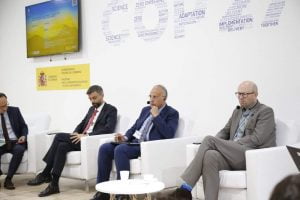
Dr. Swelam explained that the initiative aims to work on improving water management, enhancing cooperation in adaptation, and strengthening the link between water and climate action, pointing out that this initiative was prepared in partnership with the World Meteorological Organization and other international partners, relying on the outcomes of numerous international meetings held over the past months under the umbrella of several international coalitions such as the “Water and Climate Leaders Coalition,” the “Adaptation Action Coalition,” and the “Marrakech Partnership for Global Climate Action water pathway.”
Dr. Swelam reviewed the pillars of the initiative:
- Ensuring economic growth does not affect freshwater use and degradation
- Accounting for green water when developing national water use plans, adaptation and mitigation strategies, and protecting freshwater ecosystems
- Cooperating across international river basins regarding adaptation to climate change
- Promoting sustainable, low-emission, and low-cost management of drinking water and wastewater
- Developing early warning systems for extreme weather events
- Linking national water policies with climate action to reflect the long-term impacts of climate change on water resources and demand
The Future Vision of the Ministry of Water Resources and Irrigation:
- Relying on raising the overall efficiency of water use and maximizing the return from a unit of water
- Continuing work on projects for canal rehabilitation, covered drainage, flood protection, shore protection, and water reuse
- The importance of relying on modern irrigation systems in agriculture, provided that the latest globally used systems are applied
- The future will witness an expansion in the use of desalination as an important renewable water resource to cope with population growth
- The importance of expanding the use of modern technology and renewable energy in desalination to reduce costs
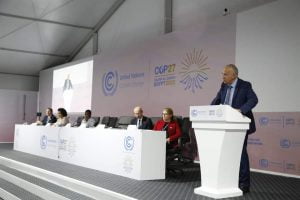
Professor Hany Sewilam, Minister of Water Resources and Irrigation, participated in the session titled “Improving Community Life: Challenges and Opportunities to Achieve Sustainability and Growth,” held during the COP27 climate conference.
Dr. Sewilam noted in his speech that all projects and policies undertaken by the ministry aim to serve society, improve services provided to citizens, elevate their standard of living, achieve sustainable development, and secure food security.
Dr. Sewilam: Water Desalination as an Important Source of Renewable Water:
He added that the future will see an expansion in the use of water desalination as an important source of renewable water to cope with population growth, provided that each unit of water is used optimally to achieve economic feasibility. He also noted the importance of expanding the use of modern technology and renewable energy in desalination, which will help reduce costs, as energy is the most important element in water treatment and desalination.
For more news, follow us…
Reference :
Ministry of Water Resources and Irrigation, Cabinet of Ministers
https://www.cabinet.gov.eg https://www.mwri.gov.eg


Latest video
تابع معنا تحليل قراءة الصحف اليومية مع الكاتب الصحفي Hany Sallam عبر