


Egypt’s Efforts to Promote the Green Economy and Green Bonds
By Al-Shaimaa Mahmoud Helmy
What Is the Green Economy?
The green economy emerged as a response to multiple global crises.
It generally aims to achieve economic development by carrying out environmentally friendly projects and using new technologies in renewable and clean energy. It calls for shifting existing sectors toward a green economy model and changing unsustainable consumption patterns, which creates new jobs aimed at reducing poverty, alongside lowering energy intensity and reducing resource consumption and production.
Efforts to Move Toward the Green Economy:
Egypt is taking successive steps and measures to lead the transition to a green economy across the region. In this context:
1 – National Climate Change Strategy 2050
Egypt launched the National Climate Change Strategy 2050 during the 27th UN Climate Change Conference (COP27) held in Sharm El-Sheikh, Egypt.
We will look at the economic objectives as follows:
The five strategic goals focus on achieving sustainable economic growth through:
First:
Low-emission development across various sectors by increasing the share of renewable and alternative energy sources in the energy mix and expanding them through the establishment of wind farms and solar power plants, producing energy from waste, and expanding the use of bioenergy. This is in addition to developing new technologies to accommodate renewable energy sources, such as smart control systems; exploring new alternative energy sources such as green hydrogen and nuclear energy; increasing the use of renewable energy to generate electricity within industrial facilities and using solar thermal applications in industrial processes; and phasing out coal and shifting to low-carbon fuels.
Second:
Maximizing energy efficiency by improving the efficiency of thermal power plants, transmission and distribution networks, and oil and gas-related activities; improving the energy efficiency of electrical appliances and equipment; and encouraging consumers to adopt technologies that rely on cleaner energy sources, such as electric and natural gas vehicles, public mass transit systems, and bicycles. This also includes improving energy efficiency in buildings, implementing the national green building code for new structures, and boosting the energy efficiency of industrial processes across all industries.
Third:
Adopting sustainable consumption and production trends to curb greenhouse gas emissions from non-energy activities. This is achieved by reducing greenhouse gas emissions from agricultural activities, such as rice cultivation, and livestock production through modern technologies and various nutrition systems; promoting the 4Rs concept (reduce, reuse, recycle, and recover) for municipal and agricultural waste; and safely disposing of solid waste in appropriate landfills while capturing the gases generated from them.
Fourth:
One of the strategy’s goals is to improve the infrastructure for climate finance. To achieve this goal, work will be done to promote local green banking and green credit lines, and to encourage innovative financing mechanisms that prioritize adaptation measures such as green bonds. It also involves engaging the private sector in climate finance, promoting green jobs, aligning with the guidelines of multilateral development banks (MDBs) for climate finance, and building on the success of existing climate finance programs.
How to Implement the National Climate Change Strategy 2050
The state has outlined a set of tools and policies used to implement the National Climate Change Strategy, including:
1. Innovative financing tools such as green bonds.
2. Traditional financing tools such as concessional loans and grants from multilateral development banks.
3. Preparing and submitting projects under the Green Climate Fund and the Paris Agreement’s new sustainable development mechanism.
4. Building a national monitoring, reporting, and verification system to help track and plan climate action.
5. Ministries applying sustainability standards when selecting projects to be submitted to the Ministry of Planning and Economic Development and the Ministry of Finance.
6. Engaging stakeholders at various stages of strategy development.
7. Using the interactive map as a planning tool to identify areas vulnerable to potential climate change risks.
8. Identifying and using digital solutions that boost the execution of low-carbon and climate-resilient solutions.
9. Establishing sustainable development and climate change units in every ministry.
10. Integrating climate change aspects into environmental impact assessment (EIA) studies in Egypt.
2. Issuing Green Bonds
The Egyptian Ministry of Finance issued the first sovereign green bond offering in the Middle East and North Africa in September 2020, valued at $750 million with a 5-year tenor and a yield of 5.25%, helping place Egypt on the path of sustainable financing.
Green bonds are debt instruments issued to raise funds dedicated to financing climate- and environment-related projects.
Green Economy Projects
Green economy projects accounted for 15% of the state’s investment plan in the 2020–2021 fiscal year, while the government aims to reach 30% from green economy projects during the current 2021–2022 fiscal year, with the share reaching about 50% by 2024–2025.
Over the past year, the Egyptian government approved the implementation of 691 eco-friendly projects in renewable energy, water, and public transport sectors, and it also started issuing Green Star certificates for hotels that apply environmental compliance policies.
The Ministry of International Cooperation worked to match development financing with the 17 Sustainable Development Goals announced by the United Nations, as the ministry’s active portfolio includes 372 projects across various state sectors and the private sector valued at $26.5 billion.
Goal 6: Clean water and sanitation from the Sustainable Development Goals comes with funding of $5.3 billion, making up 20.3% of the active portfolio through 37 projects across 88 locations in the country’s governorates, and Goal 7: Affordable and clean energy stands at $5.9 billion, to implement 32 projects across 61 locations in the country’s governorates, representing 23.2% of total development financing.
It was also announced that 32 projects valued at $5.1 billion were launched to contribute to Goal 11: Sustainable cities and communities.
To achieve Goal 13: Climate action, 12 projects valued at $365 million were launched.
First: Energy Projects
The renewable energy sector is one of the most important pillars of the government’s strategy to achieve the green transition and combat the negative impacts of climate change, so the state developed an integrated strategy to expand renewable energy projects by 2035.
Green Hydrogen:
Egypt has entered the green hydrogen production market to generate power, aiming to rank among the world’s leading countries in relying on this energy type while also targeting exports. This follows an update by the Ministry of Electricity and Renewable Energy to Egypt’s energy strategy to include green hydrogen.
In March 2021, the Ministry of Electricity and Renewable Energy, the Ministry of Petroleum and Mineral Resources, and the Navy signed an agreement with the Belgian company DEME to begin studies for a project to produce and export green hydrogen from Egypt. This is the second agreement of its kind, following an initial agreement signed with the German company Siemens in February of that year to launch a pilot green hydrogen production project.
Among the Most Prominent Renewable Energy Projects
《 Benban Solar Park: The World’s Largest Solar Farm 》
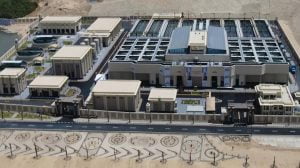
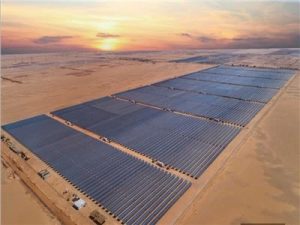
The Benban solar park project is a unique model of cooperation between stakeholders—government, the private sector, and international financial institutions—to build the world’s largest solar farm. Spanning 36 square kilometers and comprising 6 million solar panels, the project was carried out by more than 40 companies from 12 different countries to generate 1,500 megawatts of power. It strengthens Egypt’s sustainable energy strategy, supports the spread of clean energy, helps mitigate climate change, and reflects the government’s strong commitment to transitioning toward a green economy with the participation of all stakeholders.
The Benban solar park supports the implementation of Sustainable Development Goal 7 on affordable and clean energy, Goal 8 on decent work and economic growth, and Goal 17 on partnerships for the goals. The project reduces emissions of millions of tons of greenhouse gases that cause global warming, creates jobs, and boosts the Egyptian economy.
Since the issuance of Renewable Energy Law No. 203 of 2014, the government has rolled out incentives for private sector entry into renewable energy to support the country’s green transition strategy. These efforts have sparked several initiatives, including the establishment of KarmSolar—the first specialized private sector solar energy company in Egypt to obtain a license from the relevant authorities—enabling Egypt to secure its position as a leading country in the Middle East and North Africa in renewable energy.
Agriculture and Water Projects:
Projects in this field aim to:
- Achieve sustainable use of natural agricultural materials.
- Focus on integrated agricultural management methods.
- Improve water use efficiency in agriculture, upgrade irrigation and drainage systems, and modify crop patterns in favor of less water-consuming crops.
- Reuse agricultural drainage water and sewage.
Among the Most Prominent Water Treatment Projects in Egypt:
《 El Mahsama Water Plant 》
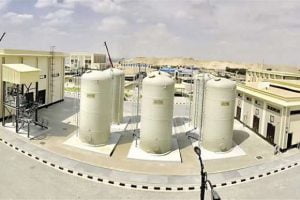
The El Mahsama plant in the Sinai Peninsula is the largest agricultural drainage water treatment plant in the world. It enables the state to irrigate 70,000 feddans of agricultural land using one million cubic meters of water daily, while creating thousands of jobs and fostering community development.
Agreements Signed in the Field of Transition Toward a Green Economy:
The international cooperation portfolio with international institutions stands at $11 billion to achieve climate change adaptation and mitigation goals. These allocations align with Egypt’s vision to transition to a green economy and achieve sustainable development goals.
***Key Agreements Signed in Egypt’s Green Economy Transition:
The renewable energy sector has witnessed unprecedented reforms, prompting international financial institutions to provide $4 billion to finance the Benban solar power project, which is one of the largest plants in the world, with the participation of institutions such as the Bank
How Does the World View Egypt’s Efforts to Transition to a Green Economy?
1 – FDI Intelligence, a platform affiliated with the global financial newspaper the Financial Times, published a co-authored article by Dr. Rania Al-Mashat, Minister of International Cooperation, and Sergio Pimenta, Vice President for the Middle East and Africa at the International Finance Corporation, shedding light for the first time on the details of Egypt’s green recovery. The article stated that, thanks to policies adopted in renewable energy, the Arab Republic of Egypt has become a leading country in the Middle East and North Africa in the policies and procedures of the transition to a green economy through a clear strategy to boost the use of renewable energy and implement eco-friendly projects, making the Egyptian model an inspiration for emerging and transition economies seeking to shift toward a green economy, according to the 2020 Solar Photovoltaic Market Outlook.
Over the past year, the Egyptian government approved the implementation of 691 eco-friendly projects across the new and renewable energy, water, and transport sectors. It also began issuing green star certificates for hotels that apply environmental compliance policies, and successfully issued the Middle East and North Africa’s first green bonds, worth $750 million, to finance eco-friendly projects.
2 – Maria Teresa Pisani, economic affairs officer at the United Nations Economic Commission for Europe, praised Egypt’s pivot toward the green and circular economy, noting the importance of Africa for Europe, particularly countries moving toward a circular economy, and pointing to the success story of Egypt’s Robiky Leather City, which produces zero waste, calling it “a story of hope that reinforces our vision of traceability.”
3 – The American magazine The National Interest stated that, by hosting the United Nations Climate Change Conference (COP27) this year, Egypt seeks to speak for Africa, elevating the continent’s aspirations in confronting climate change-related impacts, and considered that the event provides Egypt with the opportunity to present itself “as a louder voice for key African countries seeking a greater role for natural gas in the energy transition process.”
4 – British Ambassador to Cairo Gareth Bayley said that the time has come for Egypt to emerge as a superpower in renewable energy production—whether solar energy through projects like the Benban plant, wind energy in the Gulf of Suez, or green hydrogen production—in response to a question from the Middle East News Agency about the future of renewable energy in Egypt and government efforts to encourage it and develop its infrastructure, according to the Middle East News Agency.
How Does the World View Egypt’s Efforts to Transition to a Green Economy?
1 – FDI Intelligence, a platform affiliated with the global financial newspaper the Financial Times, published a co-authored article by Dr. Rania Al-Mashat, Minister of International Cooperation, and Sergio Pimenta, Vice President for the Middle East and Africa at the International Finance Corporation, shedding light for the first time on the details of Egypt’s green recovery.
The article stated:
Thanks to its renewable energy policies, the Arab Republic of Egypt has become a leading country in the Middle East and North Africa in policies and measures for the transition to a green economy. This is driven by a clear strategy to boost renewable energy use and implement eco-friendly projects, making the Egyptian model an inspiration for emerging nations and economies in transition that wish to shift toward a green economy, according to the 2020 Solar Outlook Report.
Over the past year, the Egyptian government approved the implementation of 691 eco-friendly projects across the renewable energy, water, and transport sectors. It also began issuing green star certificates for hotels that comply with environmental standards, and successfully issued the Middle East and North Africa’s first green bonds, valued at $750 million, to finance eco-friendly projects.
2 – Maria Teresa Pisani, economic affairs officer at the United Nations Economic Commission for Europe, praised Egypt’s shift toward a green and circular economy, noting the importance of Africa for Europe, particularly countries moving toward a circular economy. She pointed to the success story of Egypt’s Al-Robiky Leather City, which produces zero waste, describing it as “a story of hope that reinforces our vision for traceability.”
3 – The American magazine The National Interest reported that by hosting the UN Climate Change Conference (COP27) this year, Egypt seeks to speak for Africa, elevating the continent’s aspirations in confronting climate change impacts. The magazine noted that the event provides Egypt with the opportunity to present itself as “a louder voice for key African nations seeking a greater role for natural gas in the energy transition.”
4 – British Ambassador to Cairo Gareth Bayley said the time has come for Egypt to emerge as a renewable energy superpower—whether through solar energy via projects like the Benban solar park, wind energy production in the Gulf of Suez, or green hydrogen production. His remarks came in response to a question from the Middle East News Agency regarding the future of renewable energy in Egypt and government efforts to encourage it and develop its infrastructure.
Institutional Measures and Environmental Legislation for Companies and New Projects:
- Amending environmental legislation and developing environmental management systems.
- Increasing the drive toward lower-carbon green economic development.
- Completing the institutional framework for managing national efforts to adapt to the impacts of climate change.
- Integrating the environmental dimension into development projects.
- Adopting domestic fiscal policies that incentivize and support eco-friendly facilities, and stiffening penalties for environmental malpractice.
- The Ministry of Investment’s launch of the Egyptian Corporate Social Responsibility Index for the 100 companies listed on the stock exchange, incorporating the environmental and social practices of each company. This will indirectly drive these companies to reduce their greenhouse gas emissions to comply with environmental laws and standards.
References:
- Ministry of Environment Website
- Cabinet Information and Decision Support Center, Egypt Economic Conference 2022 page info@eec2022.gov.eg

Latest video
تابع معنا تحليل قراءة الصحف اليومية مع الكاتب الصحفي Hany Sallam عبر