
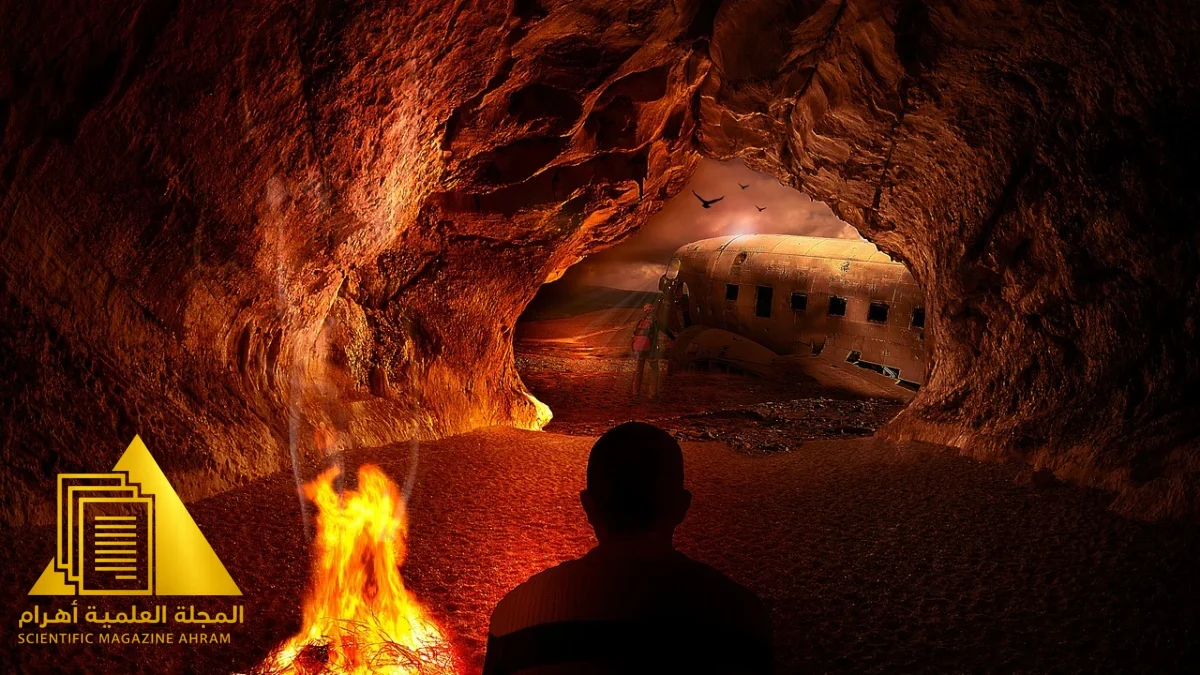

Secrets of Ancient Fires in Neanderthal Caves
For centuries, Neanderthals were commonly depicted as savage beings living in the dark and relying solely on primitive instinct. However, recent scientific discoveries continue to disprove this stereotype, revealing advanced daily behaviors that come surprisingly close to the lives of modern humans. In a fascinating new archaeological study, researchers have managed to solve the mystery of how much firewood Neanderthals consumed daily, and how cleverly they managed their cramped living spaces.
A Carbon Map Revealing Consumption Volume
A team of researchers relied on detailed analysis and a comprehensive survey of 640 fragments of charcoal carefully scattered inside an ancient rock shelter used by Neanderthals as a campsite and settlement. By mapping this burned debris in detail and precisely determining its locations and age, scientists were able to estimate the amount of wood that was burned. The striking surprise indicated that a single Neanderthal group burned about 24 pounds of firewood daily, a figure that reflects a heavy and deliberate reliance on fire for heating, cooking, and protecting themselves against harsh predators during the Ice Ages.
A Cleaning System Reflecting Organized Minds
The discovery was not limited to the amount of firewood consumed; spatial analysis of the charcoal also revealed two separate areas specifically designated for burning wood inside the camp. Even more striking is the emergence of clear evidence of a rudimentary “cleaning system,” where residents removed the ash and debris of old fires and transported them regularly to organize their living space and keep the area clean. This coordinated organizational behavior proves once again that Neanderthals were not random in their daily lives, but possessed spatial awareness and advanced social skills that go far beyond what we long believed.
By: Hany Sallam
Source: earth.com


Latest video
تابع معنا تحليل قراءة الصحف اليومية مع الكاتب الصحفي Hany Sallam عبر