
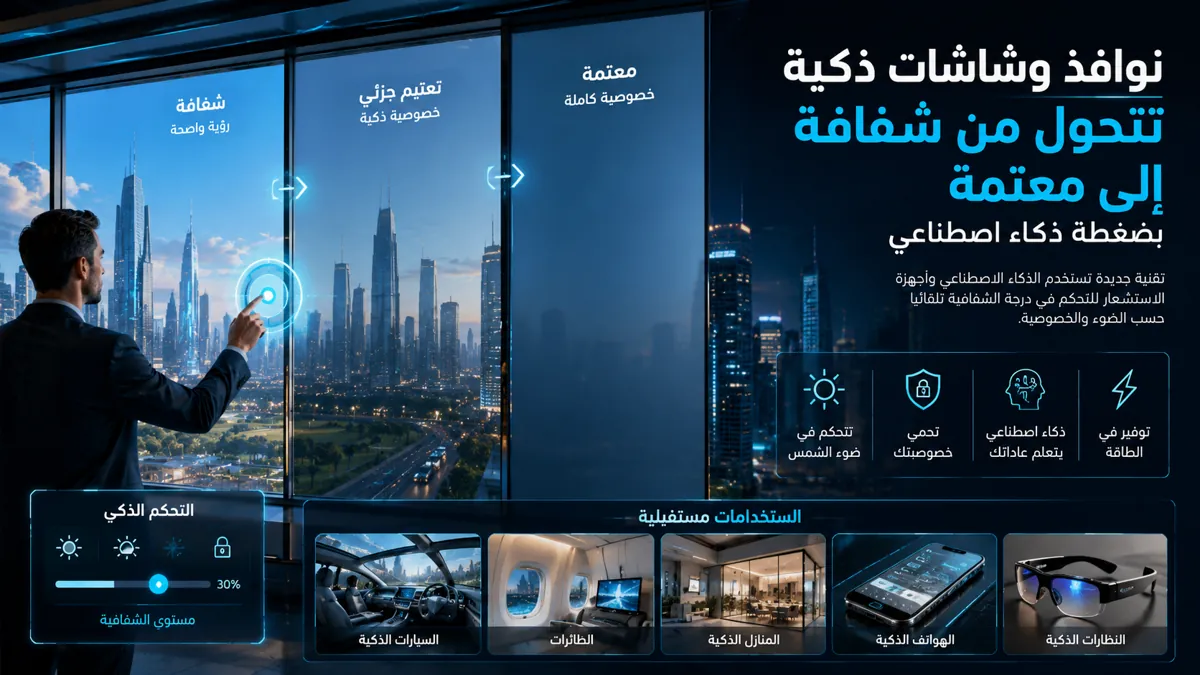

Asian technology companies are developing a new generation of smart displays and smart glass capable of automatically changing their level of transparency using artificial intelligence and advanced sensors.
These systems can shift from transparent to opaque glass in moments, while allowing for smart control of visibility, brightness, and privacy based on the surrounding environment.
How Do the New Smart Displays Work?
The technology relies on special electronic layers within the glass that react with electrical signals and external light, while artificial intelligence analyzes surrounding conditions and makes the appropriate decision automatically.
For example, windows can become opaque automatically when sunlight intensifies or during private meetings without user intervention.
Broad Uses in the Future
Experts believe that this technology may in the future enter cars, airplanes, smart homes, and even phones and wearable devices.
It may also allow for the production of screens and phones that can hide content from people around the user to protect privacy.
Artificial Intelligence Enters the World of Smart Glass
Many companies have begun integrating machine learning technologies into smart glass control systems, allowing the systems to learn user habits and adapt to daily needs automatically.
Interactive glass interfaces that can turn into full displays when needed are also being tested.
Fierce Asian Competition
China, South Korea, and Japan are experiencing a fast-paced race in this field, backed by massive investments in flexible screen and interactive glass technologies.
Specialists expect variable-transparency smart displays to become an essential part of future city and vehicle technologies in the coming years.
Hany Sallam


Latest video
تابع معنا تحليل قراءة الصحف اليومية مع الكاتب الصحفي Hany Sallam عبر