
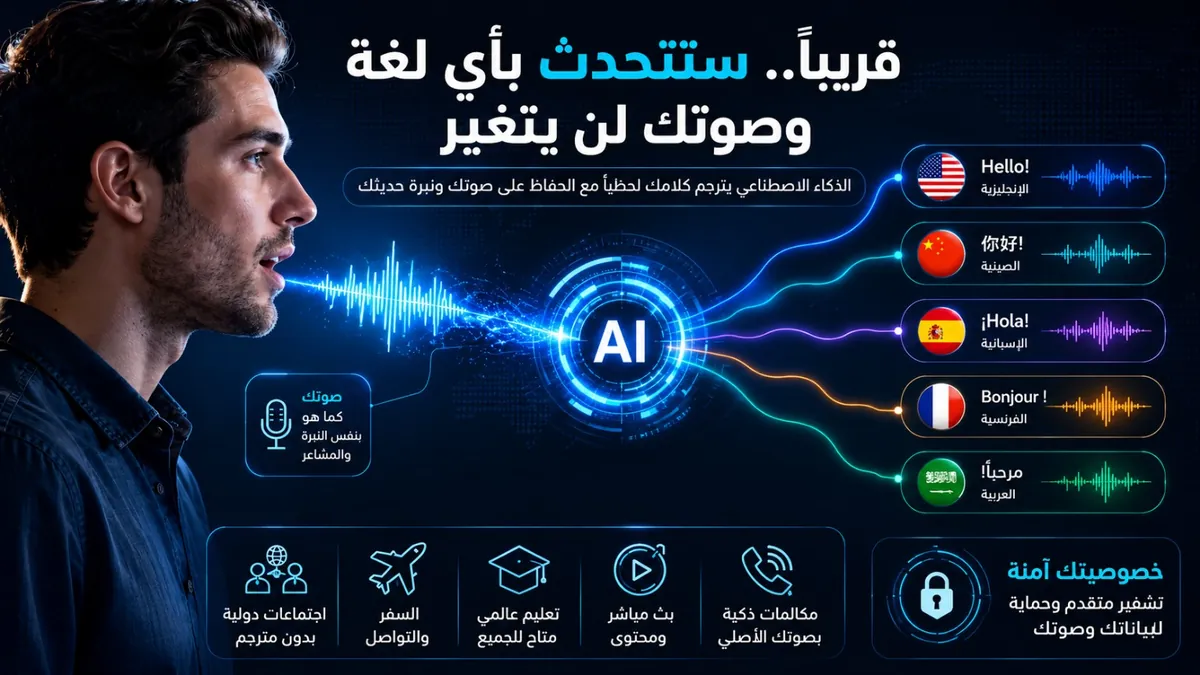

Global tech companies are moving closer to launching a new generation of artificial intelligence simultaneous translation technologies capable of converting speech into different languages instantly while preserving the speaker’s true voice.
These systems rely on advanced artificial intelligence models that can understand, translate, and reproduce speech within seconds while retaining the vocal tone, manner of speaking, and human emotion.
Simultaneous Translation in Your True Voice
Unlike traditional translation apps, the new systems make a person sound as though they are speaking the foreign language fluently in their own original voice.
Developers note that artificial intelligence has become capable of analyzing vocal pitches, expressions, and emotions before regenerating the speech in the new language.
A Revolution in Meetings and Travel
This technology may transform the future of international meetings, education, live broadcasting, and content creation, as individuals will be able to communicate in different languages without needing a human translator.
These new systems are also being tested inside call, video, and smart meeting applications.
Asia Enters the Smart Translation Race
China, South Korea, and Japan are seeing rapid investments in AI-powered simultaneous translation technologies, alongside major American companies working in the same field.
Experts believe these systems could become an essential part of phones and smart glasses in the coming years.
Concerns Persist, However
Despite the significant potential, some researchers warn that voice cloning technologies could be exploited in disinformation or impersonation operations.
Companies are therefore moving to develop digital verification and protection tools to accompany artificial intelligence voice translation technologies.
Hany Sallam


Latest video
تابع معنا تحليل قراءة الصحف اليومية مع الكاتب الصحفي Hany Sallam عبر