


Dr. Hassan ELnagar Hassan Ibrahim
Ph.D. in Material Science

Extracting crude oil from oil fields is costly, complex, and presents various difficulties that depend on the conditions of each field, climate, and oil composition, among other factors. Paraffin crystals grow as the temperature decreases, forming a crystalline network that begins to trap liquid hydrocarbon molecules until the oil can no longer flow. Paraffin deposition reduces production through facility maintenance and the removal of already formed deposits, increases the cost of producing and transporting petroleum products, and causes handling problems in regions where service temperatures are or seasonally become very low.


Therefore, during the production, storage, and transportation of paraffin-based crude oil and its products, it is important to maintain the oil at a temperature above its natural pour point. Chemical products known as flow improvers, crystal modifiers, and pour point reducers need to be used to reduce the apparent viscosity, flow limit, and pour point of oils. Paraffin wax deposition from crude oil at low temperatures is one of the serious and long-standing problems in the petroleum industry. At low temperatures, wax crystals easily form impermeable cakes that can block filters and eventually lead to engine failure. Many methods have been attempted to prevent the crystals from binding together. Because adding chemical additives (such as pour point depressants, cold flow improvers, paraffin inhibitors, or wax crystal modifiers) is one of the most convenient and economical ways to ease oil flow, it is widely used in the industry.

 .
It has been found that adding these additives changes the shape of the wax crystals. Many postulated mechanisms have been put forward to explain this phenomenon and to illustrate pour point depressant product design. Among these theoretical mechanisms, adsorption, co-crystallization, nucleation, and improved wax solubility are widely accepted by researchers.

Paraffin crystal in rigid network adhering to pipe

.
.
Modified crystal unable to form network or adhere to each other on pipe surface
At present, most pour point depressants are macromolecular polymers, such as ethylene-vinyl acetate copolymer (EVA). Although EVA is widely applied as a crude oil flow modifier, it does not perform well for crude oil. To improve the effectiveness of the pour point depressant, polar groups and branched chains should be introduced into the EVA macromolecule.
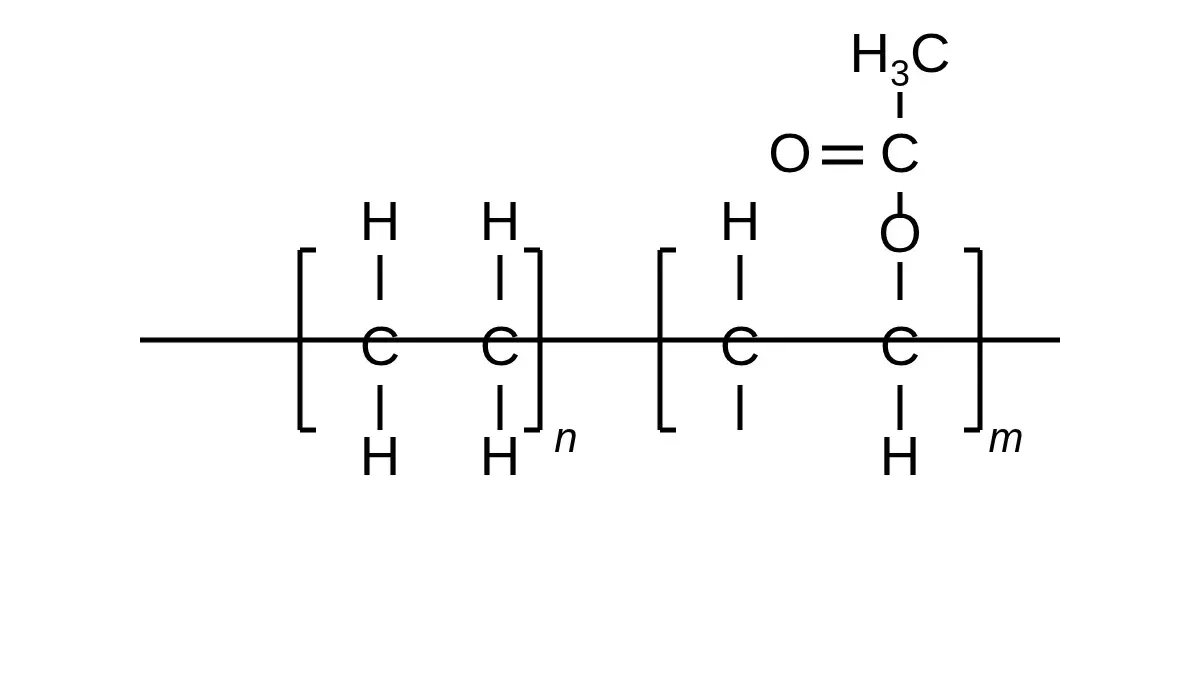
Ethylene-vinyl acetate copolymer (EVA) and its derivatives
In addition, an innovative solvent (PONA)—obtained from the hydrotreating and separation of straight-run naphtha—was used to dissolve polymers as a crude oil pour point depressant. This innovative study was conducted on crude oil. When a polymer concentration of 2,500 ppm was used, the pour point of the crude oil decreased from +42 °C to –6 °C as a result of the innovative PONA solvent in the case of crude oil, representing a new achievement.
References
Alnaimat, F., & Ziauddin, M. (2020). Wax deposition and prediction in petroleum pipelines. Journal of Petroleum Science and Engineering, 184, 106385. doi:10.1016/j.petrol.2019.106385
Burger, E., Perkins, T., & Striegler, J. (1981). Studies of wax deposition in the trans Alaska pipeline. Journal of Petroleum Technology, 33(06), 1075-1086. doi:10.2118/8788-pa
Chen, W., Zhao, Z., & Yin, C. (2010). The interaction of waxes with pour point depressants☆. Fuel, 89(5), 1127-1132. doi:10.1016/j.fuel.2009.12.005
Chen, W., Zhao, Z., & Yin, C. (2010). The interaction of waxes with pour point depressants☆. Fuel, 89(5), 1127-1132. doi:10.1016/j.fuel.2009.12.005
Chevallier, V., Petitjean, D., Bouroukba, M., & Dirand, M. (1999). Mixtures of numerous different N-alkanes: 2. Studies by X-ray diffraction and differential thermal analyses with increasing temperature. Polymer, 40(8), 2129-2137. doi:10.1016/s0032-3861(98)00409-1
Creek, J., Lund, H. J., Brill, J. P., & Volk, M. (1999). Wax deposition in single phase flow. Fluid Phase Equilibria, 158-160, 801-811. doi:10.1016/s0378-3812(99)00106-5
Deka, B., Sharma, R., Mandal, A., & Mahto, V. (2018). Synthesis and evaluation of oleic acid based polymeric additive as pour point depressant to improve flow properties of Indian waxy crude oil. Journal of Petroleum Science and Engineering, 170, 105-111. doi:10.1016/j.petrol.2018.06.053
.
.


Latest video
تابع معنا تحليل قراءة الصحف اليومية مع الكاتب الصحفي Hany Sallam عبر