
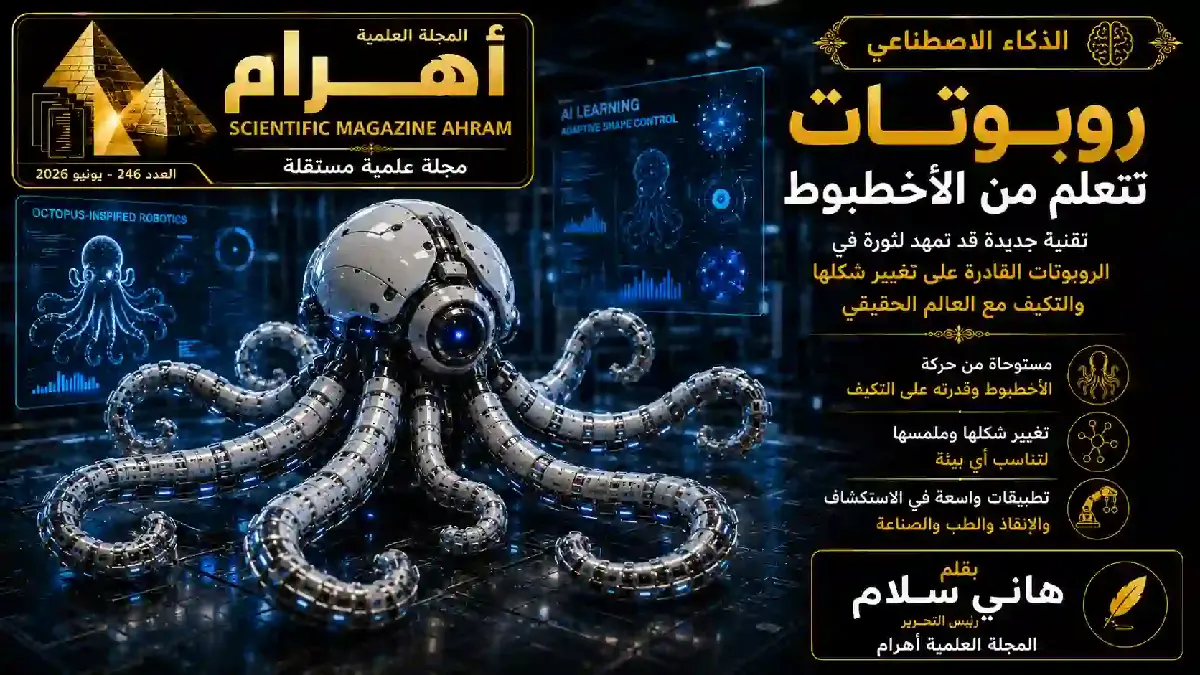

Robots Learning from the Octopus
The British company Morph has unveiled a new platform for soft robotics, drawing inspiration from the octopus, one of nature’s most adaptable creatures.
The company aims to develop robots that can change their shape and physical properties depending on their surrounding environment, thereby reducing the need for the rigid structures used in most current robots.
What Are Soft Robots?
Soft robots rely on flexible, deformable materials that allow them to move more freely and interact with humans and objects more safely.
Researchers believe these robots may operate efficiently inside hospitals, homes, and factories, and they can handle environments where traditional robots struggle to work.
Artificial Intelligence Steps Out of the Screen
Morph focuses on integrating the concept of embodied AI. This trend aims to move artificial intelligence from software into physical hardware that interacts directly with the real world.
Currently, the use of artificial intelligence is often limited to data processing and content generation. This new approach, however, gives intelligent systems the ability to move and make decisions while working.
Why Did the Company Choose the Octopus?
The company chose the octopus because of its exceptional ability to change its body shape, squeeze through tight spaces, and adapt to diverse conditions.
For this reason, the new platform attempts to mimic these natural capabilities, relying on flexible units that can be combined in different ways to suit numerous applications.
The Future of Soft Robots
Tech experts expect soft robots to see significant growth in the coming years, driven by rapid advancements in artificial intelligence and smart materials.
If these technologies succeed commercially, safer and more flexible robots may emerge and work side by side with humans in many fields.
Although the technology is still in its early stages, Morph’s announcement represents an important step that may bring us closer to a future where robots become more like living organisms.
Hany Sallam


Latest video
تابع معنا تحليل قراءة الصحف اليومية مع الكاتب الصحفي Hany Sallam عبر